What Does a Fibre Optic Technician Do?
A fibre optic technician installs and tests cables that carry signals as light. In oil and gas, a cable might connect buildings at a plant or link equipment along a route. You check the ends and joins so the signal can travel where it needs to go and faults are easier to find later.
How Fibre Optic Technicians Install and Test Oilfield Communications Cables
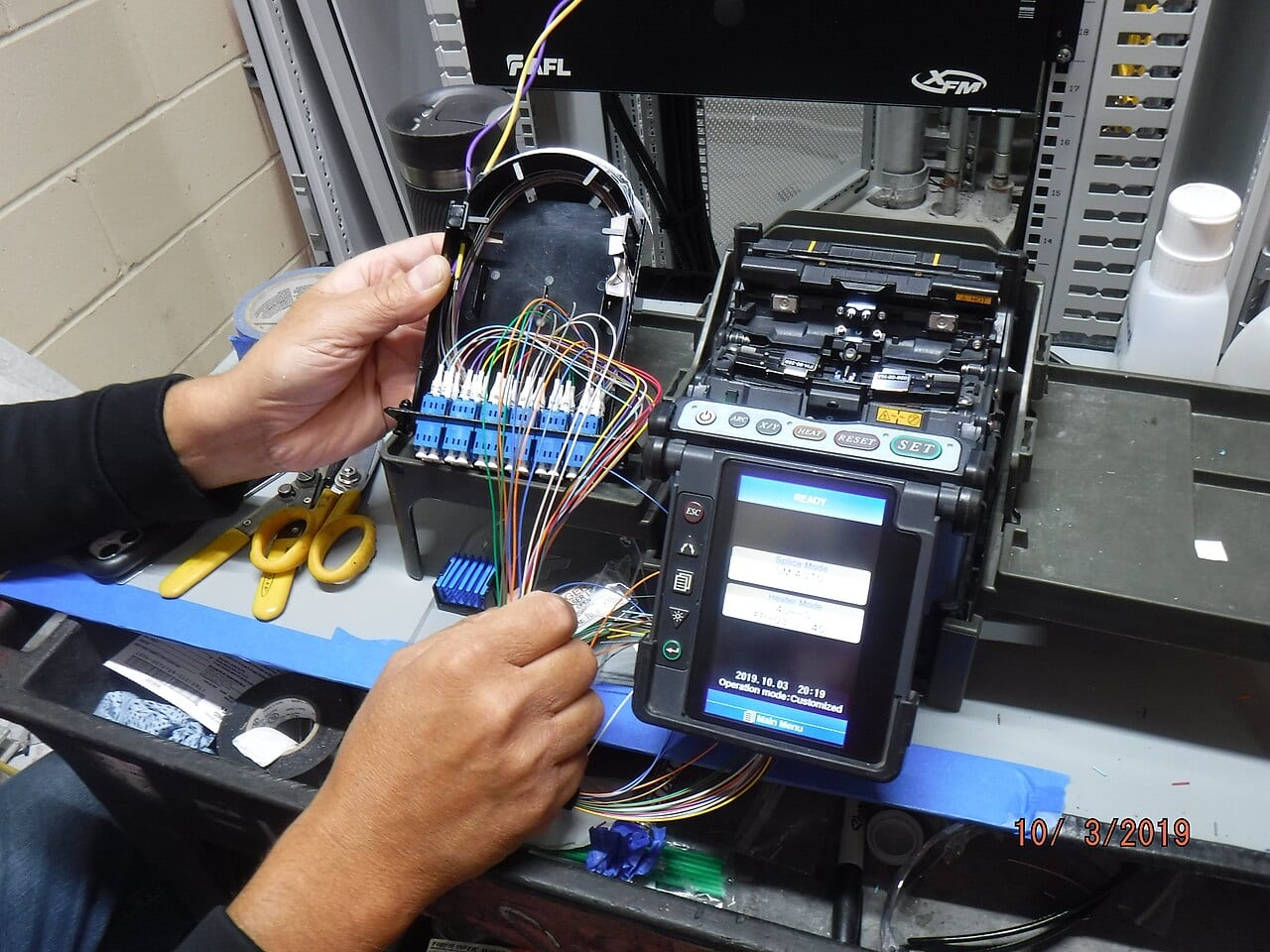
Install, join and test the cables that carry data around an oilfield or plant. Read the route and connection drawings, identify the fibres and keep clear records. A splice joins two fibres; the work needs clean, precise handling and test results tied to the right cable.
Use the specified tests to check signal loss and locate faults. An optical time-domain reflectometer, or OTDR, helps show where an event lies along a fibre. Keep the trace and connection record for handover. A cable that carries a signal is not necessarily within the project’s acceptance limits.
Coordinate access and repair work with the site team. A field IT technician may report a lost connection, while a network specialist handles other network equipment. This cabling differs from a downhole fibre-sensing system. Each needs its own training and experience.
Fibre Optic Technician Pay and Job Outlook
Job Bank lists CAD 23.00 to 55.00 per hour for telecommunications line and cable installers and repairers in Alberta for 2023–2024. In May 2025, the middle 80% of U.S. telecommunications line installers and repairers earned USD 21.79 to 49.85 per hour.
Canada projects about 3,500 openings in the Canadian group from 2026 to 2035. About 2,000 could come from retirements.
The rates cover broader telecom installation groups.
Training for Fibre Optic Technicians
You can enter through telecom or cabling work, or a practical fibre course. FOA offers Certified Fiber Optic Technician training. It covers handling, splicing and testing with hands-on work. Its training route has no prior-experience requirement. The separate direct work-to-certification route requires relevant field experience.
Employers set the credentials and site training for an assignment. Tridon sought experienced splicing and test skills for a senior Fort McMurray post. New entrants do not all need that level of skill. Learn the site’s cable identification, work-permit and protection rules. A fibre certificate does not qualify someone for electrical work.
Challenges for Fibre Optic Technicians
Outside cable routes can be exposed to weather and construction damage. Drawings may be incomplete, and an old label may not match a new connection. Careful identification and test records help prevent a repair on the wrong fibre.
Work can involve site travel, confined working space and shutdown windows. One employer’s housing or travel offer is not an allowance for the whole trade.
Perks for Fibre Optic Technicians
The work has a clear physical result and a test record that shows what was delivered. You can build skills across installation, fault finding and network handover. Energy sites add industrial experience, while the core cabling skills are useful in other sectors.