Alberta Sets July 1 Deadline for 1 Million bpd Pacific Corridor Pipeline to BC Coast as Ottawa Fast-Tracks LNG Canada Phase 2
Alberta Sets July 1 Deadline for 1M bpd Pacific Corridor Pipeline to BC Coast as Ottawa Fast-Tracks LNG Canada Phase 2.
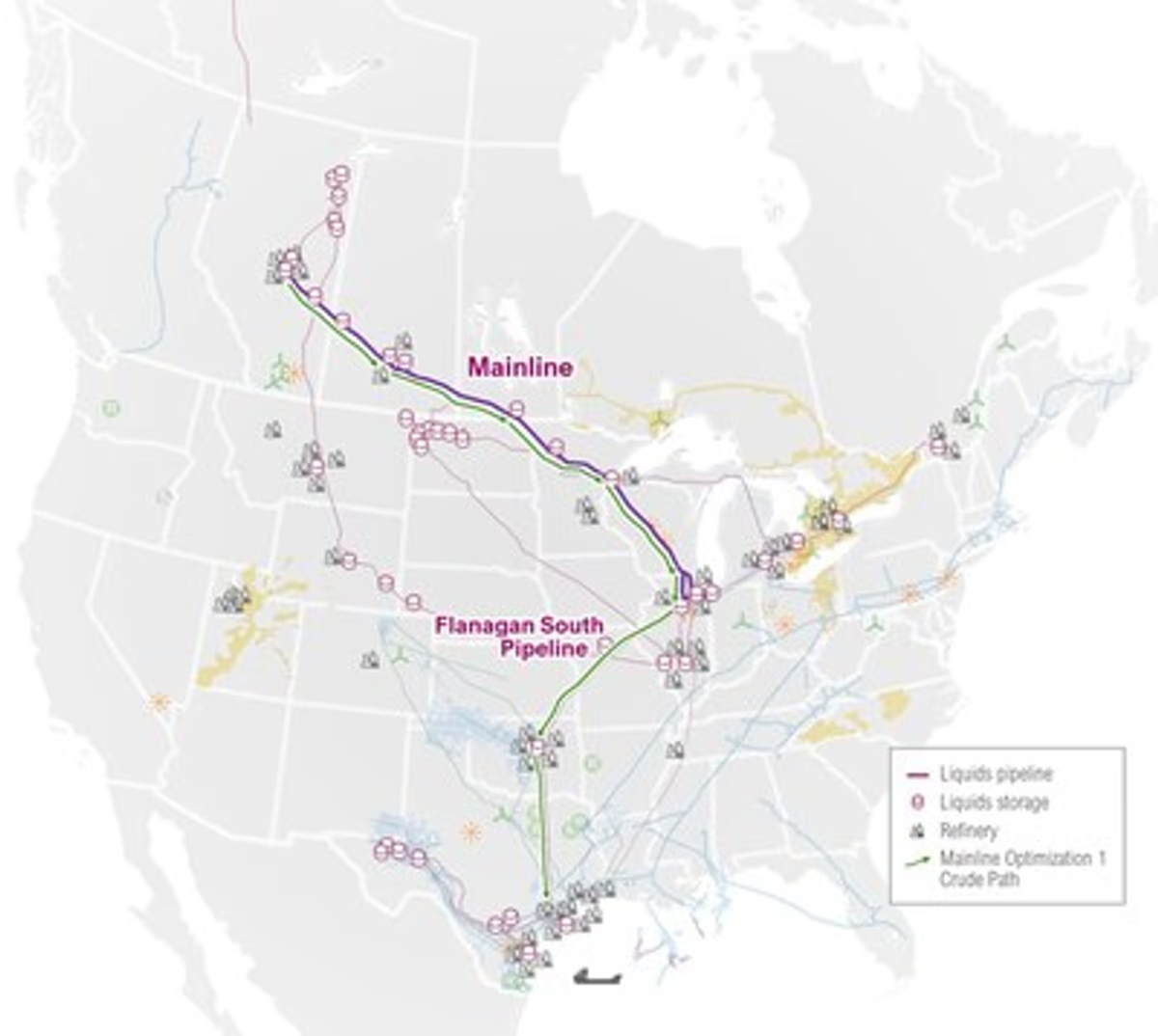
The Canadian energy landscape shifted decisively on Monday as the federal government and Alberta formalized a Memorandum of Understanding that sets a hard July 1, 2026 deadline for the province to submit a formal application for a new 1-million-barrel-per-day crude oil pipeline to the British Columbia coast.
The Pacific Corridor: Canada's Answer to Hormuz
The pipeline project, now being referred to as the "Pacific Corridor," represents Canada's most ambitious energy infrastructure undertaking since the Trans Mountain Expansion. The project is being fast-tracked through the federal Major Projects Office with a mandate to establish a secure export route to Asian markets, eliminating Canada's dependence on tanker traffic through the Strait of Hormuz chokepoint.
"This is not just an infrastructure project. This is a national security imperative," stated a senior official in the federal Natural Resources department. The Hormuz crisis has exposed the fragility of global supply chains that route Middle Eastern crude through a narrow 54-kilometre waterway now effectively closed to commercial shipping.
LNG Canada Phase 2 and Ksi Lisims: National Interest Designation
In parallel, Ottawa has invoked its "National Interest" powers to accelerate approvals for two major liquefied natural gas projects on Canada's west coast. LNG Canada Phase 2, the expansion of the Shell-led facility in Kitimat, BC, and the Ksi Lisims LNG project proposed by the Nisga'a Nation and Western LNG, have both received the designation.
The rationale is strategic. Japan and South Korea, two of the world's largest LNG importers, have been effectively cut off from their primary Middle Eastern supply sources. Canadian LNG from the Pacific coast offers a geographically secure alternative that avoids the Hormuz chokepoint entirely.
Japan alone imports approximately 70 million tonnes of LNG annually, and Korean Gas Corporation (KOGAS) has been in active negotiations with Canadian suppliers since the Hormuz closure began.
CER Projects Canadian Production to 6.7 Million bpd by 2044
The Canada Energy Regulator's latest "Energy Future 2026" report presents what it calls a "production paradox." Even as Canada pursues its Net-Zero emissions targets, crude oil production is projected to rise to 6.7 million barrels per day by 2044, up from approximately 5.3 million bpd today.
The report identifies the "diversified export base" strategy, centered on the Asian pivot, as the primary growth engine for the Canadian energy sector over the next two decades. Currently, 97% of Canadian crude exports flow south to the United States for refining. The Pacific Corridor and LNG projects aim to reduce that dependence to approximately 70% by 2035.
What It Means for Alberta's Service Sector
The announcement sent ripples through Calgary's energy service sector. CES Energy Solutions (CEU) gained 2.20% on Monday to $18.61 as investors priced in years of sustained infrastructure construction activity. Pipeline contractors, environmental consultants, and drilling companies across Western Canada are expected to benefit from what analysts are calling a "decade-long buildout cycle."
The July 1 deadline adds urgency. If Alberta fails to submit a compliant application by that date, the federal fast-track designation expires and the project reverts to standard regulatory timelines, potentially adding three to five years to the approval process.
For the 8,200-plus energy companies in Canada's oil and gas sector, the Pacific Corridor represents both an enormous opportunity and a generational test of whether the country can build major infrastructure on a timeline that matches the urgency of global energy security demands.
Published by Oil Authority, edited by Adam Humphreys
Submit a Correction
Spotted a factual error? Free account required to submit a correction.