LNG Canada on Track for 6 Million Plus Tonnes in 2026 as Train 2 Reaches Full Output and Hormuz Crisis Spurs Asian Demand
LNG Canada on Track for 6M Plus Tonnes in 2026 as Train 2 Reaches Full Output and Hormuz Crisis Spurs Asian Demand.
Canada's flagship liquefied natural gas export project is poised to ship more than six million tonnes to Asian markets in 2026, with both production trains at the Kitimat, British Columbia facility now operating at or near full capacity following Train 2's commissioning in November 2025.
According to estimates from RBC Capital Markets, LNG Canada exported approximately 4.6 million tonnes between June 2025 and mid-March 2026, a figure that surpasses the project's entire first year of output and points toward a 2026 annualized run rate of roughly 6.5 million tonnes once Train 2 reaches steady-state production. The 14-million-tonne-per-year nameplate capacity of Phase 1 remains the target as operators optimize the facility's two liquefaction trains and marine loading berths.
The timing of the ramp-up could not be more favourable for project sponsors. The ongoing Strait of Hormuz crisis, which saw WTI crude surge past $108 per barrel on April 2 following US-Iran military developments, has also tightened spot LNG markets across Asia. Japanese, South Korean and Chinese buyers, already holding limited inventory heading into summer, have been aggressively seeking long-term supply alternatives as Middle Eastern route risk escalates. LNG Canada's Pacific Rim location and the absence of Hormuz transit exposure give the Kitimat facility a structural advantage over competing supply from Qatar, the United Arab Emirates and Oman.
Spot LNG prices at the Japan Korea Marker have firmed above $13 per MMBtu in recent weeks, a level that makes the long-term contracts tied to LNG Canada's output particularly attractive to project partners including Shell (40 per cent equity), Petronas (25 per cent), PetroChina (15 per cent), Mitsubishi (15 per cent) and Korea Gas (5 per cent).
Phase 2 FID on the Horizon
The project's commercial momentum is fuelling expectations for a positive final investment decision on Phase 2 by the end of 2026. A Phase 2 approval would add two additional liquefaction trains, doubling the facility's total export capacity to approximately 28 million tonnes per year and cementing Kitimat as a major hub on the global LNG supply map.
Canada's energy minister has set an ambitious long-term target of 100 million tonnes per year of national LNG export capacity, a goal that would require not only LNG Canada's Phase 2 but multiple additional projects along the British Columbia coast. Proponents including Woodfibre LNG near Squamish and Cedar LNG, a Haisla Nation-backed project also at Kitimat, are advancing through regulatory and commercial stages in parallel.
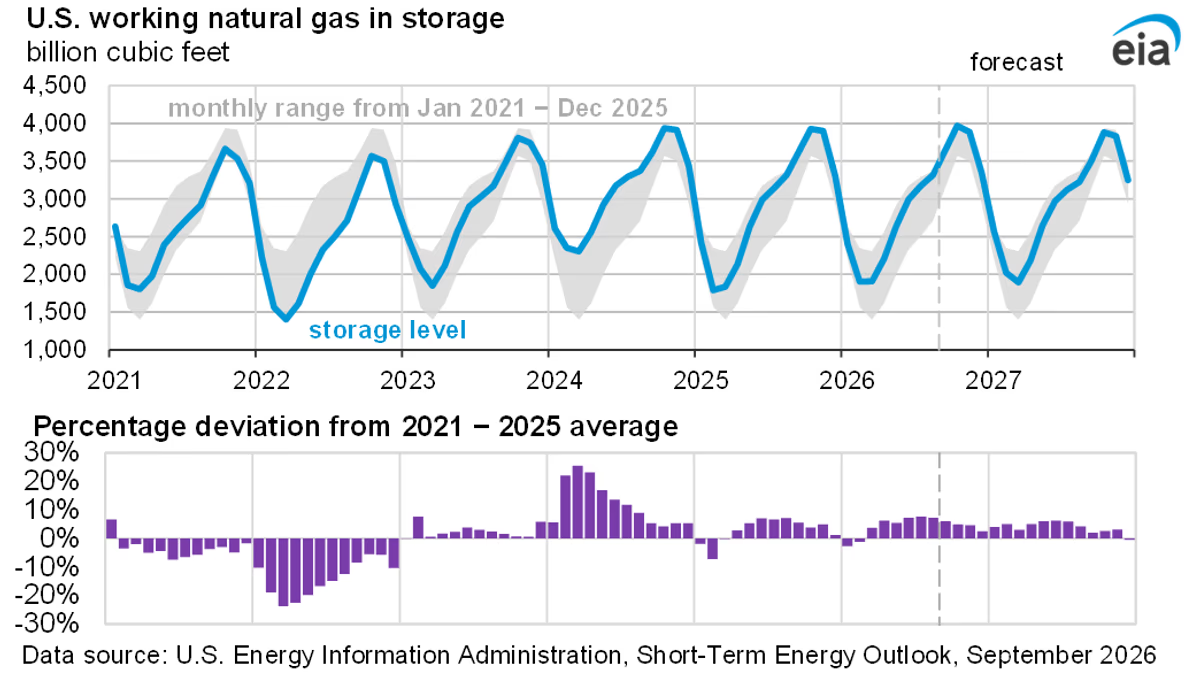
The natural gas feedstock for LNG Canada arrives via the 950-kilometre Coastal GasLink pipeline, which stretches from the Montney formation in northeastern British Columbia. Major Montney producers, including Canadian Natural Resources, have expanded upstream gas operations in 2026 partly in anticipation of growing LNG Canada offtake volumes. Henry Hub natural gas prices have stabilized near $3.03 per MMBtu in early April, but AECO spot prices in Alberta and northeastern British Columbia have tightened as LNG Canada demand absorbs incremental volumes from the basin. The EIA projects Henry Hub prices recovering to approximately $3.80 per MMBtu as a full-year 2026 average, with a steeper curve toward $4.70 per MMBtu by December as heating season inventory draws begin.
Canada's Pacific Diversification Strategy Paying Off
LNG Canada's export acceleration mirrors the broader success of Canada's Pacific diversification strategy, which also includes Trans Mountain Pipeline's expanded oil export capacity of 890,000 barrels per day serving Asian crude markets. Both projects have helped insulate Canadian energy producers from the volatility of the US Gulf Coast market, providing pricing optionality at a time when geopolitical risk premiums are elevated.
For Alberta and British Columbia natural gas producers, LNG Canada represents the most meaningful new demand outlet in a generation. Prior to the Kitimat project's completion, the majority of Western Canadian natural gas flowed to US markets, where Henry Hub pricing often exerted downward pressure on AECO. With two trains now running and Phase 2 approaching a go-ahead, producers are increasingly able to negotiate contracts linked to the Japan Korea Marker or oil-indexed Asian benchmarks, which carry a significant premium over domestic North American spot prices.
Export Volumes Expected to Climb Through Q2 2026
Train 2 entered commercial operations in November 2025, but the first several months involved performance testing and efficiency optimization rather than maximum throughput. Industry analysts expect Train 2 to contribute close to its full 7-million-tonne-per-year nameplate output beginning in the second quarter of 2026, which would push total monthly export volumes well above prior records established during Train 1 operations.
With the Middle East crisis showing no sign of resolution ahead of the April 6 diplomatic deadline set by the Trump administration, and OPEC+ facing its own supply management challenges at its April 5 meeting, global energy markets are likely to remain supportive for Canadian LNG exports through the balance of the year. LNG Canada's Pacific location, long-term Asian contracts and expanding production capacity position it as one of the primary beneficiaries of the current geopolitical realignment in global energy trade.
Published by Oil Authority, edited by Adam Humphreys
Submit a Correction
Spotted a factual error? Free account required to submit a correction.