What Does a Cathodic Protection Technician Do on Pipelines?
A cathodic protection technician checks systems that help keep buried pipe from rusting. They take readings at test points along the line and check the power units that protect the pipe. They flag changes that could mean part of the line needs a closer look or a repair.
How Cathodic Protection Technicians Test Buried Pipe
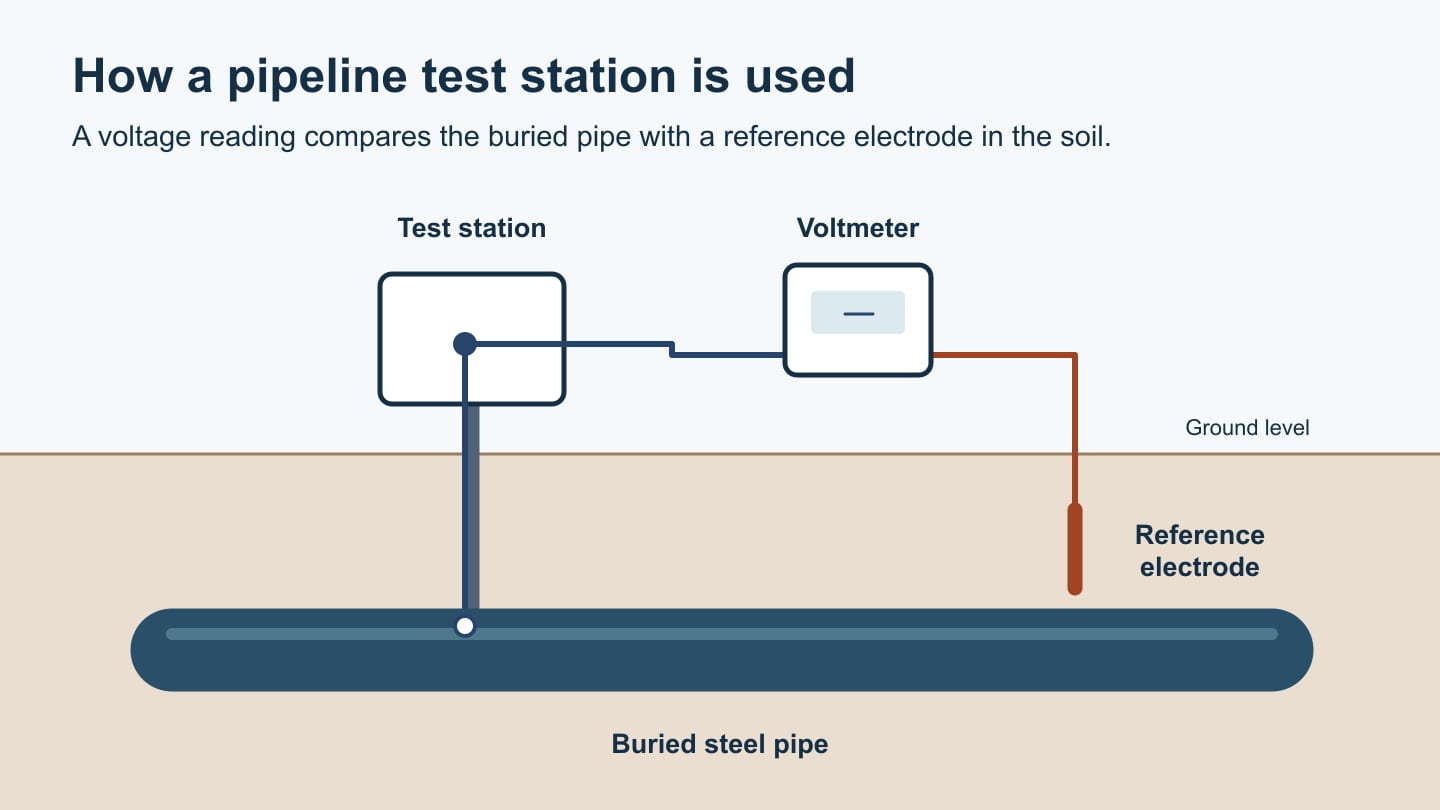
Collect readings at pipeline test points. Record where and when each was taken. On powered systems, check the rectifier, which supplies protective current. Compare results with earlier records. Report faults to the integrity team.
Help investigate weak readings or damaged test equipment. A broken lead and a change in the protection system can produce different problems. Good field notes help the reviewer decide which further checks are needed. Some jobs also arrange larger surveys with contractors.
The work supports cathodic protection, which helps control corrosion. It is one part of keeping a pipeline sound. The technician tests or repairs the system. A specialist may design it. Experienced roles can support both.
AMPP and Field Training for Cathodic Protection Technicians
AMPP separates CP1 tester and CP2 technician levels. Its guidance links tasks to experience and technical review. A new tester may record basic work. More complex tests need a higher-level reviewer. Certification levels do not all carry the same scope.
Electrical or corrosion field work can build a base. Employers may support courses and exams as experience grows. Learn the equipment and records used on the assigned network. A driving licence is commonly needed, and electrical repair tasks may require separate trade skills.
Challenges of Field Testing Cathodic Protection
Test points can be far apart and difficult to reach in snow or wet ground. Nearby systems or test faults can affect readings. A return visit may be needed before the cause is clear. Keep the field record detailed enough for someone else to understand the conditions.
Perks of Working as a Cathodic Protection Technician
The role offers outdoor work alongside electrical measurements and analysis. Repeated surveys let you learn a pipeline system over time. Further training can support more complex testing or design work, with a broader technical scope at each stage.