What Does an Industrial Radiographer Do in Oil and Gas?
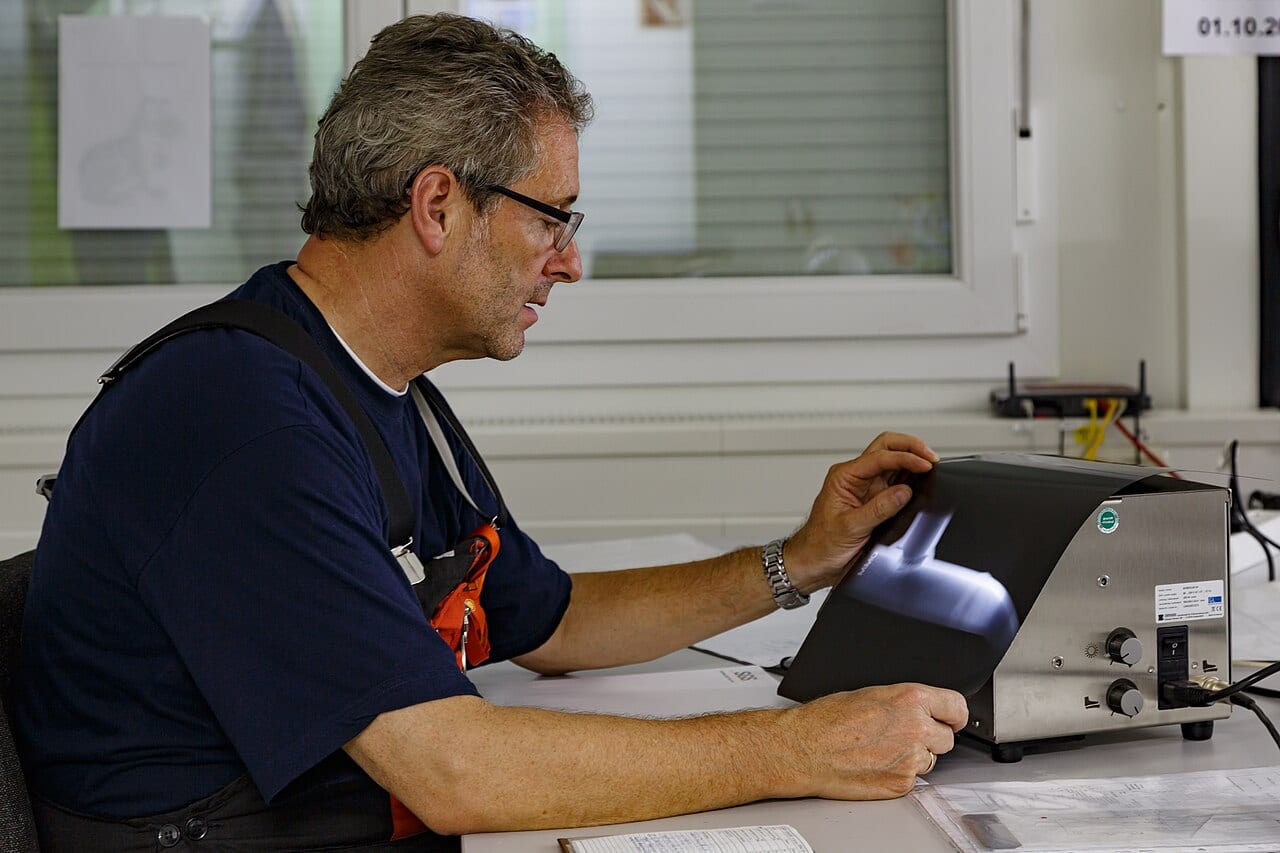
An industrial radiographer makes images of the inside of welds and metal parts. They use X-rays or a gamma source. The images can show hidden flaws. The crew follows a plan to keep people out of the test area. They save each image with a record of where it was taken.
How Industrial Radiographers Help Check Pipeline and Plant Welds
Make images that help examine welds or parts without cutting them open. The role concerns industrial equipment rather than patients. Confirm the part, procedure and required coverage with the inspection team.
Work within the method and level held. Use only the equipment your training and employer allow. Record the image identity and test details so results can be traced to the right weld. Film, computed and digital methods can have different equipment and training needs. A welding inspector may review the result as one part of the job’s wider evidence.
Plan the work with other crews and the site’s radiation-safety staff. Image review, control of an exposure device and final acceptance are separate duties. An NDT technician qualified in another method is not automatically qualified for radiography.
Industrial Radiographer Pay Compared with Inspection Data
Alberta’s broader NDT and inspection group earned CAD 22.00 to 55.00 per hour. Job Bank’s data covers 2023–2024.
U.S. data groups NDT workers with other engineering technicians. The middle 80% of that wider group earned USD 22.61 to 56.89 per hour in May 2025. This is a broad comparison, not a radiography-only wage.
Canada projects about 4,600 openings for the whole NDT group in 2026–2035. About 2,700 could come from retirements.
Radiography Training and Exposure Device Credentials
Canada’s NDT radiography route follows NRCan’s rules for the method. Gamma work needs a CNSC exposure device operator (EDO) certificate. Or you must work under a certified EDO’s direct supervision. The same rule applies to operating an exposure device. The two credentials cover different duties.
An EDO ticket alone does not cover NDT image interpretation. Device repair, dangerous-goods transport and specialist emergency response also need further training or certification. U.S. rules and employer programmes depend on the equipment and region. The employer must teach safe work and check skills before assigning duties.
Challenges of Working as an Industrial Radiographer
Plan with other crews because access and radiation controls affect the site. Keep clear part and image records. A good image of the wrong joint cannot support the intended inspection.
Jobs may be scheduled at night or during shutdowns. Remote travel and weather can alter plans.
Perks of Working as an Industrial Radiographer
You build a technical skill and produce evidence used to judge equipment quality. There are shop and field jobs across several industries. New imaging techniques can widen the scope. Each needs its own training and qualifications.