US Rig Count Reaches 599 on Friday, Highest Since May 2024, While WTI Falls to $92.41
Baker Hughes counted 599 active US rigs on Friday, the highest since May 2024, as WTI crude oil settled at $92.41, down $7.12 from the prior week.
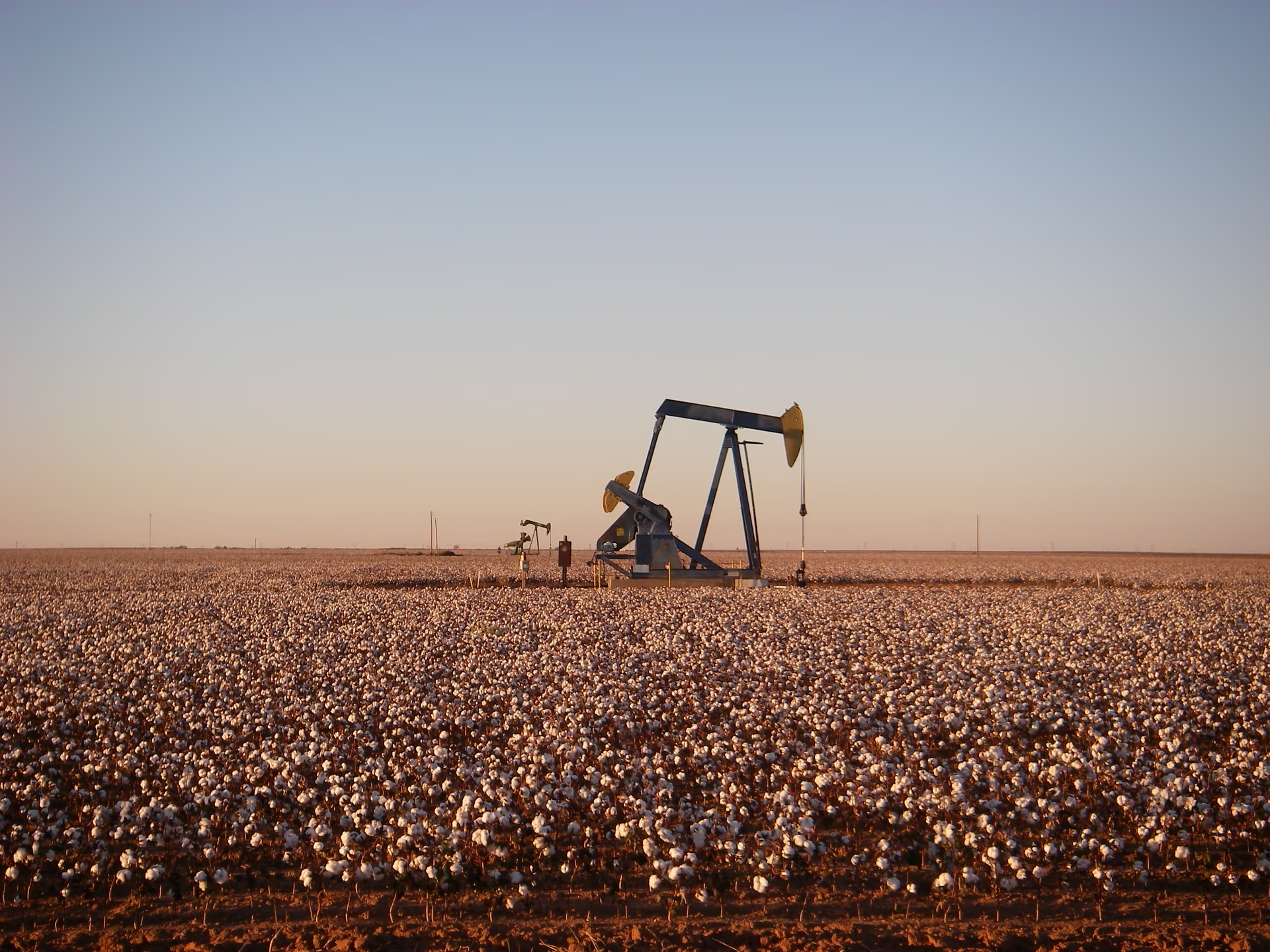
Baker Hughes counted 599 active rotary rigs drilling in the United States for the week ending September 25, 2026. The total rose four rigs from 595 the prior week, which had been described as the highest US total since May 2024. At 599, the count extends that benchmark to a new level not recorded since at least May 2024.
Oil-directed rigs accounted for 455 of the 599, up three from 452 the prior week, according to Baker Hughes weekly series data published Friday. The non-oil total, which includes natural gas and miscellaneous rigs, rose by one to approximately 144. Gas rigs alone had reached 134 for the week ending September 18, the highest level since July 2023.
WTI Has Dropped $7.12 Per Barrel Over Seven Days
WTI crude oil settled at $92.41 per barrel on Friday's CME close, down $2.20 or 2.33% on the session, per Yahoo Finance data for September 25, 2026. One week earlier, when Baker Hughes published the 595-rig reading, WTI had closed at $99.53 per barrel. The seven-day price decline totals $7.12 per barrel, a 7.2% drop.
For a Permian operator producing 100,000 barrels per day, that price move translates to roughly $712,000 less in daily gross revenue, or approximately $5 million over the seven-day span. Permian breakeven costs for new horizontal wells typically range from $55 to $65 per barrel per operator guidance on recent earnings calls. At $92.41, the current WTI price still supports a margin of $27 to $37 per barrel on new Permian completions.
Goldman Sachs set a Q4 2026 Brent target of $85 per barrel on September 7, 2026, citing continued Mideast shipping disruptions extending into 2027. That target implies WTI in the high $70s, below the breakeven range on new Permian development wells. With WTI already down $7.12 in a single week, Goldman's bearish scenario has moved from a theoretical possibility to a visible price direction.
Permian Basin Drives 45% of US Drilling Activity
The Permian Basin held approximately 269 active rigs as of last week's Baker Hughes release, representing 45.2% of total US drilling. ExxonMobil, the basin's largest single operator after its 2023 acquisition of Pioneer Natural Resources, carries a footprint that makes its capital decisions the leading variable in the Permian supply response. ConocoPhillips expanded its Permian position through its 2021 Concho Resources acquisition, adding roughly 550,000 acres across the Delaware and Midland sub-basins.
Devon Energy, which absorbed WPX Energy in a 2021 merger, operates across the Delaware Basin alongside its Oklahoma and Eagle Ford activity. Decisions by these three operators alone govern a large portion of the 455 oil-directed rigs now active nationwide. Capital discipline signals from any one of them in Q4 earnings guidance, scheduled for November, carry decisive weight in the 2027 US crude supply picture.
Gas Rigs and Henry Hub Add a Secondary Signal
Henry Hub natural gas futures for the November 2026 contract settled at $3.225 per MMBtu on Friday, down $0.145 or 4.3% on the session, per NYMEX data via Yahoo Finance. Prices had touched a 13-week high earlier in the week before profit-taking pushed them lower. Gas rigs at 134 for the week ending September 18 represent supply growth that adds associated gas from oil-focused Permian wells, tightening the market balance on both the oil and gas sides.
IEA Demand Projection Sharpens the Oversupply Case
The International Energy Agency's September 2026 Oil Market Report projected global oil demand would fall 2.5 million barrels per day in 2026, a steeper downward revision than the agency's August estimate. Set against a US rig count at multi-year highs and OPEC completing its 1.65 million bpd voluntary cut rollback, that demand projection frames the oversupply argument in specific numbers. A related variable is the 10 million barrels per day of Gulf output still offline, detailed in a prior Oil Authority analysis of the OPEC rollback.
An Oil Authority analysis published last Friday noted the 595-rig count represented a 9.8% year-over-year gain even with WTI near $100. This week's gain to 599, against a $7.12 price decline, raises a clear question for the Q4 drilling cycle: whether the price signal will override the capital momentum that elevated demand set in motion earlier in 2026. Goldman's $85 Brent target and the IEA's 2.5 million bpd demand revision together mark the benchmarks analysts will measure against as Q4 guidance season opens in November.
Published by Oil Authority, edited by Adam Humphreys
Submit a Correction
Spotted a factual error? Free account required to submit a correction.