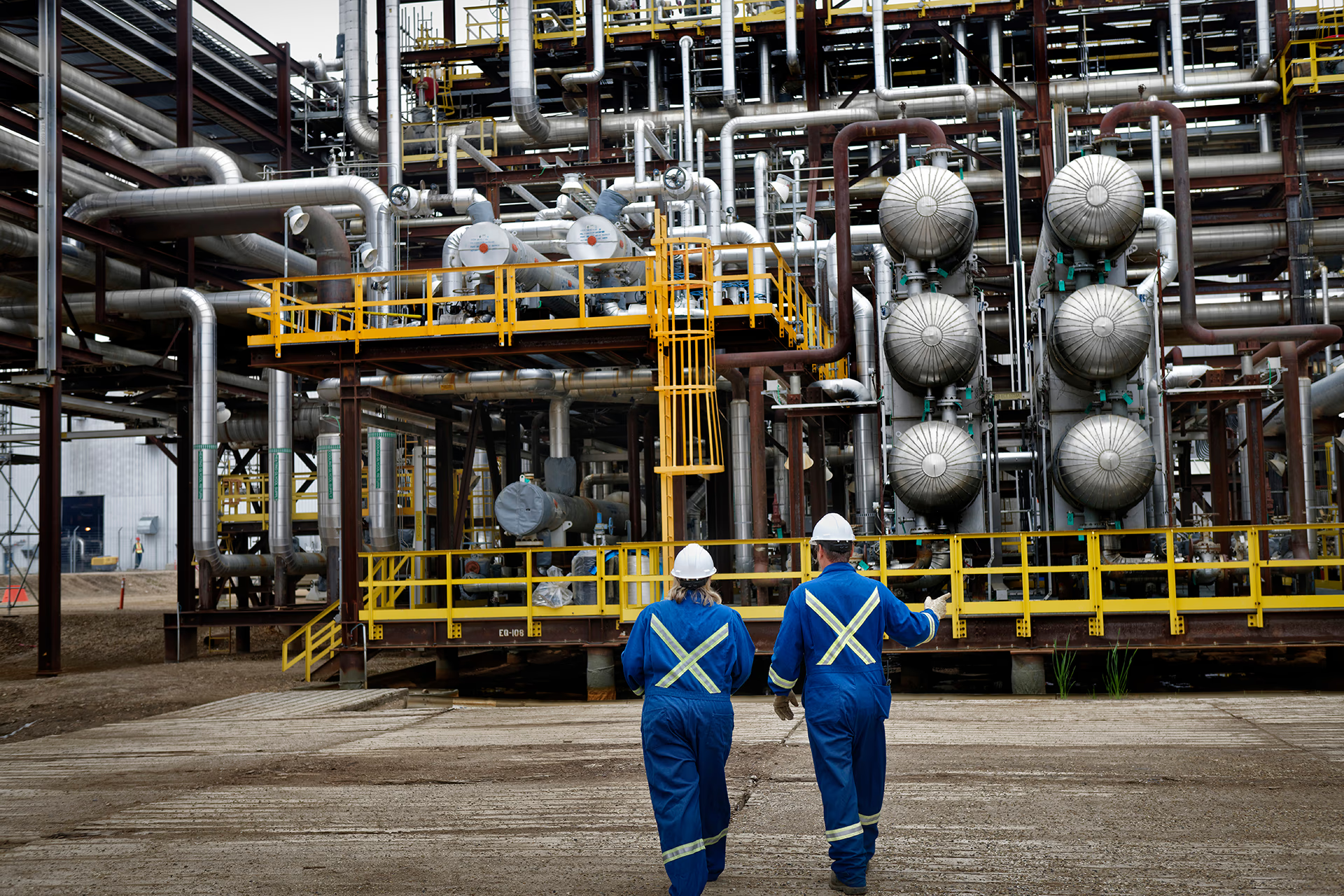
Chevron Hits Historic 1 Million BOE Per Day in the Permian Basin as Capital Discipline and WTI Above $102 Deliver 23 Percent Stock Gain in 2026
Chevron Hits Historic 1M BOE Per Day in the Permian Basin as Capital Discipline and WTI Above $102 Deliver 23 Percent Stock Gain in 2026.
San Ramon, California-based Chevron Corporation achieved a historic production milestone in 2025 by reaching 1 million barrels of oil-equivalent per day from the Permian Basin alone, and the company's stock has risen 23.5 percent year-to-date in 2026 as investors reward its combination of operational discipline and exposure to elevated crude prices.
West Texas Intermediate crude traded at US$102.92 per barrel on April 1, 2026, while Brent crude settled at US$105.27, levels that are generating outsized free cash flow for Permian-heavy producers who locked in low-cost acreage before the current market cycle. Chevron's Permian assets, concentrated in the Delaware and Midland basins of West Texas and southeastern New Mexico, are now widely viewed as among the most valuable onshore oil and gas properties in North America.
Baker Hughes Reports 729 Active Rigs Despite US$102 WTI, Down 33 Week-Over-Week
The landmark Chevron milestone reflects a broader structural shift in U.S. shale production. Chevron and its Permian peers have adopted strict capital return frameworks that prioritize free cash flow and shareholder distributions over production growth for its own sake. North America's active rig count fell to 729 rigs in the week ending March 27, 2026, down 33 rigs week-over-week, even as WTI trades above US$100 per barrel, according to Baker Hughes rig count data. That discipline stands in sharp contrast to the 2014-to-2019 shale boom, when operators drilled aggressively regardless of commodity prices.
For Chevron, the Permian now delivers roughly 1 million BOE per day at an average breakeven below US$50 per barrel on a fully-loaded basis, meaning current prices represent margin well above operational requirements. The company has guided for maintaining Permian output at approximately this level through 2026 while generating maximum free cash flow rather than pursuing aggressive volume growth.
ExxonMobil Targets 2.5 Million BOE Per Day From Permian by 2030 After US$60 Billion Pioneer Acquisition
ExxonMobil is the other dominant force in the Permian Basin following its 2024 acquisition of Pioneer Natural Resources in a US$60 billion deal. ExxonMobil is now targeting 2.3 to 2.5 million BOE per day from the Permian by 2030 and is deploying a new proppant technology to 50 percent of new wells drilled in 2026, up from 25 percent in 2025, improving well economics across its massive acreage position. The combined output of Chevron and ExxonMobil from the Permian already exceeds 2 million BOE per day, giving the two U.S. supermajors commanding influence over North American production growth decisions.
OPEC+ Begins 206,000 bpd Output Increase on April 1 With April 5 Review Amid Hormuz Disruptions
OPEC+ began implementing a collective production increase of 206,000 barrels per day on April 1, 2026, the latest step in unwinding the voluntary cuts the group imposed beginning in April 2023. The eight participating OPEC+ members, led by Saudi Arabia at an additional 62,000 barrels per day, are scheduled to meet again on April 5, 2026, to assess whether the production ramp-up should continue given ongoing Strait of Hormuz shipping disruptions that have constrained tanker traffic through the vital chokepoint.
Goldman Sachs has raised its Brent crude price forecast to average US$110 per barrel through April 2026, with the U.S. Energy Information Administration projecting Brent above US$95 per barrel through May before a gradual decline toward US$70 in the fourth quarter. For Permian producers like Chevron, near-term price support remains robust even as medium-term forecasts indicate potential softening.
WCS Trades at US$91 Per Barrel as Hormuz Disruptions Narrow the Heavy Crude Discount to US$12
While Permian light tight oil trades at or near WTI, Canadian heavy crude producers remain exposed to the Western Canada Select differential. WCS was quoted near US$91 per barrel at the Hardisty, Alberta hub on April 1, a discount of roughly US$12 to US$13 per barrel versus WTI. Canadian integrated producers like Suncor Energy and Cenovus Energy partly offset this discount through their downstream refining operations, which can process heavy feedstocks at a cost advantage relative to refineries designed for lighter crude slates.
The WCS-WTI spread has narrowed from wider levels earlier in 2026, as Hormuz-related supply disruptions reduced availability of competing medium-to-heavy sour barrels on world markets, lifting demand for Alberta bitumen blends among Gulf Coast and Asian refiners. Trans Mountain Expansion pipeline capacity of 890,000 barrels per day gives Canadian producers a direct Pacific route that further supports WCS netbacks.
Morgan Stanley Rates Chevron Overweight Citing US$75 Billion Buyback Authorization Through 2026
Chevron's 23.5 percent stock gain through the first quarter of 2026 significantly outpaces the S&P 500 index, reflecting both the company's Permian exposure and its broader portfolio of LNG assets in Australia, deepwater Gulf of Mexico operations, and a major stake in Kazakhstan's Tengiz field. Analysts at Morgan Stanley rate the stock Overweight, citing free cash flow generation capacity that supports Chevron's US$75 billion share repurchase authorization through 2026.
The Permian Basin's structural advantages, including shallow decline rates relative to other tight oil plays, vast inventory of undrilled locations, and established midstream infrastructure networks, position Chevron and ExxonMobil to sustain production at or above current levels for years without requiring significant capital escalation, a profile that resonates strongly with investors navigating a volatile commodity price environment.
As OPEC+ and Hormuz developments unfold through April 2026, Permian producers with low breakeven costs and locked-in infrastructure access are likely to remain among the most defensively positioned equities in the global energy sector, reinforcing the case for continued capital discipline over growth-at-any-price strategies.
Published by Oil Authority, edited by Adam Humphreys
Submit a Correction
Spotted a factual error? Free account required to submit a correction.