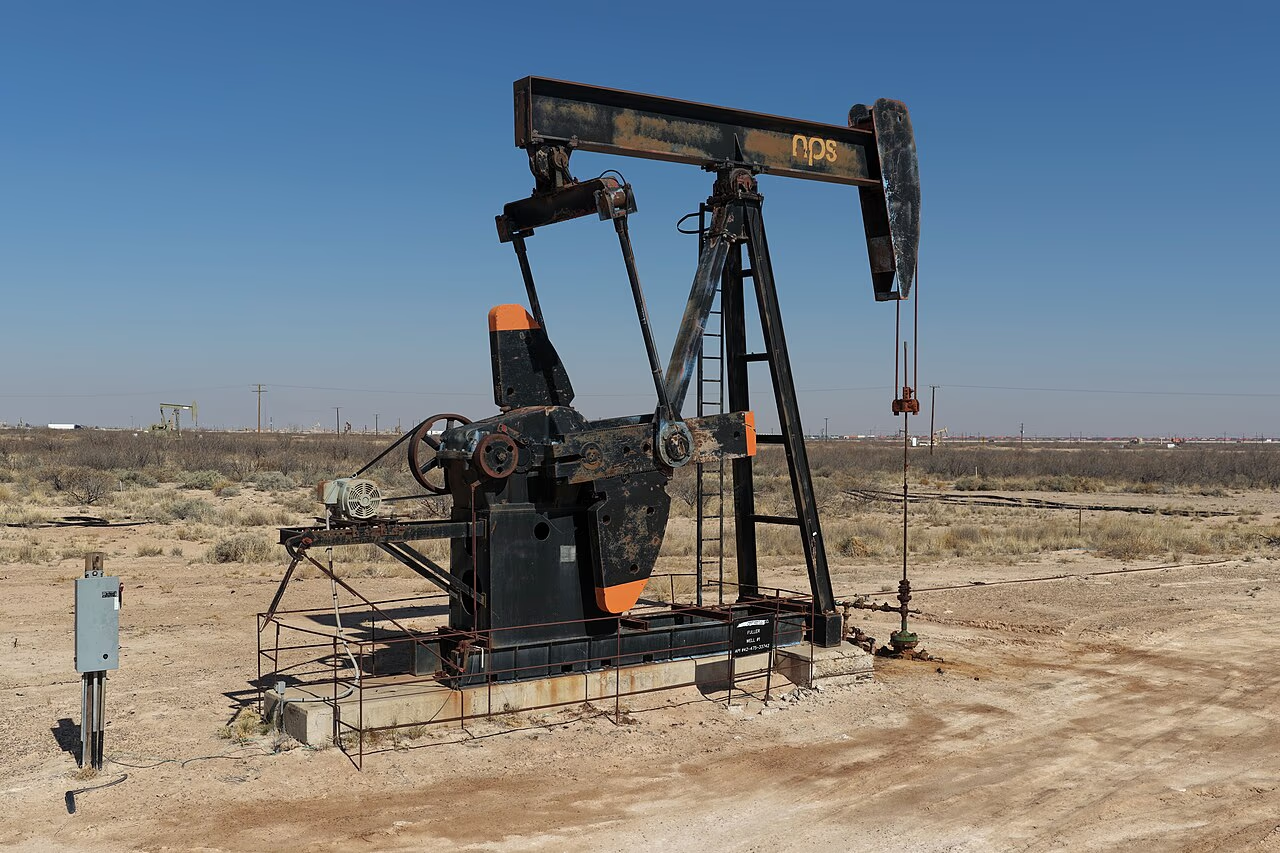
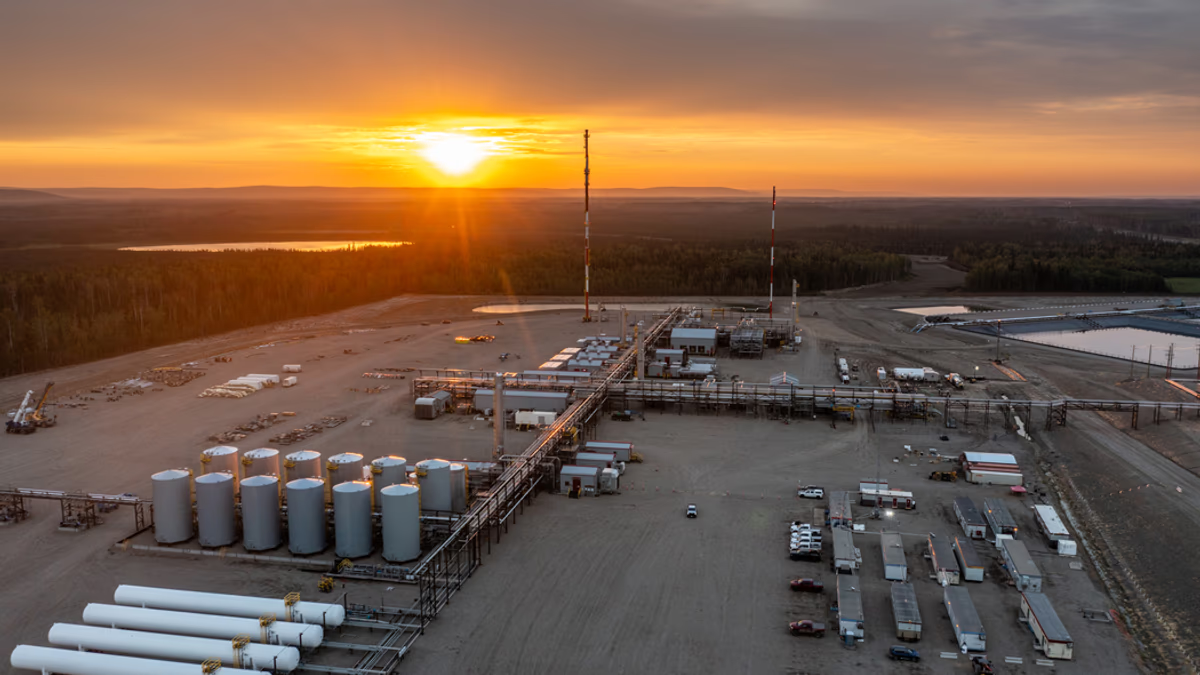
Devon Closes Coterra Merger, 1.6 Million BOED Shale Giant Targets $1 Billion Synergies by 2027
Devon closes $58 billion Coterra merger May 7, creating 1.6 million BOED shale giant with 750,000 Delaware acres and $1 billion synergy target by 2027.
Devon Energy completed its all-stock merger with Coterra Energy on May 7, 2026, the company confirmed in a joint press release issued Thursday, closing a transaction first announced February 2 and approved by both shareholder bases on May 4. The combined company retains the Devon Energy name, trades under the ticker DVN on the New York Stock Exchange, and is headquartered in Houston with continued operational scale in Oklahoma City. Each Coterra share was converted into 0.70 Devon shares; pre-merger Devon holders own roughly 54 percent of the combined entity and former Coterra holders own roughly 46 percent on a fully diluted basis.
Combined Footprint Hits 1.6 Million BOED Across Six Major Basins
On a pro forma basis the merged Devon expects to produce more than 1.6 million barrels of oil equivalent per day, including over 550,000 barrels per day of oil and 4.3 billion cubic feet per day of natural gas, according to merger filings. The Delaware Basin sits at the center of the combination: combined acreage exceeds 750,000 net acres and produces approximately 863,000 BOED from that play alone. The remainder spans the Anadarko Basin, Eagle Ford, Marcellus Shale, Powder River Basin, and Williston Basin, providing geographic diversification that few peers can match.
President and Chief Executive Officer Clay Gaspar said in the company's announcement that this transformative merger marks a defining moment for Devon Energy, bringing together two companies with proud histories to create a premier shale operator. Shannon E. Young III continues as Chief Financial Officer; John D. Raines leads Permian exploration and production as executive vice president.
$1 Billion Synergy Target by Year-End 2027
Management has identified $1 billion in annual pre-tax synergies, with the full run-rate targeted by year-end 2027. The mix is anchored by capital efficiency gains in the Delaware Basin (longer laterals, shared infrastructure, drilling cadence), procurement leverage on services and materials, and corporate overhead reductions. World Oil reports the deal value at approximately $58 billion, making this one of the largest US shale combinations since ExxonMobil absorbed Pioneer Natural Resources for $59.5 billion in 2024.
The strategic logic mirrors the consolidation thesis driving the upstream sector: scale lowers per-barrel cost, deeper inventory extends the runway of premium drilling locations, and combined free cash flow can support both growing capital programs and shareholder returns. Devon Energy has reaffirmed its commitment to capital discipline alongside the merger close.
Capital Discipline Shapes 2026 Outlook in $90s WTI Environment
WTI crude futures rebounded to roughly $96 per barrel by Thursday's close after dropping toward $90.50 earlier in the session on shifting US-Iran headlines, while ICE Brent traded near $101.65 per barrel as of Friday May 8 morning, up 1.59 percent on the day. The price backdrop is supportive but volatile, and US shale producers have largely held the line on rig count discipline despite the elevated curve. Baker Hughes' latest weekly count showed the Permian holding at 242 active rigs.
Analyst commentary on the merger has been generally constructive. Goldman Sachs and Morgan Stanley have both flagged the Delaware Basin position as the key strategic asset, with synergy capture viewed as achievable given the high overlap between Devon's existing Delaware operations and Coterra's adjacent acreage. The companies expect approximately 60 percent of the synergy run-rate to come from operating cost reductions, with the balance from capital efficiency and corporate overhead.
What This Means for the Permian Concentration Trend
Including the Devon-Coterra combination, four of the top five US Permian producers are now post-consolidation entities: ExxonMobil after Pioneer, Chevron Corporation after PDC and Hess, ConocoPhillips after Marathon Oil, and now Devon after Coterra. The trend concentrates roughly two-thirds of Permian rig activity inside operators with $50 billion-plus enterprise values, a structural change that reduces the number of independent voices guiding US shale supply response and arguably explains why production growth has held flat near 13.5 million barrels per day despite recent price spikes.
Synergy math at $1 billion annual pre-tax against the combined company's pro forma upstream output of 1.6 million BOED implies a roughly $1.71 per BOE reduction in run-rate operating cost once fully realized, which is material in a sector where every dollar of unit cost advantage compounds into multi-year free cash flow. Devon's first combined quarterly results, expected in the second half of 2026, will offer the first read on synergy capture.
Published by Oil Authority, edited by Adam Humphreys
Submit a Correction
Spotted a factual error? Free account required to submit a correction.