Equinor and German State-Owned Uniper Sign 15-Year Troll Gas Deal as European Winter Supply Risks Mount
Equinor signed a 15-year Troll gas deal with German state-owned Uniper on Monday, as Goldman Sachs flagged a deepening European winter supply gap.
Equinor and German utility Uniper signed a 15-year natural gas supply agreement on Monday, with deliveries to Germany sourced from the Troll A platform on Norway's continental shelf. The contract anchors a long-term supply chain between Norway's largest gas field and Germany's dominant gas trader and importer. The deal extends an energy relationship that was forced into restructuring after Uniper's emergency nationalization by the German federal government in December 2022.
The transaction is, in structural terms, a deal between two state-influenced entities. The Norwegian government holds 67% of Equinor through the Ministry of Petroleum and Energy. The German government owns approximately 99% of Uniper SE following its 2022 nationalization, when Berlin intervened after the company faced insolvency from Russia's halt of gas deliveries via Nord Stream. This ownership overlap gives the supply agreement a quasi-intergovernmental character that most energy media coverage has not addressed.
Troll's Scale and What the 15-Year Term Implies
Troll is Norway's largest gas field and one of the largest offshore gas fields in the world. It accounts for approximately 25 to 30% of Norway's total annual gas production, which reached around 121 billion cubic metres in 2025 according to the Norwegian Petroleum Directorate. The field's concrete gravity base structure, Troll A, holds the record as the largest and most massive structure ever towed across the open sea.
Germany received approximately 35 billion cubic metres of Norwegian gas in 2024, much of it transiting the Gassled pipeline network. Troll is the single largest contributor to those volumes. A 15-year commitment to supply a German buyer from Troll implies Equinor is confident the field's reservoir can sustain deliveries through at least 2041. At a conservative contract rate of 5 billion cubic metres per year, the deal represents 75 billion cubic metres of total contracted supply to German consumers.
Goldman Sachs Warning and European Storage Pressure
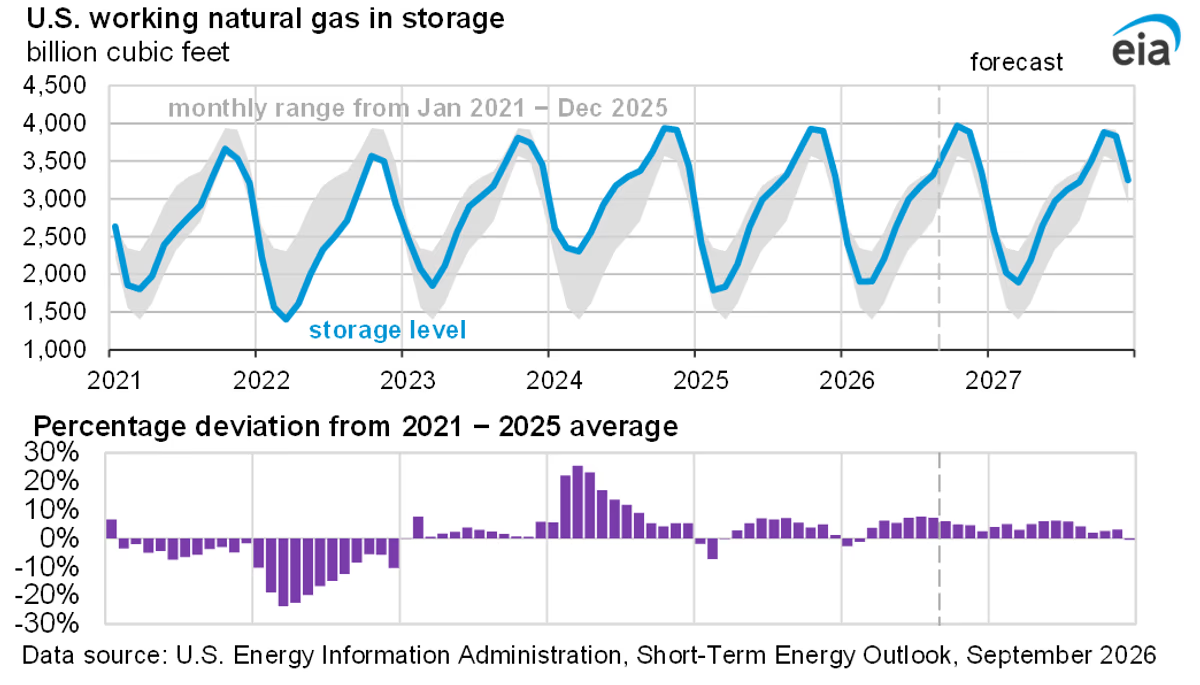
The deal's announcement came the same day Goldman Sachs issued a warning on European gas prices, according to reporting by OilPrice.com on August 24. The bank said prices must rise substantially before December to incentivize enough LNG imports for storage facilities to reach adequate levels ahead of the heating season. Storage has been under pressure partly because Middle East LNG availability has been reduced by ongoing Hormuz transit disruptions.
The EIA reported on August 19 that US crude oil inventories rose 4.4 million barrels for the week ending August 14, a sign of adequate North American supply. Henry Hub natural gas settled at $2.768 per MMBtu on Monday's CME session, reflecting US supply comfort. European spot gas benchmarks face a steeper trajectory, with Goldman Sachs and independent analysts pointing to below-target storage injection rates ahead of a potentially cold northern hemisphere winter.
Comparison to Prior Norwegian Gas Contracts
Norwegian gas supply contracts signed in the aftermath of the 2022 European energy crisis averaged 3 to 5 years in term, as buyers and sellers sought flexibility during a period of price volatility. A 15-year term marks a structural shift, signaling both parties' willingness to accept long-range price and volume commitments. For Uniper, still rebuilding its financial position post-nationalization, a long-dated supply deal reduces procurement risk and provides cost visibility for its German customer base.
For Equinor, the deal locks in a major European buyer at a time when long-term gas demand beyond 2035 remains uncertain under Europe's energy transition policies. Troll production is in a managed decline from its 2000s peak, though Equinor has extended the field's productive life through compression and reservoir management programs. Committing Troll output to Germany through the early 2040s signals that Equinor's production models show the field can meet those obligations without undermining other supply commitments across Europe.
Published by Oil Authority, edited by Adam Humphreys
Submit a Correction
Spotted a factual error? Free account required to submit a correction.