EU Gas Storage at 17-Year Seasonal Low Limits Iran Diplomatic Relief; TTF-Henry Hub Spread Stays at $15.30 Per MMBtu
EU gas storage at 57%, a 17-year seasonal low, limits Iran diplomacy's price impact while the TTF-Henry Hub spread holds at $15.30 per MMBtu.
European natural gas fell alongside crude oil on August 4 but proved significantly more resilient than oil markets facing a geopolitical supply shift. TTF, the European benchmark, eased 2.15% to €56.27 per megawatt-hour on ICE, per Trading Economics. Brent crude dropped 4.23% to near $80 per barrel on the same exchange, while Henry Hub natural gas fell 3.80% to $2.68 per million British thermal units.
The difference in magnitude reflects fundamentally different supply conditions on each side of the Atlantic. An Iran diplomatic thaw eases oil supply risk almost immediately, given Iranian crude can reach markets within weeks of sanctions relief. European gas supply takes far longer to recover: Qatari LNG terminals operating near the Hormuz zone face logistical constraints that persist even after a ceasefire, and Norwegian field restart timelines are measured in months, not days.
EU Storage at a 17-Year Seasonal Low
EU gas storage stood at 57% of working capacity as of early August, the lowest seasonal level since 2009, per Trading Economics. European Union regulations require member states to fill storage to approximately 90% of capacity before November, a target that now demands an aggressive injection campaign over the remaining weeks. Approximately one-fifth of global LNG flows have been disrupted by the Hormuz Strait conflict, per OilPrice.com, reducing the cargoes available to fill European terminals. TTF peaked at €63.7 per megawatt-hour on July 24 before easing on Iran diplomatic developments, but prices remain approximately 70% above year-ago levels, per Trading Economics.
The 57% fill rate compares unfavorably with historical injection targets for this point in the storage season. European storage at this level in early August creates meaningful risk of supply stress by January if winter temperatures approach the seasonal norm. Even if Hormuz diplomacy succeeds and some disrupted LNG returns to market, rerouting cargoes and restarting terminals takes weeks, and regasification infrastructure constrains the rate of rapid injection.
The $15.30 Per MMBtu Transatlantic Spread
TTF at €56.27 per megawatt-hour converts to approximately €16.49 per MMBtu using the standard energy equivalence of one megawatt-hour equaling 3.41 million British thermal units. At an approximate EUR/USD exchange rate of 1.09, this equates to roughly $17.98 per MMBtu. With Henry Hub at $2.68 per MMBtu, the gross spread between the two benchmarks stands at approximately $15.30 per MMBtu. This gap represents the theoretical value of buying U.S. natural gas, liquefying it, shipping it across the Atlantic, and regasifying it for European consumers.
At that spread, every 1 billion cubic feet per day of U.S. LNG export capacity flowing to Europe generates approximately $15.30 million in gross daily arbitrage value, or roughly $5.6 billion annualized per Bcf of daily throughput. U.S. LNG export capacity across all operational facilities is approximately 13 to 14 billion cubic feet per day, implying a theoretical total cross-ocean value transfer of approximately $199 to $214 million per day at prevailing spreads. After liquefaction fees of roughly $2.50 to $3.00 per MMBtu and Atlantic shipping costs of approximately $1.50 per MMBtu, the net margin available to cargo buyers and sellers is approximately $10.80 per MMBtu.
Cheniere, TotalEnergies, and ExxonMobil: LNG Exposure at Scale
Cheniere Energy, the largest U.S. LNG exporter, announced substantial completion of Train 6 at its Corpus Christi Stage 3 expansion in July 2026, per the company's newsroom, adding to its portfolio at Sabine Pass in Louisiana and Corpus Christi in Texas. Cheniere collects a fixed liquefaction toll from its customers, typically in the range of $2.25 to $3.00 per MMBtu, regardless of the Henry Hub-TTF spread. The commodity arbitrage accrues to cargo buyers and their downstream offtake partners. TotalEnergies holds a 16.6% equity stake in the Cameron LNG facility in Louisiana, a three-train export terminal operated by Sempra Infrastructure, giving the French major direct exposure to the Atlantic LNG spread.
ExxonMobil holds a 30% equity stake in Golden Pass LNG, the Texas export terminal under development in a joint venture with QatarEnergy, which holds the remaining 70%. As the Golden Pass facility ramps toward full capacity, both companies gain additional access to the transatlantic spread. The concentration of U.S. LNG output among a handful of major integrated companies means the current $15.30 per MMBtu spread is highly material to their quarterly earnings.
U.S. Gas Market: Abundant Supply, Depressed Price
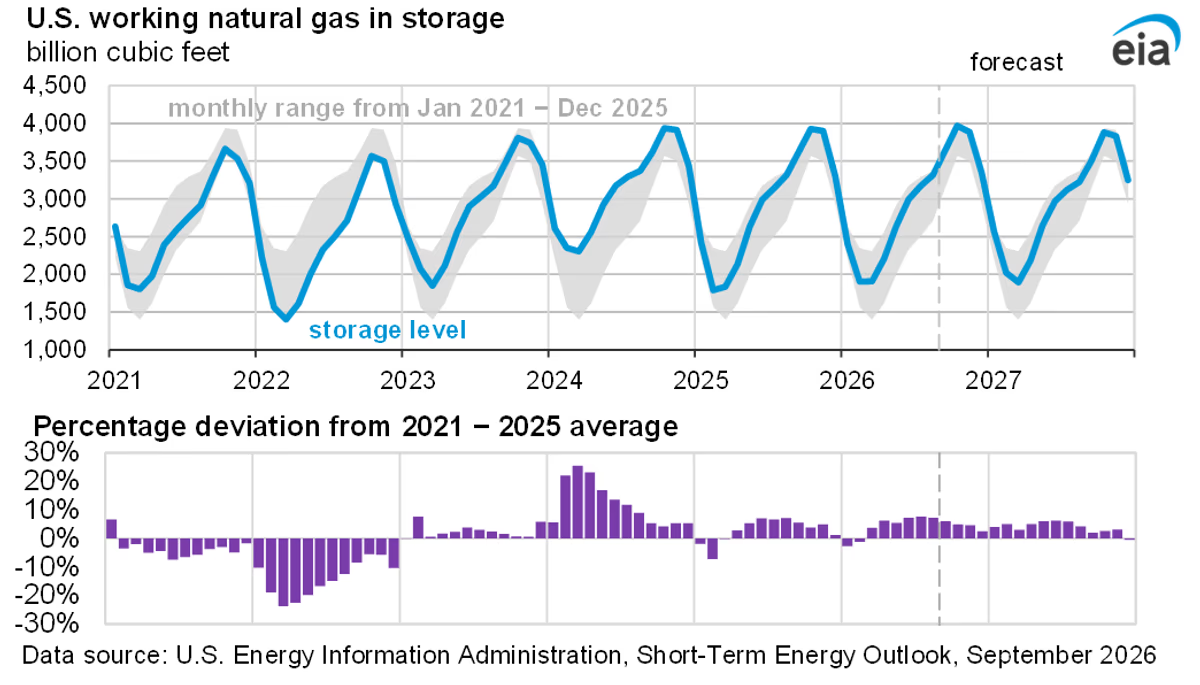
U.S. natural gas working inventories reached 3,084 billion cubic feet for the week ending July 24, 2026, per the U.S. Energy Information Administration's weekly storage report published July 30. That figure sits 185 Bcf above the five-year average for the same calendar week, equivalent to a 6.4% surplus. Inventories were 32 Bcf below year-ago levels, reflecting LNG export demand that has pulled more domestic gas to global markets than the prior year. The EIA will publish the next weekly natural gas storage report on August 6, covering the week ending July 31.
Henry Hub at $2.68 per MMBtu reflects the bearish domestic supply picture. The 6.4% surplus over the five-year average leaves U.S. producers with limited domestic pricing power. LNG exports act as the release valve for Permian Basin and Haynesville Shale gas that would otherwise remain stranded at depressed domestic prices, directing molecules to where the premium is highest, which in August 2026 is clearly in Europe.
Iran Thaw Cannot Quickly Resolve Europe's Winter Risk
The oil market reacted sharply to Iran diplomatic progress on August 3 and 4, with Brent falling more than 4%. European gas proved stickier, falling barely half as much in percentage terms. As detailed in our earlier coverage, Qatar's Ras Laffan LNG terminal declared force majeure, halting shipments that represent a significant share of Europe's LNG import capacity. Even if Hormuz were to reopen fully and Ras Laffan resumed operations, European storage would still need to inject at an elevated rate through October to approach the 90% winter target from its current 57% starting point. BMI analysts described the U.S.-Iran diplomatic outlook as "highly fragile," per Rigzone, meaning supply disruptions may persist well into Q3. Europe enters August with a structural storage deficit that geopolitical thaw cannot quickly resolve.
Published by Oil Authority, edited by Adam Humphreys
Submit a Correction
Spotted a factual error? Free account required to submit a correction.