FERC Sets Oil Pipeline Rate Ceiling at PPI-FG Minus 0.55 Percent for 2026 to 2031, Removing $7.1 Billion From Sector Revenue
FERC's April 24 final rule cut the oil pipeline rate index 133 basis points to PPI-FG minus 0.55 percent, removing $7.1B from sector revenue through 2031.
The Federal Energy Regulatory Commission issued a Final Rule on April 24, 2026, establishing a new oil pipeline rate index of PPI-FG minus 0.55 percent for the five-year period from July 1, 2026, through June 30, 2031. The prior index, covering 2021 through 2026, was set at PPI-FG plus 0.78 percent. The 133-basis-point reduction takes effect in 26 days and will limit how quickly pipeline operators may raise ceiling tariff rates relative to general inflation.
What the Index Controls
FERC uses the oil pipeline rate index to set ceiling levels for interstate crude oil and petroleum product pipeline tariffs across the United States. Roughly 86 percent of interstate oil pipeline rates fall under this indexing methodology, covering approximately 369 pipeline assets, according to East Daley Analytics. Those assets generate an estimated $40.4 billion in annual transportation revenue.
Under the new rate, tariff ceilings will grow more slowly than general inflation for the next five years. Shippers benefit from a lower rate ceiling each year compared with what the prior index would have allowed. FERC itself estimated that the Final Rule will reduce interstate oil pipeline transportation revenues by $7,135,557,869 over the five-year period compared to the prior index, per the commission's own impact analysis in Docket RM26-6.
Compounding EBITDA Headwind for Liquids Pipelines
East Daley Analytics projected the year-by-year earnings impact for the liquids pipeline sector. The firm estimates the index change will generate a $269 million EBITDA headwind in 2026, growing to $820 million in 2027, $1.4 billion in 2028, and more than $2.0 billion by 2029. The escalation reflects the compound nature of the annual rate adjustment: each year's reduced ceiling builds on the prior year's lower base.
Oil Authority calculated the average annual revenue reduction across the five-year period as $1.43 billion, equal to roughly 3.5 percent of East Daley's estimated $40.4 billion annual transportation revenue base. In year one, the impact represents approximately 0.67 percent of that base. By year four, it approaches five percent annually. This compounding structure makes the long-run impact materially different from a single one-time rate cut.
Affected Pipeline Operators and Parent Companies
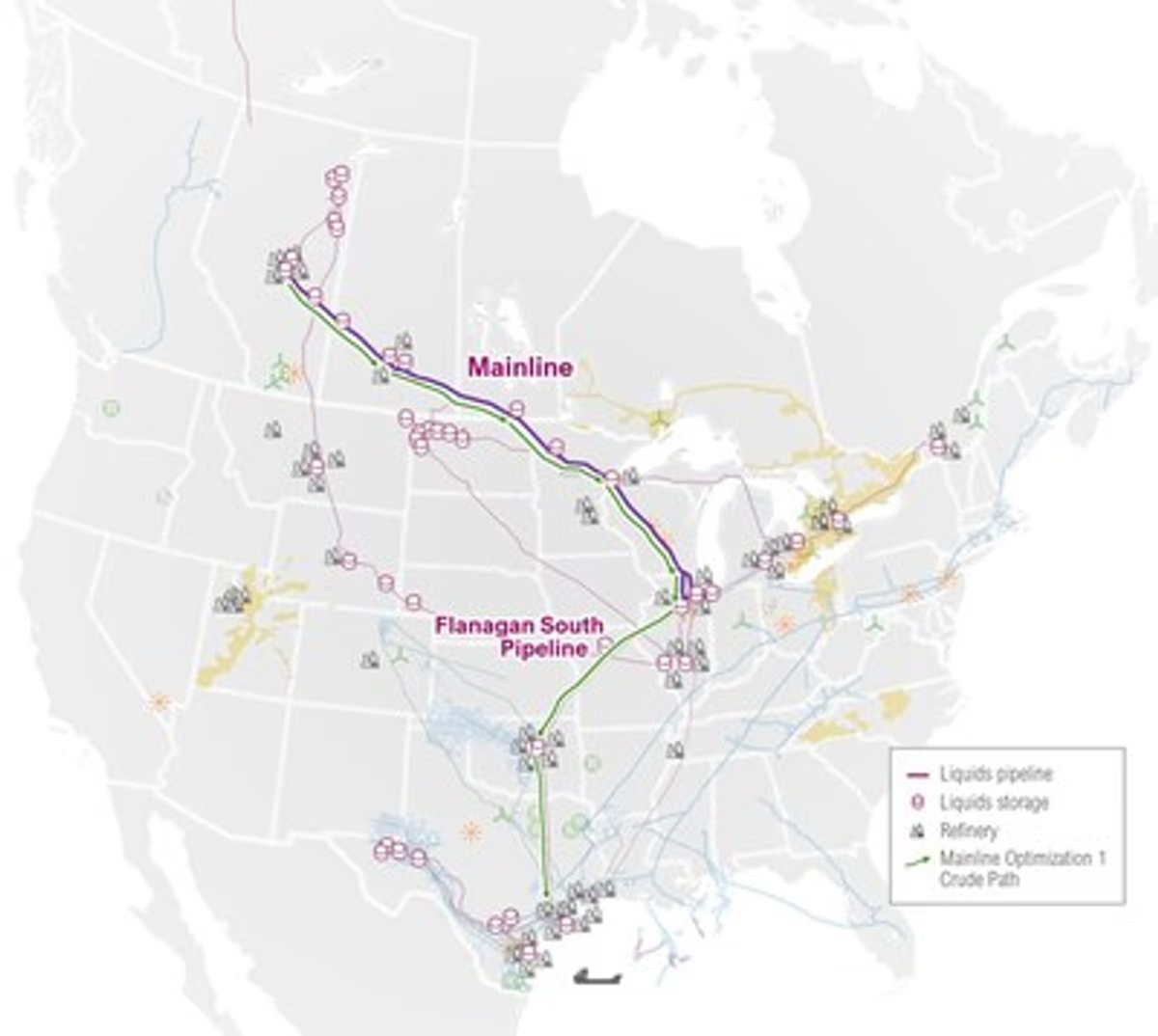
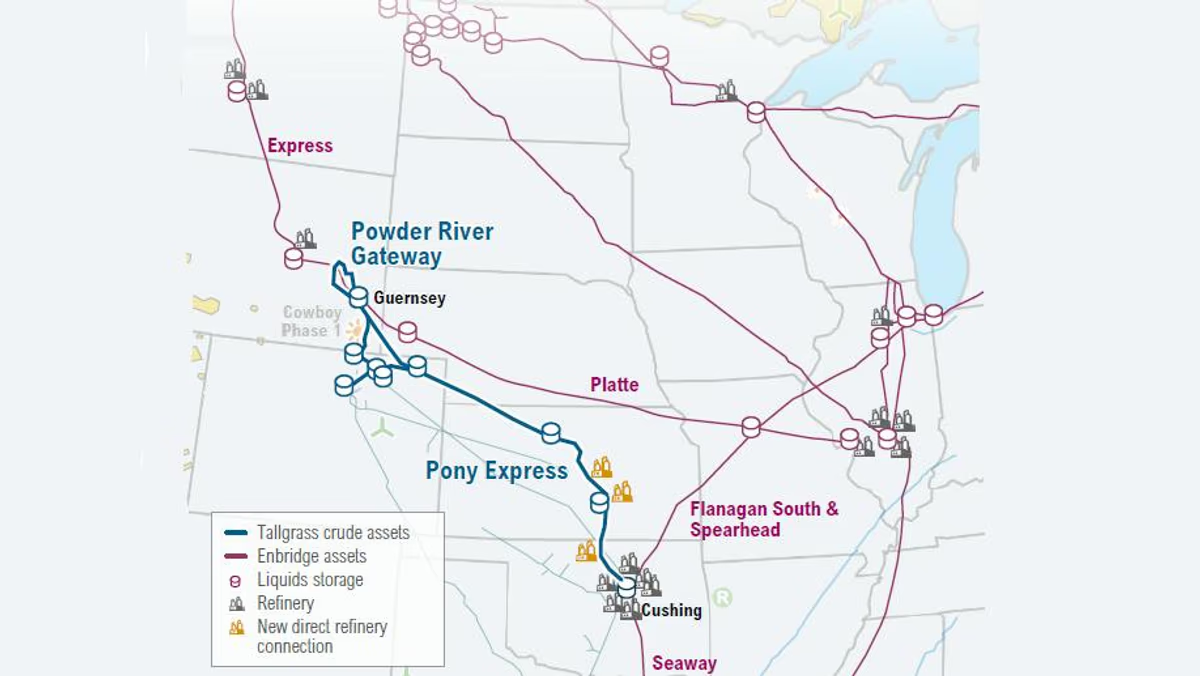
Energy Transfer, Enbridge, ONEOK, and Plains All American are among the largest operators of FERC-regulated interstate oil pipelines, according to East Daley Analytics. Enbridge Inc., headquartered in Calgary, operates multiple FERC-jurisdictional crude oil lines in the United States, including its Line 5 and Line 6 systems, which move Canadian crude oil through the Great Lakes region to refineries in the Midwest and Ontario. Energy Transfer LP operates a broad network of crude oil and refined product pipelines spanning Texas, the Midwest, and the Gulf Coast.
Both Enbridge and Energy Transfer operate complex subsidiary structures. Enbridge's US pipeline assets sit within subsidiary entities including Enbridge Energy Partners and Lakehead Pipe Line Partners. Energy Transfer LP is itself the general partner operating entity above a network of pipeline subsidiaries. The FERC index rate applies at the subsidiary pipeline level, but the earnings headwind aggregates to the consolidated parent in each case.
Operator Alternatives and Litigation Risk
Operators retain one alternative to the index mechanism: a cost-of-service filing. Under FERC rules, a pipeline may pursue a higher rate ceiling if it can demonstrate that its actual costs substantially exceed what the index allows. Holland and Knight noted in its April 2026 analysis that appellate review is anticipated given the unprecedented ROE adjustment and data methodology changes in the Final Rule. Any legal challenge would not stay the July 1 effective date without a court order specifically granting relief.
How FERC Set the New Level
FERC opened Docket RM26-6 in November 2025 with a Notice of Proposed Rulemaking proposing PPI-FG minus 1.42 percent. That proposal drew objections from all parties: pipeline operators pushed for a higher index and shippers sought a lower one. FERC issued its Final Rule on April 24, 2026, settling on PPI-FG minus 0.55 percent. The methodology change excluded resubmitted 2019 cost data, applied the middle 80 percent of cost observations, and averaged each pipeline's DCF-based return on equity with a uniform CAPM return of 8.3 percent.
Published by Oil Authority, edited by Adam Humphreys
Submit a Correction
Spotted a factual error? Free account required to submit a correction.