Iran Strikes U.S. Air Bases in Kuwait and Bahrain as Saudi Supertankers Reroute Around Africa
Iran bombed U.S. air bases in Kuwait and Bahrain July 31 as Saudi supertankers detoured around Africa. Brent settled at $87.93 per barrel on ICE.
Iran's army claimed responsibility July 31 for drone strikes against Ahmad al-Jaber Air Base in Kuwait and Sheikh Isa Air Base in Bahrain. The military statement described the attacks as "a direct response to recent U.S. aggressions on southern Iran," per OilPrice.com. The strikes resumed just two days after Iranian forces announced a halt to attacks, ending a brief pause in hostilities.
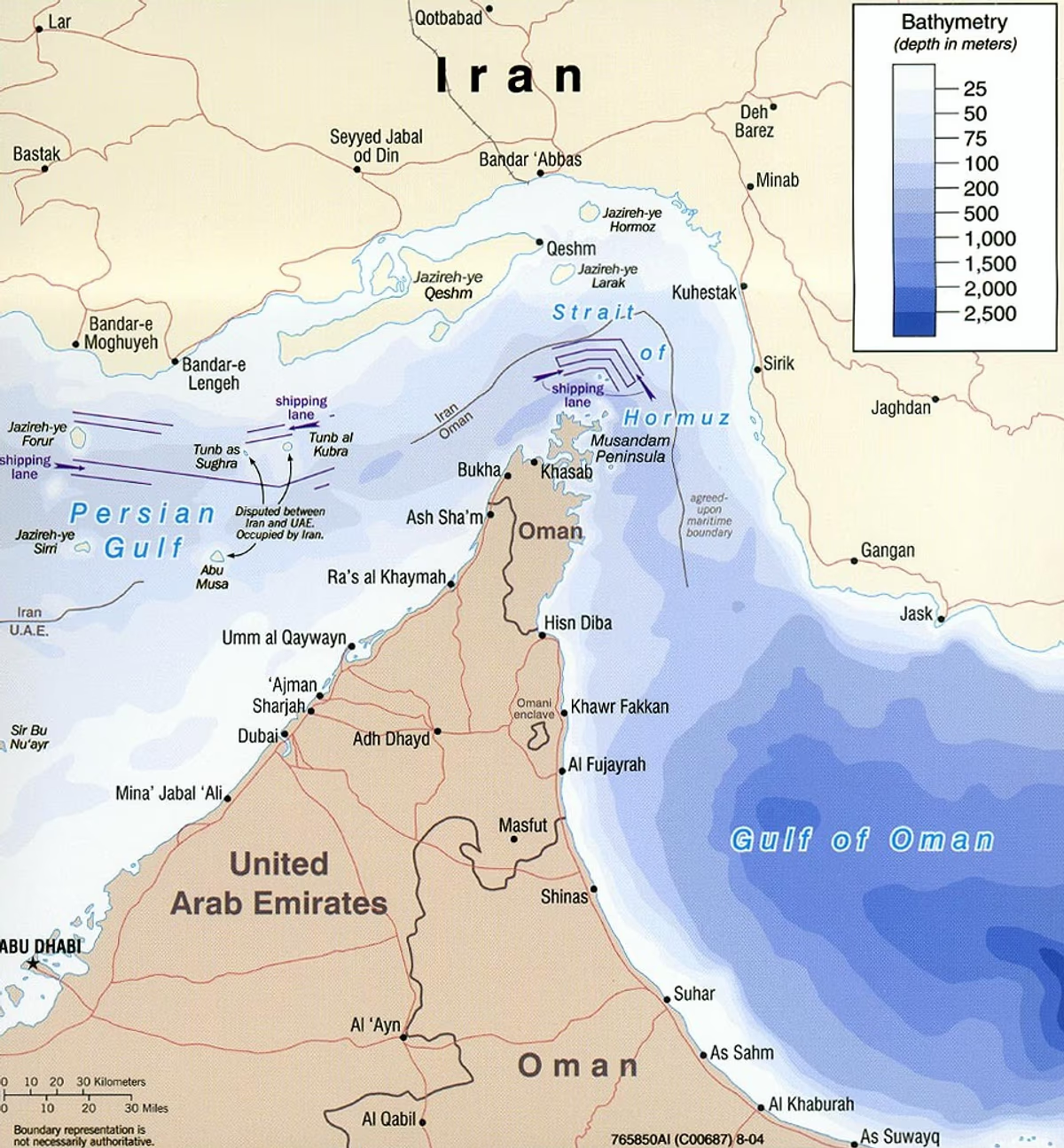
The air-base strikes mark a broadening of the conflict's geography. Prior Iranian military action had concentrated on maritime assets, including the seizure of two tankers in the Strait of Hormuz on July 31, as Oil Authority reported. Targeting U.S. installations in Kuwait and Bahrain introduces a land-and-air dimension absent from the conflict's earlier phases.
Brent Holds Below $90 Despite the Escalation
Brent crude settled at $87.93 per barrel on ICE on July 31, capping a 22.86 percent monthly gain. WTI settled at $84.67 per barrel on CME the same day. Prices held in the upper $80s despite the air-base strikes, as roughly 13 million barrels per day continued to leave the Persian Gulf, per OilPrice.com. Improving tanker traffic through the Strait of Hormuz compared to earlier conflict peaks has kept prices from breaking above $90 per barrel.
Six Saudi Supertankers Reroute Around the Cape
Six empty Saudi supertankers heading to load cargoes turned away from the Bab el-Mandeb strait in the Arabian Sea and set course around Africa, per OilPrice.com reporting from July 31. Additional vessels are en route to South African refueling hubs including Durban and Algoa Bay, or onward to Gibraltar before European delivery. The Africa route adds at least two weeks to each voyage compared to the Bab el-Mandeb and Suez Canal path. Saudi Arabia has also moved some crude flows to an overland pipeline through Egypt as a parallel contingency.
Calculating the Fleet Throughput Impact
Six VLCCs each carry roughly 2 million barrels of crude per laden voyage. The 14-day minimum rerouting delay means 12 million barrels of Saudi crude takes two additional weeks to reach European and Asian refiners. Across those six vessels, the extra time in transit represents 84 combined vessel-days removed from the normal shipping cycle. In a market where Brent has already gained 23 percent in July, the timing of those deferred deliveries amplifies the existing supply disruption rather than adding to its scale.
Saudi crude output has already fallen by approximately 25 percent from pre-conflict Q2 levels, according to Oil Authority's July monthly price wrap. Tanker rerouting compounds the supply-side constraint by extending delivery time without reducing the refiners' need for crude. Higher tanker day-rates follow when effective vessel capacity tightens while demand for cargoes holds.
How the Conflict Has Escalated Since Late July
The conflict has moved from maritime interdiction to strikes on Gulf Cooperation Council military infrastructure in less than a week. The Houthi blockade of Saudi Red Sea shipments added rerouting pressure on tankers that had previously transited Bab el-Mandeb. Friday's Kuwait and Bahrain air-base strikes extend that pattern to land-based targets hosting U.S. forces. Each escalation step has raised the floor on risk premiums priced into Brent and WTI futures.
Brent's $13.93 premium above the EIA's Q3 2026 price forecast of $74 per barrel reflects the cumulative repricing of Persian Gulf supply risk. The EIA's pre-conflict Short-Term Energy Outlook assumed neither Hormuz tanker seizures nor attacks on GCC military installations. Both conditions have materialized, and the market has moved accordingly.
Published by Oil Authority, edited by Adam Humphreys
Submit a Correction
Spotted a factual error? Free account required to submit a correction.