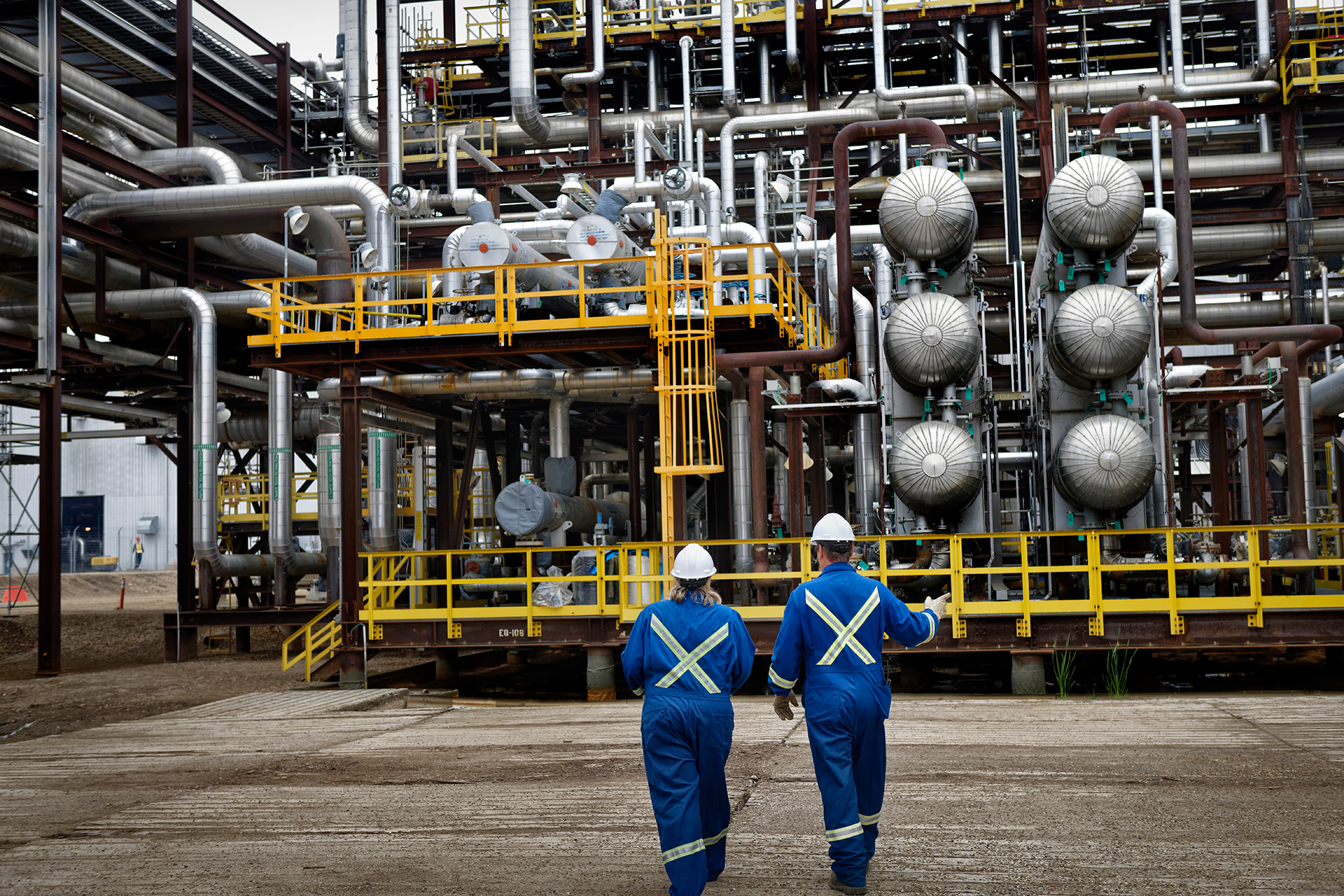
Ukrainian Drone Hits Orenburg Gas Plant, Cutting Karachaganak Output 25% and Costing Shell, Eni and Chevron $3.6 Million Per Day
Ukraine's drone struck Russia's Orenburg gas plant Thursday, forcing a 25% output cut at Kazakhstan's Karachaganak field, operated by Shell, Eni, and Chevron.
Ukraine struck Russia's Orenburg Gas Processing Plant with drones in the early hours of Thursday, June 26, igniting a fire at the facility. The attack forced Kazakhstan to reduce natural gas production at the Karachaganak oil and gas field by approximately 25 percent. Kazakhstan Energy Minister Yerlan Akkenzhenov confirmed the cut, stating: "Naturally, we have reduced the gas intake."
Karachaganak is jointly operated by Shell and Eni, each holding a 29.25 percent stake in the Karachaganak Petroleum Operating consortium. Chevron holds 18 percent, Russia's Lukoil holds 13.5 percent, and state company KazMunayGas holds 10 percent. The field sits approximately 23 kilometres east of Aksay in western Kazakhstan and produces around 200,000 barrels per day of oil and condensate alongside 650 million cubic feet per day of natural gas.
Production Loss and Revenue Impact
Before the attack, Karachaganak gas production ran at approximately 34,000 metric tons per day. Following the disruption at Orenburg, output dropped to around 25,000 metric tons per day, a reduction of roughly 9,000 metric tons per day. Oil and condensate output declined proportionally, per the Energy Ministry.
A 25 percent reduction from Karachaganak's 200,000-barrel-per-day oil and condensate baseline removes approximately 50,000 barrels per day from Kazakhstan's export stream. At ICE Brent's Friday, June 26 settlement of $71.99 per barrel, that translates to roughly $3.6 million per day in combined liquids revenue across all five operators. Shell and Eni each face a daily shortfall near $1.05 million from their 29.25 percent stakes. Chevron's 18 percent interest accounts for approximately $648,000 per day, and Lukoil's 13.5 percent stake for around $486,000 per day.
Orenburg: Kazakhstan's Critical Gas Processing Choke Point
Karachaganak's natural gas cannot reach export markets without first passing through the Orenburg Gas Processing Plant on Russian territory. That geographic dependency gives conflicts occurring inside Russia direct reach over Kazakhstani production volumes. A similar Ukrainian drone attack on the Orenburg complex in October 2025 forced comparable reductions at Karachaganak, a precedent that underscores the structural vulnerability of the processing route.
Lukoil's 13.5 percent stake introduces an unusual dynamic. The Russian company co-owns a field whose gas exports were cut because Ukrainian drones damaged the Russian plant that processes the gas. KazMunayGas, the Kazakhstani state company, has not issued a public statement on the disruption.
Domestic Supply Unaffected, Ministry Says
Minister Akkenzhenov confirmed that Kazakhstan's domestic gas distribution remained uninterrupted. The cut affected gas volumes earmarked for export rather than internal supply. Karachaganak oil and condensate moves separately via the Karachaganak Oil Pipeline to the Caspian Pipeline Consortium terminal at Atyrau, providing a different export route that bypasses the Russian gas processing dependency.
Market Context: Brent Settles at Four-Month Low
ICE Brent crude settled at $71.99 per barrel on Friday, June 26, down 4.34 percent on the day, per ICE Futures Europe data. CME WTI crude closed at $69.23 per barrel on the same session, down 3.74 percent. Resumed tanker traffic through the Strait of Hormuz drove both benchmarks to their lowest settlements since late February. The Karachaganak supply disruption added geopolitical supply risk but was insufficient to reverse the Hormuz-driven selloff.
Published by Oil Authority, edited by Adam Humphreys
Submit a Correction
Spotted a factual error? Free account required to submit a correction.