Hormuz LNG Disruption and European Storage Deficit Push TTF to €55.55 Per MWh, Opening $16 Per MMBtu Gap With Henry Hub
TTF settled at €55.55/MWh Friday while Henry Hub sits at $2.66, a $16/MMBtu gap as Hormuz LNG disruption strips Europe of Qatari spot cargoes.
European natural gas futures closed the week in a different world from their North American counterpart. TTF front-month futures settled at €55.55 per megawatt-hour on Friday, August 7, per ICE Futures Europe, up 71.19 percent year-over-year and 12.91 percent over the past month. Henry Hub finished at $2.6620 per MMBtu on the same day, per CME Group, near its lowest level since April and down 17 percent month-over-month. The two benchmarks measure the same commodity, but they no longer live in the same market.
Hormuz Is Cutting Off Europe’s LNG Backstop
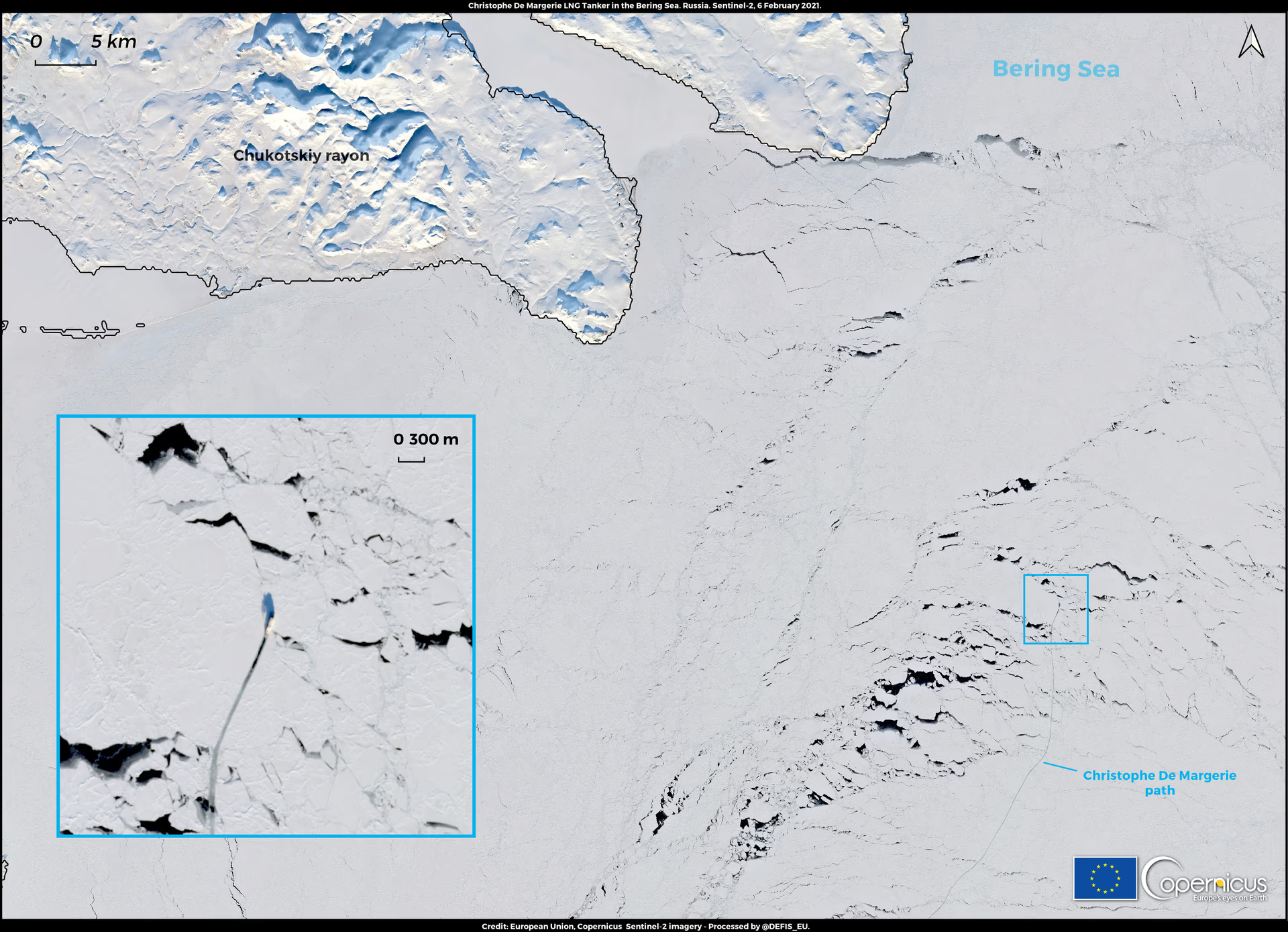
The Strait of Hormuz carried 130 to 140 daily transits before the current conflict disrupted shipping. It now operates at only 3 to 4 percent of that baseline, with just 33 transits recorded across Monday through Thursday of this week, according to Oil Authority reporting from August 7. Qatar ships virtually all of its LNG cargo through Hormuz. With that route blocked, European terminal operators cannot cover storage gaps with Qatari spot cargoes during the August injection window.
An Iran-Oman shipping corridor deal has agreed on geographic coordinates for a proposed bypass lane. Inbound vessels would use a northern lane through Iranian waters and outbound ships a southern lane through Omani waters. However, the framework requires a 30-day mine-clearing operation before commercial shipping resumes, per the same Oil Authority reporting. That timeline pushes meaningful LNG flow resumption to late August at the earliest.
The Henry Hub-TTF Spread: $16.16 Per MMBtu
Converting TTF’s Friday settlement into dollar terms makes the spread precise. At €55.55 per MWh and Friday’s EUR/USD rate of 1.1559, TTF equates to approximately $18.82 per MMBtu. That conversion uses the standard factor of 3.41214 MMBtu per megawatt-hour. Henry Hub at $2.6620 per MMBtu leaves a gross spread of $16.16 per MMBtu between US-landed gas and European terminal prices, per TradingEconomics data.
That $16.16 gap is not pure profit for US LNG exporters. Liquefaction tolls, shipping, and regasification add roughly $4 to $5 per MMBtu to the landed cost of a Gulf Coast-to-Europe cargo. At current spreads, net margin on a diverted US LNG cargo runs roughly $11 to $12 per MMBtu. A typical Atlantic-size cargo of approximately 3 billion cubic feet of gas-equivalent earns roughly $33 to $36 million above its Henry Hub cost basis at that net margin.
Archive Callback: What Was Different at the Troll TWIN FID
When Equinor received final investment approval for the Troll TWIN gas project in June 2026, TTF was trading near €41.34 per MWh. As Oil Authority reported on August 6, the price rise to €54.47 by early August added approximately €1.52 billion to the project’s lifetime gas revenue, of which Equinor’s 30.55 percent stake captured roughly $536 million. TTF has since climbed a further €1.08 to €55.55, widening the gap above the FID base price to €14.21 per MWh. The Troll TWIN economics have strengthened since that article was written.
Norwegian offshore gas supply cannot be surged beyond contracted plateau rates to offset the shortfall. Norwegian export pipelines through the Gassco system already run near maximum utilization during peak summer injection periods. The Hormuz gap cannot be closed by Norwegian incremental volume alone.
European Storage and the Winter Timeline
European gas inventories entered August at their lowest level since 2011, per OilPrice.com, as the winter 2025-26 drawdown ran deeper than the five-year seasonal average. Standard injection-season targets call for storage to reach roughly 90 percent of capacity by October 1 before northern heating demand peaks. With both Qatari LNG and Norwegian swing capacity constrained, European operators depend more on US LNG cargo diversions than at any point since the 2022 supply crisis.
US LNG export pacing reached 37 vessels totaling 139 billion cubic feet in a single week during January 2026, per EIA weekly natural gas export data. Whether those cargoes divert to Europe or Asia depends on the JKM-TTF spread. JKM, the Japan Korea Marker for Asian spot LNG, tends to carry a premium over TTF during Asian winter peaks. Through the summer, TTF’s current level holds a supply-pull advantage for European buyers competing for Atlantic Basin cargoes.
What to Watch This Week
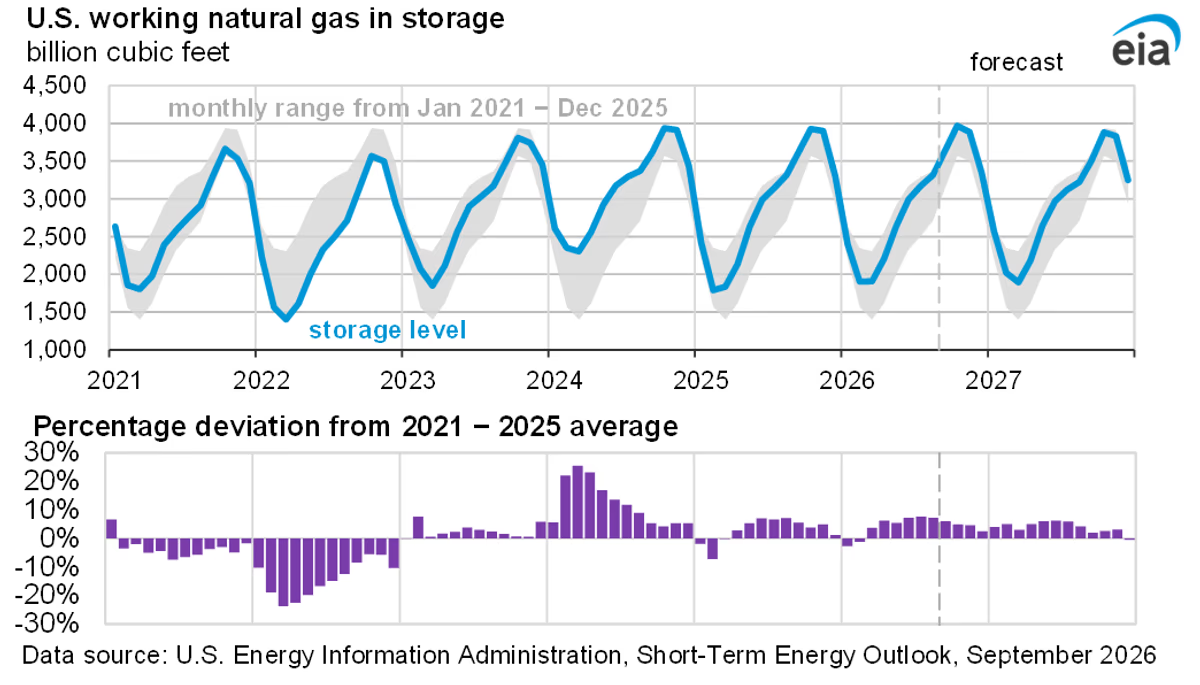
The EIA Weekly Natural Gas Storage Report covering the week ending August 8 publishes on Wednesday, August 12. A smaller-than-expected US injection would modestly support Henry Hub and narrow the transatlantic spread. A larger-than-expected injection would widen it further. European storage data from Gas Infrastructure Europe updates daily and remains the most direct real-time indicator of whether the August deficit is deepening.
Published by Oil Authority, edited by Adam Humphreys
Submit a Correction
Spotted a factual error? Free account required to submit a correction.