Also known as a roughneck.
What Is an Oil Rig Floorhand?
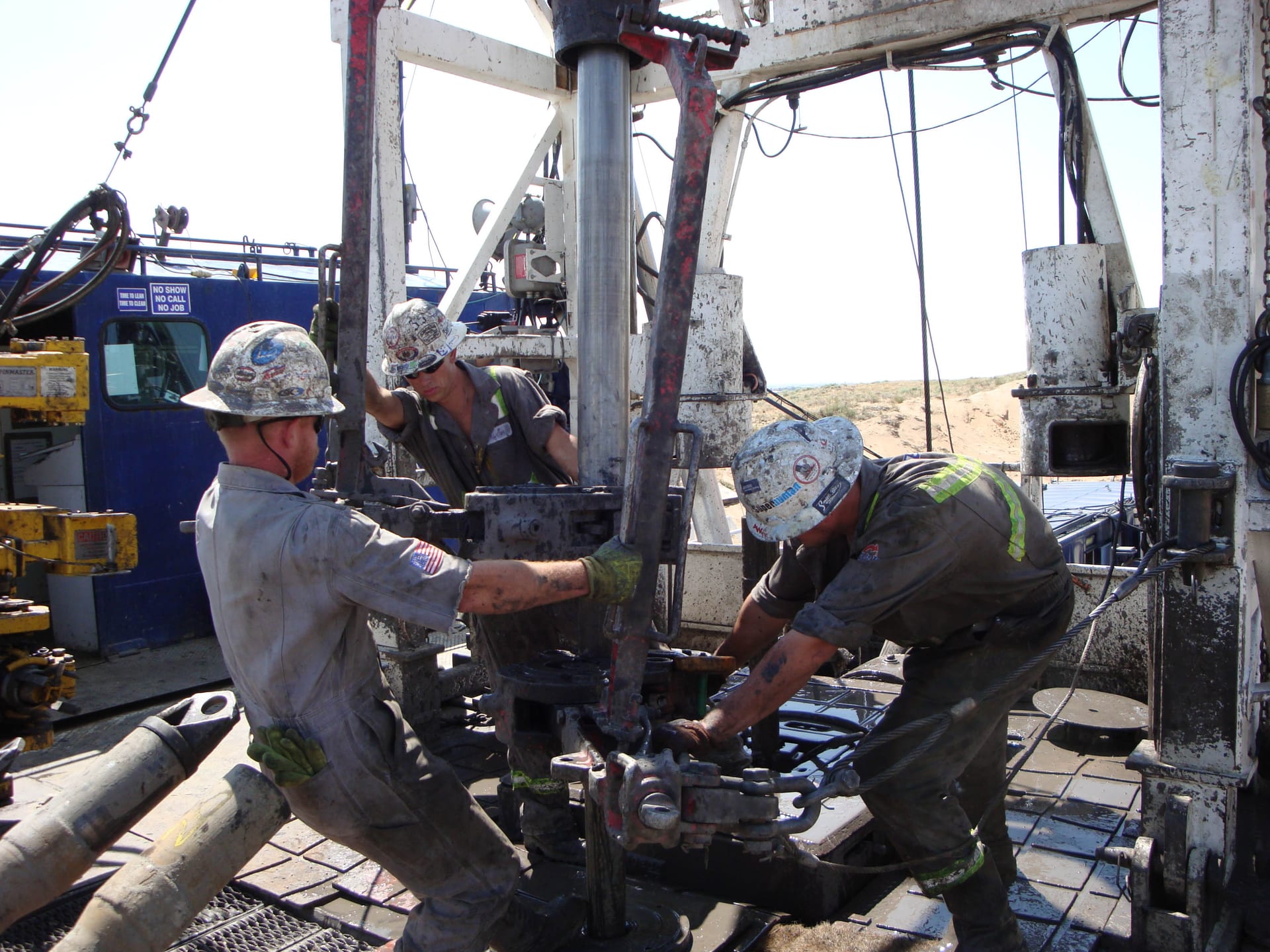
A floorhand works with drill pipe on an oil rig. They help the driller make and break pipe joints and move pipe in and out of the well. They also check tools and clean the drill floor. Some Canadian crews have a junior role called leasehand.
Where the Name Roughneck Came From
The word roughneck is older than the oil rig job. In the 1800s, Americans used it for people they saw as tough or rough. By 1917, people used it for oil rig workers. Today, floorhand is the job title for drill-floor work. Roughneck is still a common name for it.
What Does a Floorhand Do on an Oil Rig?
A floorhand spends much of a shift helping the crew move pipe. As pipe goes in or out of the well, floorhands help set slips and use elevators. They use manual tongs or an iron roughneck to make and break pipe joints, following rig procedures.
The work changes when the rig moves or the crew is between pipe runs:
- Help set up and take down rig equipment. Assist with the blowout preventer under supervision.
- Help the derrickhand mix mud products and keep the shakers and mud-pit area clean.
- Help the motorhand check oil or coolant as assigned. Inspect hand tools and report leaks or faults.
- Unload supplies, move mud sacks within assigned lifting duties, and clear mud, ice, tools and hoses from walkways.
On older rigs, the floorhand assigned to the spinning chain may be called a chainhand. A slips hand is the floorhand who handles the slips. Slips hold the pipe while the crew makes or breaks a connection.
Assignments change with rig design and training. The driller controls the drilling operation. Floorhands carry out their assigned tasks and support the crew.
Floorhand Wages and Job Outlook on Canadian Oil Rigs
Some Western Canadian land drilling jobs advertised CAD 42.22 per hour for floorhands in 2026.
Canada’s 2026–2035 forecast covers the wider drilling and well-service labourer group. It projects about 500 openings, including about 400 due to retirements. It includes jobs outside the rig floor, so it does not predict one contractor’s hiring. Drilling activity and seasonal programs still affect when crews are needed.
Floorhand Wages on U.S. Oil Rigs
Precision Drilling’s experienced floorhand posting in West Texas, checked in November 2026, listed USD 28.50 per hour. It asked for more than one year of drilling rig experience. This is an advertised starting rate for that assignment.
Per Diem, Hotels and Meals for Oil Rig Floorhands
A per diem, or living-out allowance, helps pay for a hotel and meals when you work away from home. What you get can depend on how far you live from the site. The company may pay less if it gives you a room or meals.
What is the difference between floorhands on Canadian and U.S. oil rigs?
Core pipe-handling duties are similar. On some Canadian crews, leasehands rank below floorhands. U.S. employers use both floorhand and floorhand/roughneck as job titles.
Floorhand Jobs on UK, Norwegian and Middle Eastern Oil Rigs
UK and North Sea Offshore Floorhand Jobs
UK offshore employers use floorhand and roughneck for drill-floor work on platforms and mobile drilling rigs. A deck-based roustabout job can be a route into the drilling crew. Offshore rotations keep workers away for the full hitch, with travel arrangements set out in the offer.
Norwegian Offshore Floorhand Jobs and Pay
A boredekksarbeider is a Norwegian floorhand. Under the 2026–2028 Styrke mobile-rig agreement, group D earns NOK 733,694 to 822,703 per year (about USD 78,900 to 88,500) before holiday pay. Workers who meet group C rules earn NOK 765,442 to 858,457 (about USD 82,300 to 92,400) on the same basis.
The rates took effect June 1, 2026. They apply to a rotation of two weeks on and four weeks off. The USD amounts use the November 5, 2026 exchange rate.
Middle Eastern Oil Rig Floorhand Jobs
Floorhands and roughnecks work on land and offshore rigs in Saudi Arabia, the UAE and neighbouring countries. The offer needs to state the rotation and whether travel days are paid.
Oil Rig Safety and Training for Floorhands
Floorhands work around moving pipe, suspended loads and loud equipment. Lifting and awkward postures can cause strains. Mud products and other chemicals need controlled handling. Work at a sour well adds the risk of breathing hydrogen sulphide.
Pre-job briefings set the task sequence, communication and restricted areas. Crews check their gear and report faults. If a task is unsafe, they follow the site rules to stop work. An iron roughneck is machinery and still needs trained personnel.
Canadian Oil Rig Floorhand Certificates
Western Canadian drilling contractors commonly ask for current H2S Alive and First Aid with CPR. The first course covers hydrogen sulphide hazards. An awareness course does not replace that certificate.
Common Safety Orientation (CSO) may also be required. Job orientation covers WHMIS for work with hazardous products and TDG for work that involves shipping or hauling dangerous goods.
U.S. Oil Rig Floorhand Training
U.S. land rigs use safety orientation such as IADC RigPass. An employer may also specify a Basin United endorsement. Gas-safety training and First Aid/CPR depend on the assignment. The job posting identifies the required courses.
Forklift certification and IADC WellSharp well-control training can be preferred qualifications for a floorhand. They serve different purposes from basic safety orientation.
Floorhand Training Provided After Hiring
Some drilling companies provide required courses after hiring.
Offshore Floorhand Training and Access Requirements
Offshore jobs can add survival and helicopter-escape training. U.S. assignments may require SafeGulf orientation and a TWIC card for unescorted access to secure maritime areas. UK work calls for accepted OPITO training and an offshore medical. CA-EBS means compressed air emergency breathing system. Norwegian assignments require locally accepted certificates.
How to Get a Floorhand Job and Advance on an Oil Rig
On crews with a leasehand position, workers can start there before moving into a floorhand job. They can progress through motorhand, derrickhand and assistant driller roles before becoming a driller or rig manager. Crew size and rig design change the sequence. Advancement depends on demonstrated skills, drilling activity and available positions.
Some employers accept candidates without rig experience while asking for a record of physical work. Precision's Canadian posting requests two years of recent outdoor heavy labour or rig experience. Its assessment includes lifting up to 75 lb, about 34 kg. That is one employer's requirement, rather than a universal lifting standard.
Applications need a clear record of physical work, equipment experience and current certificates. A rig log shows which tasks you did under supervision and which tests you passed.
Floorhand and Roughneck Job Titles on Oil Rigs
- Roughneck: commonly the same drill-floor role. In informal use, it can include other rig workers.
- Floor hand or floorman: employer and regional variants.
- Boredekksarbeider: Norwegian drill-floor worker, subject to local qualifications and agreement classification.
- Rig hand: a broader title that needs a duty check.
A roustabout works in a separate deck or general support role. A leasehand is a junior position on Canadian crews that include one.
Questions About Floorhand Experience and the Leasehand Position
Is a leasehand below a floorhand on Canadian oil rigs?
On crews that include both positions, the leasehand is the junior crew member. Savanna lists leasehand separately in its drilling crew, and Precision advertises separate leasehand and floorhand rates. Other crews hire directly into the floorhand position. Calling every floorhand the lowest position would miss that difference.
Can floorhands start oil rig work without experience?
Some floorhand advertisements accept related labour experience in place of rig experience. Entry standards still differ: Precision asks for recent outdoor heavy labour, while AKITA has advertised positions for experienced floorhands. Applications need to match the stated experience level and the contractor's assessment and training requirements.
Challenges of Working as a Floorhand on an Oil Rig
Extreme Heat and Cold for Oil Rig Floorhands
Floorhands face extreme heat and cold. Texas air temperatures can exceed 110°F (43.3°C). Monahans recorded 120°F (48.9°C) in 1994. RP Drilling describes Arctic air temperatures of -50°F (-45.6°C), before wind chill, with wind-chill values reaching -100°F (-73.3°C). Rig work limits depend on the site and its safety plan.
Long Shifts and Rural Travel for Oil Rig Floorhands
A 12-hour shift can be followed by a long drive or crew-bus ride. Gravel roads and off-road access tracks may be muddy, icy or difficult to see in poor weather. A switch from days to nights can throw off your sleep. Travel cuts into the time you have to rest.
Time Away From Friends and Family as a Floorhand
A hitch can mean weeks away from friends and family, missing birthdays, holidays or time with children. Keeping in touch has to fit around shifts and sleep. Remote locations can also have limited phone service.
Road Bans and Interruptions to Floorhand Work
In Western Canada, spring breakup and road bans can stop heavy rig moves when thawing roads cannot carry the loads. Drilling may pause or start late. That can mean fewer paid hours or a gap between jobs. Wind, lightning and poor access can also interrupt work.
Perks of Working as a Floorhand on an Oil Rig
Floorhands learn to handle pipe and use rig equipment alongside experienced crew members. That experience can help them move into a motorhand position. Some rotations give floorhands several days off in a row between hitches.