Alberta Targets July 1 Submission for 1-Million-Bpd Pacific Pipeline as WCS Discount Persists at $16 Per Barrel
Alberta plans a July 1 federal submission for a 1-million-bpd Pacific pipeline, seeking to narrow WCS crude's persistent $16 per barrel discount to WTI.
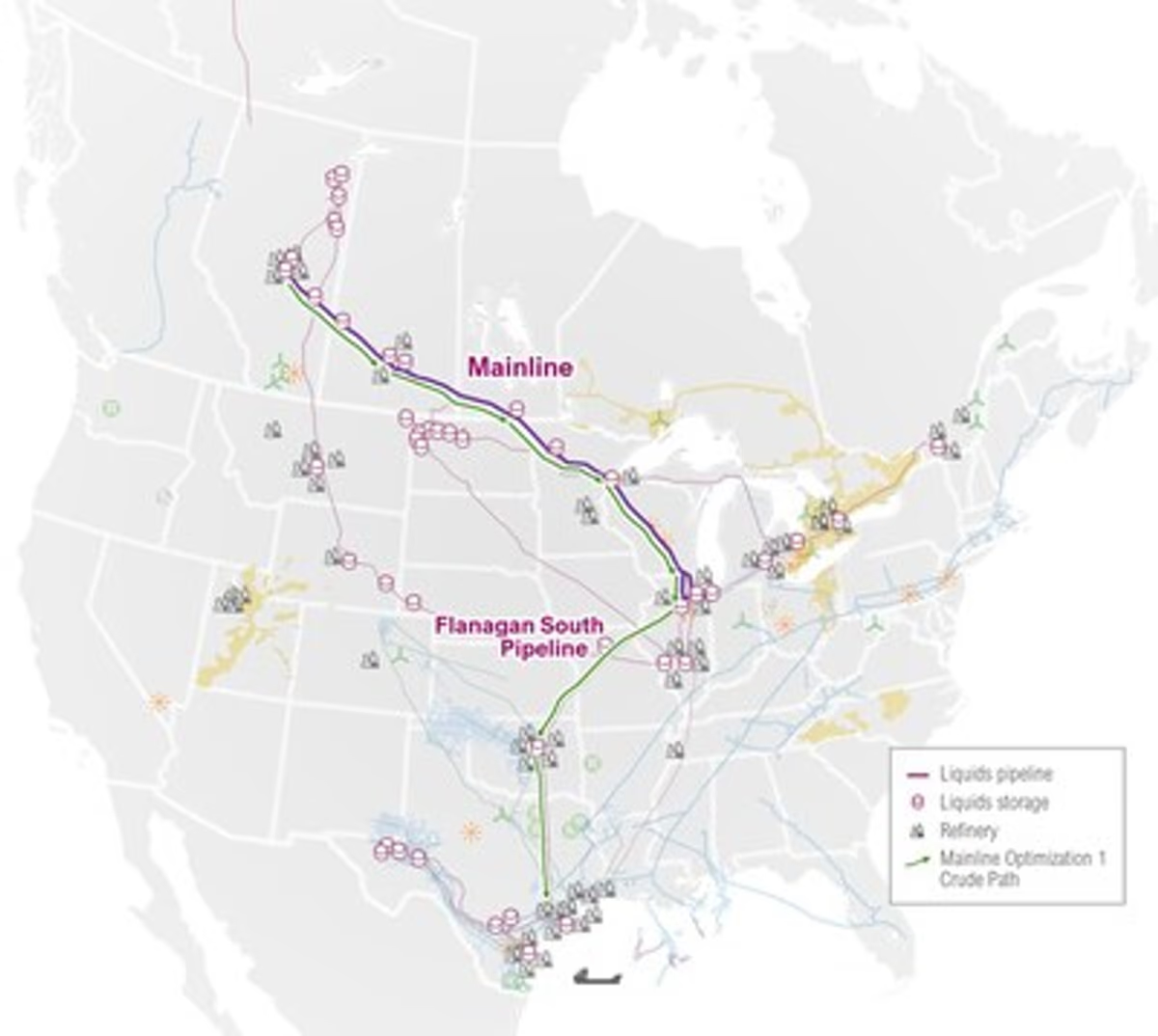
Alberta's government plans to submit a proposal for a one-million-barrel-per-day oil pipeline to Canada's Pacific Coast to the federal Major Projects Office by July 1, 2026. The province has contributed $14 million in planning funds and named the Alberta Indigenous Opportunities Corporation as the vehicle for Indigenous co-ownership. Alberta will propose a general corridor through northern British Columbia rather than a specific path, according to Minister of Indigenous Relations Rajan Sawhney. No route has been finalized, as consultations with First Nations communities and BC provincial authorities remain incomplete.
Federal Timeline and Designation Targets
Beyond the July 1 submission, Alberta targets October 1, 2026 for federal designation of the project as a matter of national interest. Ottawa separately plans to greenlight construction by fall 2027, according to BNN Bloomberg reporting from May 15. The provincial government has indicated construction could commence as early as September 1, 2027. CIBC analysts described that construction start as a best-case scenario, given mandatory Indigenous consultation requirements and BC approvals still outstanding.
WCS Discount: A $19-Per-Barrel Gap to the International Benchmark
Western Canadian Select crude traded at $16.30 per barrel below West Texas Intermediate at Hardisty, Alberta, as of late May 2026, according to brokerage CalRock data reported by the BOE Report. At that differential against Wednesday's WTI settlement of $90.48 per barrel, WCS Hardisty carried an implied value of $74.18 per barrel. ICE Brent settled at $93.44 per barrel on Wednesday, placing Alberta heavy oil $19.26 per barrel below the international benchmark.
Over one million barrels per day of new Pacific capacity, that $19.26 differential represents $19.26 million per day in forgone revenue for Alberta producers, or $7.0 billion annually. Trans Mountain's expansion, completed in May 2024, added 590,000 barrels per day of Pacific access and helped narrow the WCS-WTI spread from peaks above $30 per barrel. A second pipeline of the proposed scale would provide Alberta's oil sands producers a structural exit from the landlocked pricing discount that has constrained netbacks for decades.
Alberta Oil Sands Producers and Parent Company Context
Four companies hold the largest stakes in Alberta oil sands output and would be the primary direct beneficiaries of expanded Pacific export access. Suncor Energy operates Oil Sands Base, Fort Hills, and holds a 58.7% interest in Syncrude Canada; combined oil sands production regularly exceeds 750,000 barrels per day. Canadian Natural Resources is the largest producer of WCS-grade heavy crude from Athabasca operations and would gain the most throughput benefit from a new Pacific route. Cenovus Energy, which absorbed Husky Energy in 2021, operates the Christina Lake and Foster Creek thermal projects.
Imperial Oil holds the Kearl oil sands mine and the Cold Lake thermal project. ExxonMobil owns approximately 69.6% of Imperial Oil, making Kearl and Cold Lake key assets within ExxonMobil's Canadian unconventional portfolio. A Pacific route delivering near-Brent netbacks would improve realized pricing across all four operators, reducing the structural WCS discount that has historically eroded heavy oil economics by $10 to $30 per barrel depending on pipeline capacity conditions.
Investor Interest and Outstanding Challenges
Sovereign wealth funds have signaled willingness to take 15% to 30% minority stakes in the pipeline, according to OilPrice.com. The Alberta government expects a private sector proponent to step forward once regulatory designation is secured. No corporate proponent has been named as of the July 1 submission date, and the provincial government remains the sole formal applicant. The project aligns with federal ambitions to establish Canada as an energy exporter independent of US tariff exposure, a priority accelerated by trade tensions with the Trump administration.
Indigenous consultation remains the primary schedule risk. Alberta's proposed corridor would cross territories where First Nations and Metis communities require government-to-government consultation before a route can be selected. Environmental groups have announced opposition, and BC provincial approvals add a regulatory layer beyond the federal Major Projects Office process. The Alberta government's $14 million planning investment is modest relative to the multi-billion-dollar project cost, but the province has framed the corridor approach as the fastest path through the approvals process.
Published by Oil Authority, edited by Adam Humphreys
Submit a Correction
Spotted a factual error? Free account required to submit a correction.