Blackcomb Pipeline Targets Q3 2026 Launch as Gas Constraints Cap Permian Crude at 6.2 MMbbl/d
WhiteWater, MPLX, and Enbridge target Q3 2026 for Blackcomb Pipeline's 2.5 Bcf/d Permian launch, a project analysts say can unlock stalled crude growth.
WhiteWater Midstream and its joint venture partners have reached a final investment decision on the Blackcomb Pipeline, a 2.5-billion-cubic-foot-per-day natural gas conduit from the Permian Basin to South Texas targeting Q3 2026 in-service, according to the EIA's Natural Gas Pipeline Projects Tracker. The project addresses the core bottleneck holding Permian Basin oil production at a plateau near 6.2 million barrels per day. Gas takeaway constraints, not geology, are the primary limit on associated crude production in the basin.
The Gas-Oil Production Bottleneck
Permian Basin oil output has held near 6.2 million barrels per day for several months, even as the rig count fell 10 to 13 percent year-over-year, according to analysis by TGS published in March 2026. Chevron CEO Mike Wirth stated at CERAWeek that US shale production has "probably" plateaued, citing structural rather than resource constraints. As associated gas volumes accumulate in the Delaware and Midland sub-basins, limited pipeline export infrastructure prevents producers from increasing crude throughput. Until gas processing and takeaway capacity expands, producers cannot commit to additional oil drilling programs against available gathering contracts.
Blackcomb Pipeline: Specifications and Partnership Structure
Blackcomb will run 365 miles via 42-inch diameter pipe from West Texas to the Agua Dulce hub in South Texas, routing Permian supply from the Waha hub per EIA data. The WPC Joint Venture holds 70 percent of the project, with Targa Resources holding 17.5 percent and MPLX holding a 12.5 percent incremental direct stake. Within the WPC JV, ownership breaks down as WhiteWater Midstream 50.6 percent, MPLX 30.4 percent, and Enbridge 19.0 percent. MPLX's combined economic interest in Blackcomb, accounting for both its WPC stake and its direct position, works out to approximately 33.8 percent of the project.
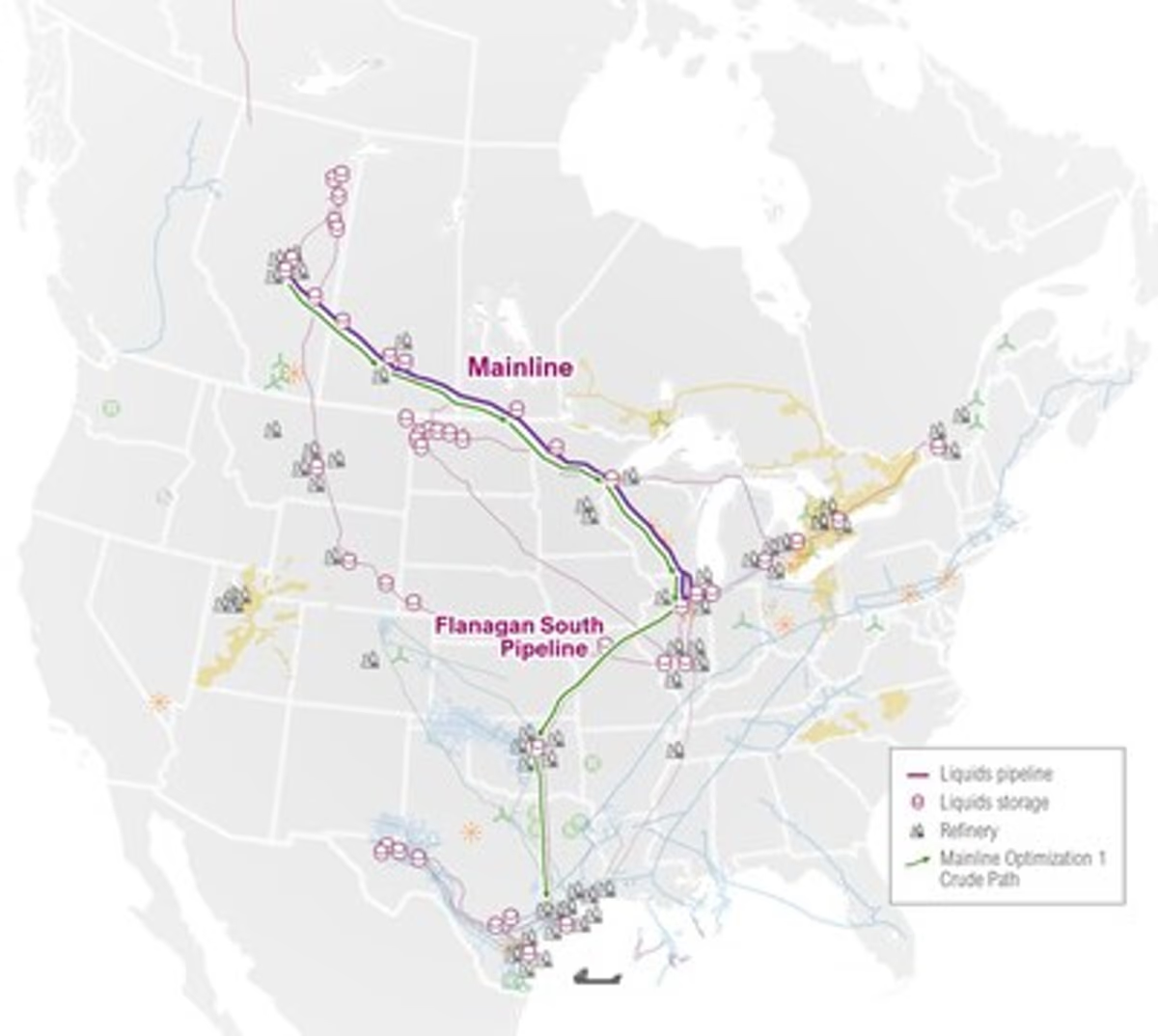
MPLX LP is the publicly traded master limited partnership majority-owned by Marathon Petroleum Corporation, the US refining major. Marathon's downstream refinery network in the Midwest and Gulf Coast depends on stable Permian crude supply chains, making Blackcomb a strategic asset for the parent as well as the MLP. Enbridge's 19 percent WPC stake, worth roughly 13.3 percent effective project interest, extends the Canadian pipeline giant's US midstream footprint to complement its trans-border mainline franchise. This structure means three distinct corporate families, Marathon, Enbridge, and WhiteWater, each hold material economic exposure to Permian gas takeaway capacity through a single pipeline JV.
Committed Shippers Include Devon, Diamondback, and Marathon Petroleum
Devon Energy, Diamondback Energy, Marathon Petroleum, and Targa Resources have signed firm transportation agreements as anchor shippers on Blackcomb, according to the joint venture's FID press release. Devon and Diamondback rank among the Permian's largest independent producers, with substantial Midland and Delaware Basin acreage on both sides of the basin. Marathon Petroleum, as both a pipeline owner via MPLX and a committed shipper, holds a dual interest in Blackcomb's commercial success. The shipper roster covers the pipeline's full capacity, indicating the project carries no material commercial risk to its Q3 2026 commissioning target.
Hugh Brinson Adds Parallel Capacity in Q4 2026
Blackcomb will enter service alongside the Hugh Brinson Pipeline, which the EIA projects will provide 2.2 billion cubic feet per day of additional Permian gas takeaway capacity in phased service starting Q4 2026 through Q1 2027. Combined, the two projects add approximately 4.7 billion cubic feet per day of new egress from the Permian basin by early 2027. TGS analysts identified the gas takeaway shortage as the direct brake on crude production growth. If both pipelines commission on schedule, Permian oil output could resume a growth trajectory in the first half of 2027.
The EIA's June 1 pipeline tracker noted that Texas originates 66 percent of the 44.9 billion cubic feet per day of planned US capacity additions for 2026 and 2027, confirming the Permian basin as the single largest driver of US midstream investment. Nearly 70 percent of that planned capacity is already under construction. The Blackcomb and Hugh Brinson projects together account for roughly 10 percent of the total 44.9 billion cubic feet per day expansion.
Published by Oil Authority, edited by Adam Humphreys
Submit a Correction
Spotted a factual error? Free account required to submit a correction.