Bridger Pipeline Locks 400K bpd, FID Threshold Near
South Bow and Bridger Pipeline near final investment on the Alberta-Wyoming line as binding commitments hit 400,000 bpd, just 50,000 short of greenlight.
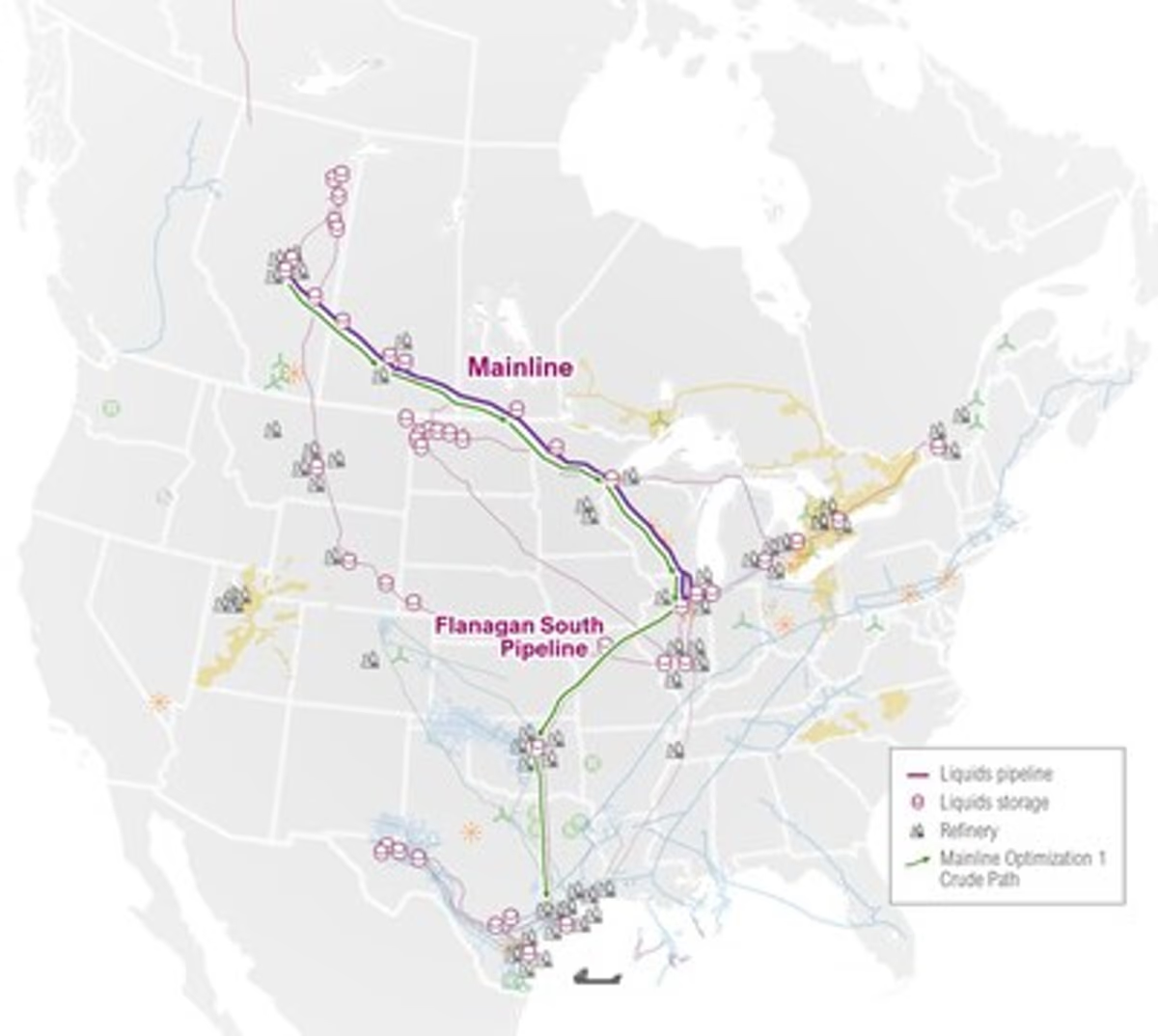
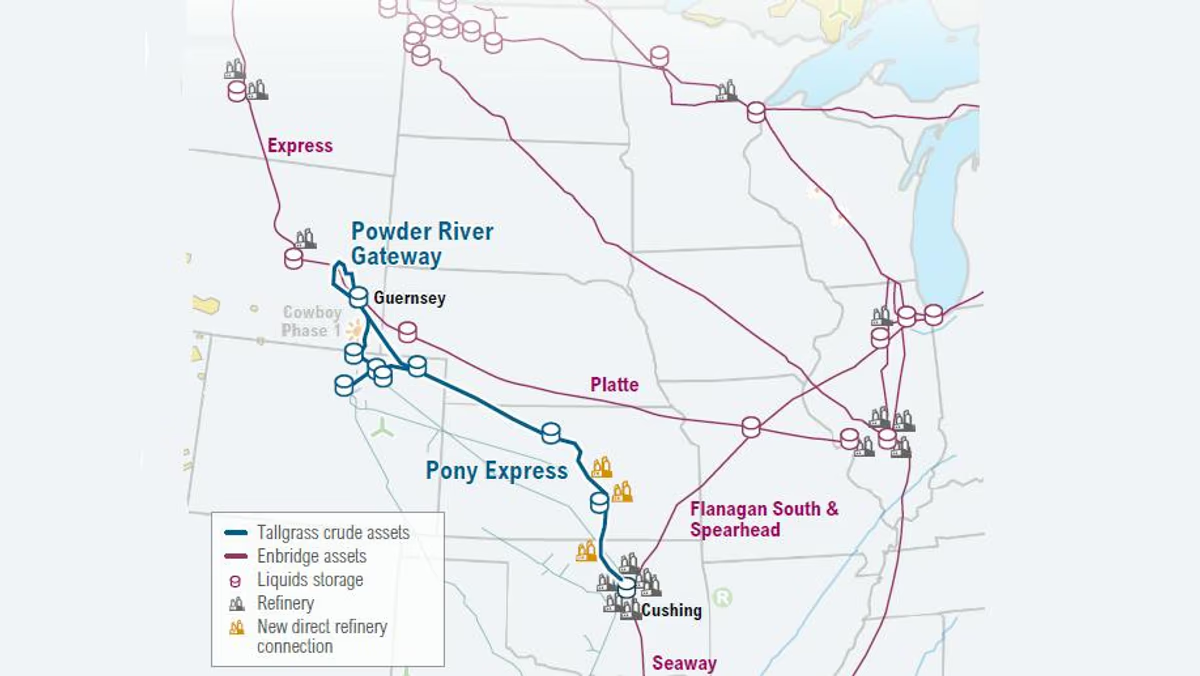
South Bow Corporation and U.S. partner Bridger Pipeline are within 50,000 barrels per day of triggering a final investment decision on the 1,038-kilometre crude line that would carry diluted bitumen from Hardisty, Alberta to Guernsey, Wyoming, according to sources familiar with the binding open season. Binding commitments stand near 400,000 barrels per day, or 72 percent of the project's 550,000 bpd initial capacity, against an 80 percent threshold of roughly 450,000 bpd that the partners have set to sanction construction.
WTI crude was trading near $98.20 per barrel on the CME in afternoon trading on May 11, 2026, with Western Canadian Select discounting roughly $13 per barrel against the U.S. benchmark. A direct Alberta-to-Wyoming crude artery would compress that differential for the anchor shippers by adding firm transportation that bypasses today's congested mainline egress through Hardisty.
Five Calgary Producers Anchor the Open Season Book
Five Calgary producers have signed up so far. The roster names are Canadian Natural Resources Limited, Cenovus Energy, Strathcona Resources, Whitecap Resources and Tamarack Valley Energy. Combined, these companies produce roughly 1.6 million barrels per day of Western Canadian heavy and light crude, so locking in 400,000 bpd of firm pipeline takeaway represents about 25 percent of their aggregate output.
South Bow itself was spun out of TC Energy in October 2024 when the parent separated its liquids pipelines business after years of regulatory delays around the original Keystone XL project. Bridger Pipeline, owned by Wyoming's True Companies, operates roughly 4,000 miles of crude infrastructure across the U.S. Rockies. President Donald Trump granted the U.S.-Canada cross-border permit on May 1, 2026, reviving roughly 150 kilometres of idle pipe that South Bow inherited from Keystone XL on the Canadian side and clearing the path for the binding contracts to firm up.
Project Economics: $2 Billion for 1.13 Million bpd at Ultimate Buildout
The cost estimate filed with U.S. regulators in March 2026 is approximately $2 billion. Initial capacity is set at 550,000 bpd, expandable to 1.13 million bpd at ultimate buildout, according to the project's regulatory filing. If completed at the high-end capacity, the line would increase Canadian crude exports to the United States by more than 12 percent over current totals, according to analysis published by South Bow.
The economic case rests on the spread between WCS and U.S. Gulf Coast benchmarks. South Bow's chief executive said on the company's earnings call last Thursday that demand for shipments to the U.S. Gulf Coast remains strong, with the Marketlink and Houston systems running at high utilization. A direct Alberta-to-Wyoming route would extend that thesis into a second egress pathway and provide shippers an alternative to the Trans Mountain Expansion that began service in 2024.
Carney Talks Open a Parallel Coastal Pipeline Track
The Bridger commitments come as Alberta Premier Danielle Smith reports progress in talks with Prime Minister Mark Carney on a separate domestic pipeline that would run to British Columbia's coast. Smith shifted from saying "if" a deal gets signed to "when" after a Friday May 8 meeting in Ottawa, and Alberta is preparing a Major Projects Office submission for July 1, 2026 covering the proposed West Coast Oil Pipeline. The two projects are not mutually exclusive. The Bridger line addresses U.S. Gulf Coast egress, while a coastal line would unlock Asian markets and crude pricing on Brent-linked terms.
What Triggers the Final Investment Decision This Quarter
South Bow and Bridger have indicated they will sanction construction once binding nominations reach the 450,000 bpd mark and the partners can demonstrate sufficient long-term ship-or-pay contracts to underpin financing. Recent U.S. drilling activity has held at 548 active rigs through the first week of May 2026, with the Permian at 242 rigs, signalling sustained takeaway demand from the basin that will compete with Canadian barrels for Gulf Coast refining slots. RBC Capital Markets analysts noted last week that a sanction announcement could come as soon as June if the final 50,000 bpd of shipper commitments lands by mid-month.
Published by Oil Authority, edited by Adam Humphreys
Submit a Correction
Spotted a factual error? Free account required to submit a correction.