Canada Is Back in the Energy Business: Minister Hodgson Launches Nova Scotia Offshore Bid at CERAWeek as Team Canada Courts Global Investors
Canada Is Back in the Energy Business: Minister Hodgson Launches Nova Scotia Offshore Bid at CERAWeek as Team Canada Courts Global Investors.
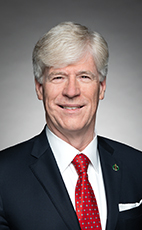 Federal Energy Minister Tim Hodgson took the stage at CERAWeek by S&P Global in Houston this week with a message that resonated across the global energy industry: "Canada is back!"
Opening Canada House at one of the world's most influential energy conferences, Hodgson outlined a vision of renewed ambition for Canadian energy development, backed by concrete opportunities for international investors and a Team Canada approach uniting federal and provincial governments.
"Canada is not only back, we're also open for business," Hodgson told delegates from dozens of countries. "In a world feeling increasingly dangerous and divided, Canada will continue to seek mutually beneficial trade relationships as part of our strategy to ensure energy and economic security."
Nova Scotia's Offshore Frontier: 13 Parcels, 3.3 Million Hectares
Among the most significant opportunities Hodgson highlighted is Nova Scotia's offshore conventional energy potential, described as "significant and largely undeveloped." The Canada-Nova Scotia Offshore Energy Regulator has issued a Call for Bids covering 13 parcels on the Scotian Shelf and Scotian Slope, totalling more than 3.3 million hectares. The deadline for bids is April 28, 2026.
An independent resource assessment of the Scotian Basin estimates approximately 22.6 billion barrels of oil and 64.6 trillion cubic feet of natural gas potential offshore Nova Scotia, making it one of the most promising undeveloped conventional basins in the world. None of the 13 parcels overlap the Sable Island National Park Reserve or the Gully Marine Protected Area, reflecting Canada's commitment to responsible development.
Nova Scotia Premier Tim Houston is also in Houston this week meeting with energy leaders, reinforcing the provincial government's commitment to creating a predictable, investable framework for offshore development. Successful bidders will be awarded exploration licences, with pathways to significant discovery licences and production licences as projects advance.
Team Canada at CERAWeek
Hodgson emphasized the strength of Team Canada's presence at CERAWeek, with participation from Alberta, Ontario, Nova Scotia, and Newfoundland and Labrador. This unified approach signals to international investors that Canada's energy opportunity spans coast to coast, from Alberta's oil sands and proposed Pacific Corridor pipeline to Atlantic Canada's offshore frontier and British Columbia's LNG terminals.
The numbers underscore the scale of Canada's energy position:
- Fourth-largest proven oil reserves globally, holding 10 per cent of the world's supply
- Fifth-largest natural gas producer, with reserves lasting approximately 200 years at current production rates
- A Tier 1 nuclear nation and the fourth-largest renewable electricity producer
- Canadian LNG exports projected to reach almost 50 million tonnes per annum by the end of the decade
- Trans Mountain pipeline expansion reaching 1,190,000 barrels per day by 2030
A Global Moment for Canadian Energy
The timing of Canada's energy push is significant. With the Strait of Hormuz crisis disrupting traditional energy supply routes from the Middle East, allies in Europe and Asia are actively seeking stable, democratically governed alternatives. Canada, with its world-leading environmental and human rights standards, is uniquely positioned to fill that role.
Prime Minister Mark Carney has set a target of catalyzing $500 billion in private investment in Canada, and foreign investment has reached "its strongest level in decades," according to Hodgson. In the last eight months alone, Canada has signed 20 trade and security agreements across four continents, including comprehensive energy partnerships with Japan, India, and China.
For international energy companies evaluating their next major capital commitments, Canada offers a rare combination: massive resource potential, political stability, a skilled workforce with decades of offshore and onshore expertise, and a regulatory environment that balances development with genuine environmental stewardship, including the world's first large-scale industrial carbon capture project at Quest in Alberta.
What This Means for the Energy Industry
The April 28 deadline for Nova Scotia's offshore Call for Bids represents one of the most significant licensing rounds in Canadian history. For the 8,200+ energy companies listed on Oil Authority, the opportunities extend well beyond the bid itself: seismic survey companies, offshore drilling contractors, marine logistics providers, environmental assessment firms, and the entire supply chain that supports offshore exploration stand to benefit from renewed Atlantic Canadian activity.
As Hodgson put it, Canada is approaching energy policy with "renewed ambition, pragmatism and urgency." For a country whose energy workers have built their careers on resilience, innovation, and hard work, the message is clear: the world needs what Canada has, and Canada is ready to deliver.
The Call for Bids for 13 offshore parcels on the Scotian Shelf and Slope closes April 28, 2026. For details, visit the Canada-Nova Scotia Offshore Energy Regulator.
Published by Oil Authority, edited by Adam Humphreys
Submit a Correction
Spotted a factual error? Free account required to submit a correction.