Devon Energy Plans $350 Million Capex Cuts After Coterra Merger, Putting MPLX and Energy Transfer Delaware Volumes at Risk
Devon Energy plans $350M in capex cuts after closing its Coterra merger in May, trimming rigs from 40 to 31 and putting MPLX Delaware Basin volumes at risk.
Devon Energy completed its all-stock merger with Coterra Energy on May 7, 2026, creating a combined independent producer with pro-forma output exceeding 1.6 million barrels of oil equivalent per day. The combined enterprise targets more than $1 billion in annual pre-tax synergies by the end of 2027. Devon also announced an $8 billion share repurchase program through June 30, 2029, alongside a 33% quarterly dividend increase to $0.320 per share. CEO Clay Gaspar described the combination as providing "the scale, inventory depth, and financial strength to sustain a peer-leading capital return framework while maintaining a fortress balance sheet."
The $350 Million Capital Synergy
Of the $1 billion total synergy target, $350 million comes from reduced capital spending and supply chain optimization. Devon's combined 2026 capital guidance covers $4.8 billion to $5.0 billion. Before the merger closed, Coterra's standalone 2026 capital plan targeted a midpoint of $2.25 billion, with roughly 68% directed at the Permian Basin. The combined guidance reflects deliberate program rationalization rather than a single large-asset sale or write-down.
Corporate Lineage of the Delaware Basin Position
Devon's combined Delaware Basin acreage draws from three distinct corporate lineages. Devon's legacy Permian position grew from an eastward expansion of its Anadarko Basin operations. WPX Energy, which Devon acquired in January 2021, brought Delaware acreage originally built inside Williams Companies before WPX was spun off from Williams in January 2012. Cimarex Energy's Delaware acreage traces to Burlington Resources Oil and Gas Company, which contributed assets to the new company at its 2002 spinoff; Coterra absorbed Cimarex in October 2021 and brought its Burlington-lineage acreage into the Devon combination. The three-lineage Delaware position now gives Devon roughly 750,000 net acres in the core of the play.
Midstream Systems at Risk
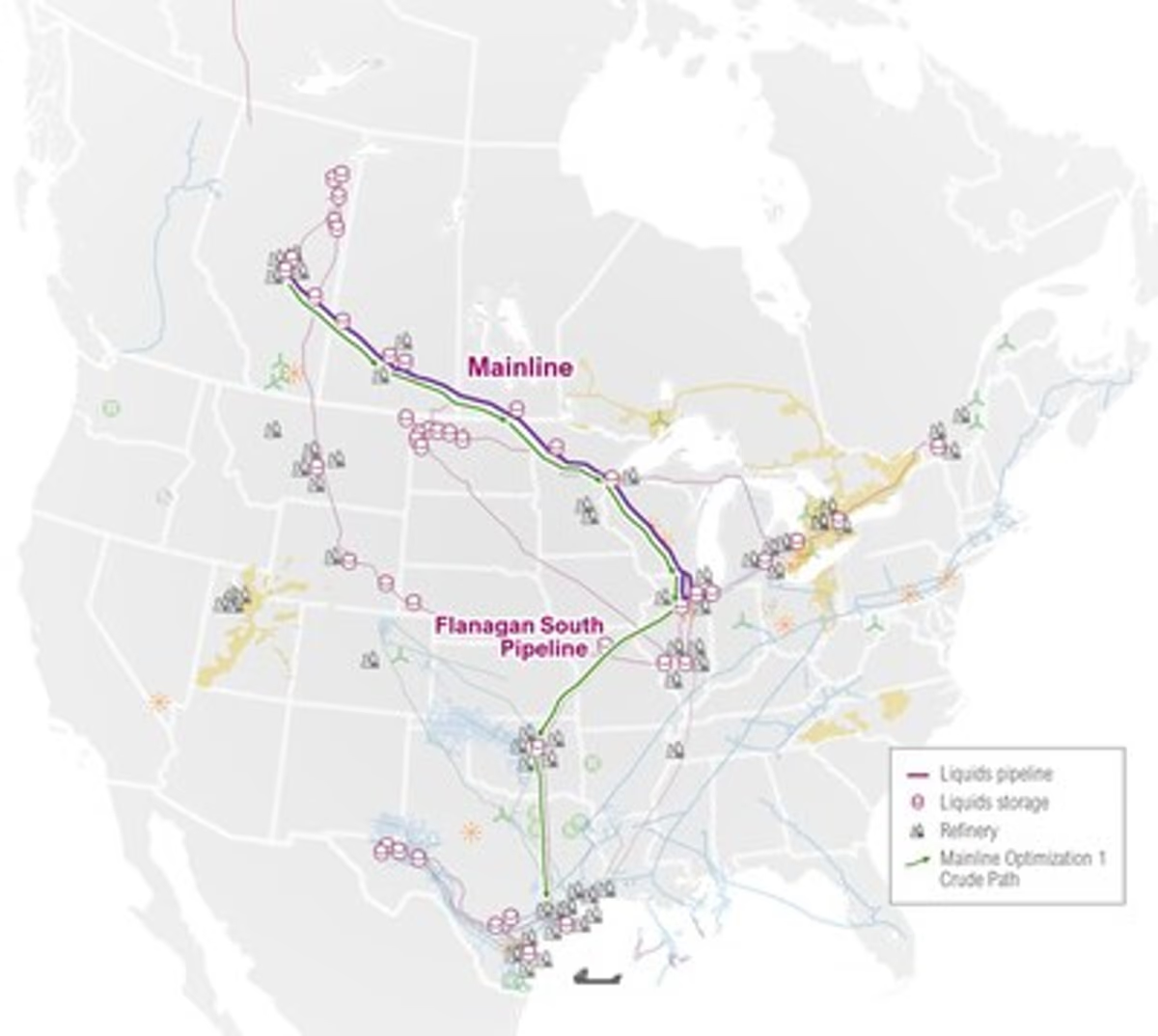
East Daley Analytics identified MPLX's Delaware Basin gathering and processing system as the most exposed to volume risk from the Devon capex cuts. MPLX is the midstream subsidiary of Marathon Petroleum Corporation, operating gathering, processing, and transportation infrastructure across the Delaware Basin. Coterra ran 6 of the 8 rigs feeding the MPLX-Delaware system before the merger, representing a 75% operator concentration on that network. Energy Transfer's Delaware system carries Devon production from 4 of its 12 operator rig slots, a 33% share. Kinetik Holdings, Targa Resources, Western Midstream Partners, and Phillips 66 also gather and process Devon and Coterra volumes in the Delaware Basin.
Rig Count Reduction and Well Cost Math
Devon and Coterra ran a combined pro-forma total of approximately 40 rigs at their peak activity in early 2025. The combined company's 2026 guidance covers 31 rigs and 10 completion crews, a reduction of 9 rigs, or 22.5%, from that peak. The 31-rig plan supports 460 to 480 net wells coming online in 2026, implying an average well cost of roughly $10.4 million per lateral based on the $4.9 billion midpoint capital budget. The $350 million capital and supply chain synergy equals about 7% of the combined post-merger budget and reflects program consolidation and combined-fleet purchasing advantages.
Basins at Risk vs. the Delaware Core
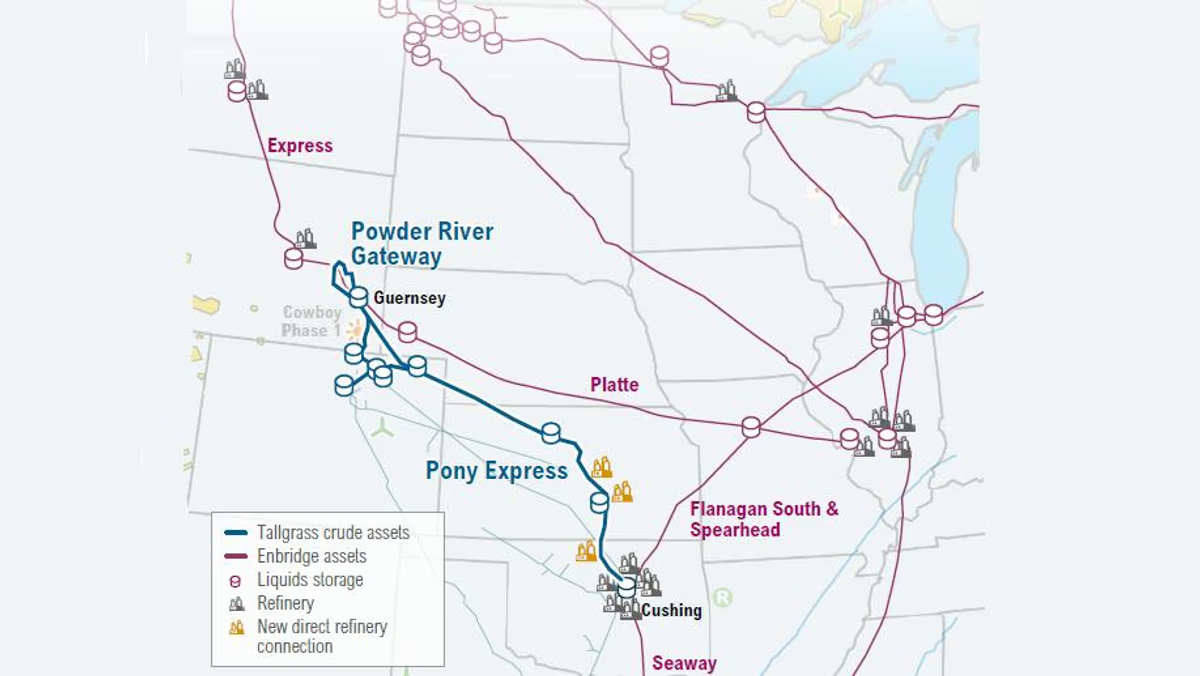
Devon management characterized the Delaware Basin as the "crown jewel" of the combined portfolio, directing more than 60% of combined capital there. East Daley Analytics identified the Bakken, Anadarko Basin, Eagle Ford, and Powder River Basin programs as the most likely targets for rig reductions. Those four basins were primarily Coterra programs where activity was already declining before the merger closed. Any rig reduction in these programs would reduce volumes on non-Delaware midstream systems while preserving Delaware Basin output growth.
WTI Price Context and Devon's Hedge Floor
Devon holds price swap positions at a weighted average of $66.14 per barrel through Q4 2026. WTI settled at $74.32 per barrel Monday, per OilPrice.com, leaving Devon's hedged barrels $8.18 below current spot prices. Suncor Energy set a Q1 2026 production record of 875,000 barrels per day despite WTI falling 32% from its $115 peak, as Oil Authority reported, demonstrating that oil sands operators maintain output through low prices because of sunk capital costs. Devon's shale model requires continuous new drilling to offset natural decline, making its 31-rig plan a deliberate production maintenance strategy at current pricing rather than a growth acceleration.
Published by Oil Authority, edited by Adam Humphreys
Submit a Correction
Spotted a factual error? Free account required to submit a correction.