EIA Raises Henry Hub 2026 Forecast to $3.60 as US LNG Exports Hit 16.6 Bcf Per Day
EIA raised its 2026 Henry Hub forecast to $3.60 per MMBtu, up from $3.50 in May, as US LNG exports hit 16.6 Bcf per day and Asia took 36% of shipments.
The U.S. Energy Information Administration raised its Henry Hub natural gas price forecast for 2026 to $3.60 per MMBtu in its June Short-Term Energy Outlook, up $0.10 from the May forecast of $3.50 per MMBtu. The 2027 forecast was revised to $3.46 per MMBtu, a $0.28 increase from May's $3.18 projection. Henry Hub spot prices reflected the upward pressure, trading at $3.251 per MMBtu on Monday, up 3.3%, even as WTI crude oil fell 4.61% on the same session.
LNG Export Demand Anchors Gas Prices
U.S. LNG feedgas deliveries averaged 16.6 billion cubic feet per day (Bcf/d) for the week ending June 10, according to the American Gas Association. That figure is below the all-time high of 19.7 Bcf/d reached in March 2026 due to routine facility maintenance, but it remains well above prior-year levels. LNG exports to Asia reached a one-year high, accounting for 36% of total U.S. LNG shipments in recent weeks, up from 27% in April. U.S. natural gas production is forecast at 120.8 Bcf/d for full-year 2026, up 2% from 2025.
Permian Basin Drives Supply Growth
Permian Basin output drives most of the U.S. natural gas production growth, the EIA notes, contributing an estimated 1.4 Bcf/d of incremental supply in 2026. That gas is associated with oil production: every barrel of Permian crude brings roughly 3,000 to 5,000 cubic feet of natural gas to the surface. The Haynesville Shale, linked to Gulf Coast LNG demand, provides a second major production pillar independent of crude oil economics.
WTI Decline Creates a Natural Gas Supply Risk
The EIA's June STEO assumed elevated oil prices as the backdrop for rising Permian associated gas output. WTI traded near $77.03 per barrel on Monday, per OilPrice.com, down from $84.88 on June 12 before the Strait of Hormuz deal eliminated the geopolitical premium. If WTI stays near $77 and Permian operators cut activity by 5%, Oil Authority calculates that associated gas volumes could fall by 1.0 to 1.5 Bcf/d. Permian wells produce roughly 3,000 to 5,000 cubic feet of gas per barrel of crude, so a 300,000 barrel-per-day reduction in Permian oil output translates to that gas volume loss. That reduction is about 1.2% of total U.S. supply, enough at the margin to narrow the storage surplus the EIA currently projects.
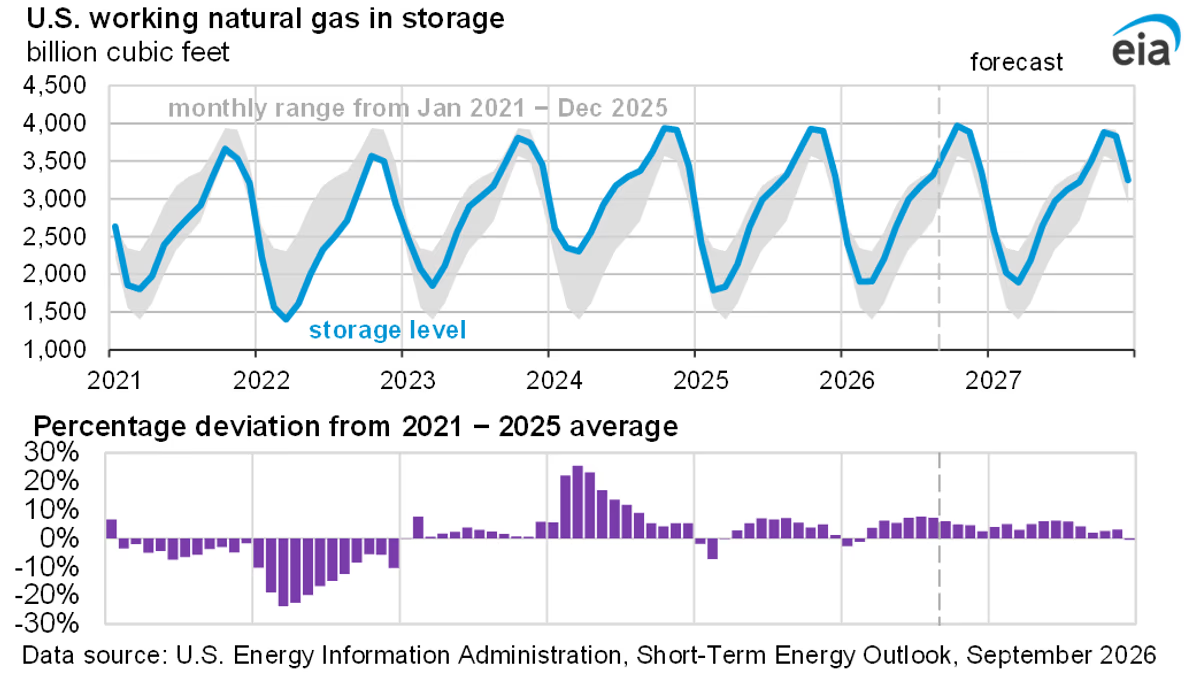
Inventories were expected to stay above the five-year average throughout 2026, the EIA noted, built on a higher WTI price path. A sustained oil price correction would reduce Permian associated gas output and tighten the balance. The 2027 Henry Hub forecast of $3.46 per MMBtu already reflects some of that anticipated tightening.
Crude and Gas Prices Diverge
Monday's 4.61% WTI decline reflects market repricing of Hormuz supply recovery. Natural gas moves on different dynamics: LNG export pull, storage levels, and summer power burn. The two benchmarks traded in opposite directions on Monday for the second session running, a divergence that underscores how the post-Hormuz crude repricing is not automatically feeding through into gas markets.
Published by Oil Authority, edited by Adam Humphreys
Submit a Correction
Spotted a factual error? Free account required to submit a correction.