Enbridge Eyes 1M Bbl BC Crude Pipeline Bid
Enbridge CEO Greg Ebel signals it would consider a 1M bbl per day Alberta-to-BC oil pipeline after Carney-Smith $16.5B carbon capture compromise.
Enbridge Inc. (NYSE: ENB) has signalled it would consider backing a new 1 million barrel per day oil pipeline from Alberta to British Columbia's west coast, giving early industry weight to the carbon-and-crude compromise that Prime Minister Mark Carney and Alberta Premier Danielle Smith signed in Calgary on May 15, 2026. The deal sets a target to approve a new bitumen export pipeline by September 2027 and ties construction to the $16.5 billion Pathways Alliance carbon capture project that the federal and provincial governments now describe as "mutually dependent" with any new oil egress.
"We would definitely consider it," Enbridge chief executive Greg Ebel said within hours of the Carney-Smith announcement, according to Bloomberg reporting on May 22. Ebel framed Enbridge's interest as conditional on regulatory certainty and shipper support but signalled that the country's largest pipeline operator does not intend to sit out a coast-bound project of that scale. WTI crude was trading at $98.27 per barrel on the CME front-month contract in afternoon trading on May 22 as of approximately 13:00 MT, with Brent at $105.42 per barrel on ICE, reinforcing the netback case for additional tidewater capacity.
Carney-Smith deal ties pipeline approval to scaled-back Pathways targets
The Implementation Agreement signed in Calgary commits Ottawa to fast-tracking regulatory approval for a 1 million bbl per day bitumen pipeline to the BC coast, with construction targeted to start September 1, 2027. Alberta in turn agreed to an industrial carbon-price floor rising to $130 per tonne by 2035 and $140 per tonne by 2040, levels well above the previous Alberta-only TIER baseline.
Tied to that deal is the Pathways Alliance carbon capture, utilization and storage hub near Cold Lake, a $16.5 billion project that links 20 separate oilsands CCS facilities into a single CO2 trunk line. The agreement quietly cut the project's capture target to 16 million tonnes per annum by 2035 from the previously pledged 22 Mta by 2030, a reduction first reported by Canada's National Observer on May 20. Pathways member companies include Canadian Natural Resources Limited, Cenovus Energy Inc, Suncor Energy, ConocoPhillips and Imperial Oil (a subsidiary of ExxonMobil), which together represent roughly 95 percent of Canadian oilsands production.
Existing Enbridge BC footprint already growing
Enbridge enters the oil-pipeline conversation having just secured federal approval, on April 24, 2026, for its Sunrise Expansion Program, a $4 billion natural gas expansion of the Westcoast pipeline system in BC that adds approximately 300 million cubic feet per day of southern BC capacity. Construction on Sunrise is scheduled to begin in July 2026 with an in-service date in late 2028, according to the Enbridge media release. That sequencing means BC field crews, right-of-way agreements and contractor pipelines will already be active when any new oil pipeline enters detailed engineering.
For context, Trans Mountain Expansion entered service in May 2024 and added 590,000 bbl per day of nameplate capacity to the existing 300,000 bbl per day system, taking total Alberta-to-BC oil egress to roughly 890,000 bbl per day. A new 1 million bbl per day pipeline would more than double that combined coast-bound capacity, exceeding the entire current TMX system in a single project.
Information gain: cost-per-barrel math and CIBC reaction
Industry analysts have flagged the 2027 construction-start timeline as the most aggressive case. CIBC analysts described the Carney-Smith schedule as a "best-case scenario" in a May 16 note covered by CBC, citing typical Canadian linear-infrastructure permitting cycles of 5 to 7 years. The federal government's commitment to backstop carbon-contract-for-difference instruments worth up to 75 million tonnes of carbon credits is the lever Pathways members have asked for since 2023 to underwrite the CCS portion of the deal.
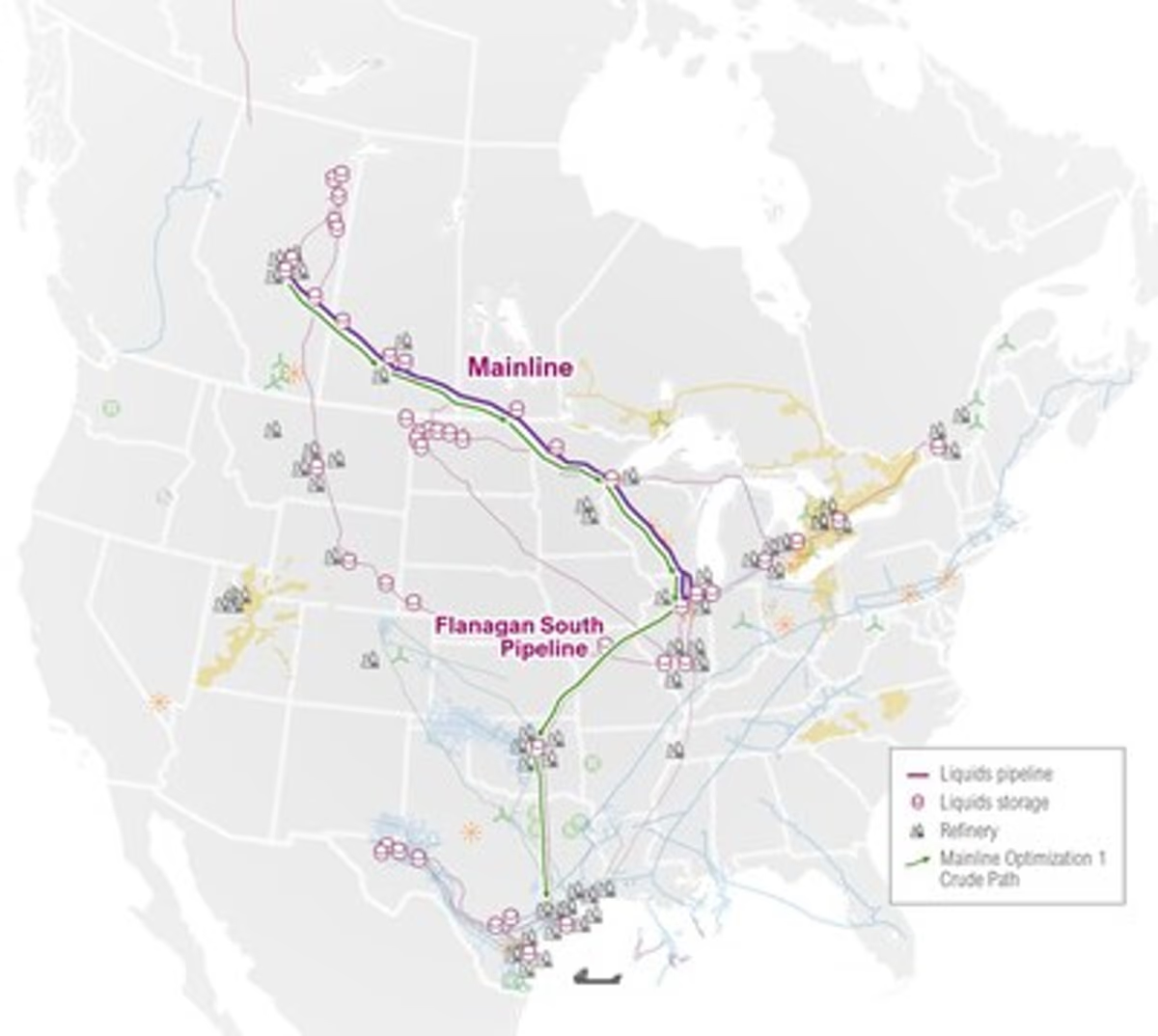
The implied economics favour the project. Enbridge's existing Mainline crude tolls average roughly $4 to $7 per barrel for Edmonton-to-Hardisty-to-US-Gulf routes. A new west-coast line of comparable scale would likely toll in the $5 to $10 per barrel range based on greenfield construction precedent, against an Asian-market premium for WCS that has historically run $2 to $5 per barrel above Cushing netbacks when TMX is fully nominated. With WCS-WTI differentials forecast at $12 per barrel in 2026 per CAPP guidance, an additional 1 million bbl per day of tidewater egress could compress that differential by an estimated $3 to $5 per barrel based on RBC Capital Markets sensitivity work, translating to roughly $1.1 billion to $1.8 billion in additional annual netback for the Alberta producer base at current production levels of approximately 3.4 million bbl per day from the oilsands.
What changed since Northern Gateway
Enbridge's last attempt at a west-coast oil project, Northern Gateway, was approved by the Harper government in 2014 and rescinded by the Trudeau government in 2016, with the 2018 federal tanker moratorium north of Vancouver Island formally closing the door. The Carney-Smith deal does not yet specify whether the new pipeline would land at the existing Trans Mountain terminus in Burnaby, at Kitimat (the original Northern Gateway terminus, still inside the moratorium zone), or at a new tidewater point, leaving routing as a politically and environmentally consequential outstanding question.
BC Premier David Eby has publicly opposed Northern Gateway-style routings, and the province is now "scrambling to capitalize" on whatever route is selected, per Today in BC reporting on May 22. Bitumen blend export contracts already running through TMX are oversubscribed, with Q1 2026 utilization at roughly 84 percent according to Trans Mountain Corporation's quarterly update, suggesting genuine shipper demand for additional egress rather than speculative buildout.
Published by Oil Authority, edited by Adam Humphreys
Submit a Correction
Spotted a factual error? Free account required to submit a correction.