Henry Hub Spikes 5.6 Percent Despite 6.2 Percent Gas Storage Surplus; LNG Export Demand Narrows Buffer to 7.8 Days
Henry Hub natural gas surged 5.6% to $3.27 per MMBtu as US storage sits 144 Bcf above the five-year average, a buffer equal to 7.8 days of LNG exports.
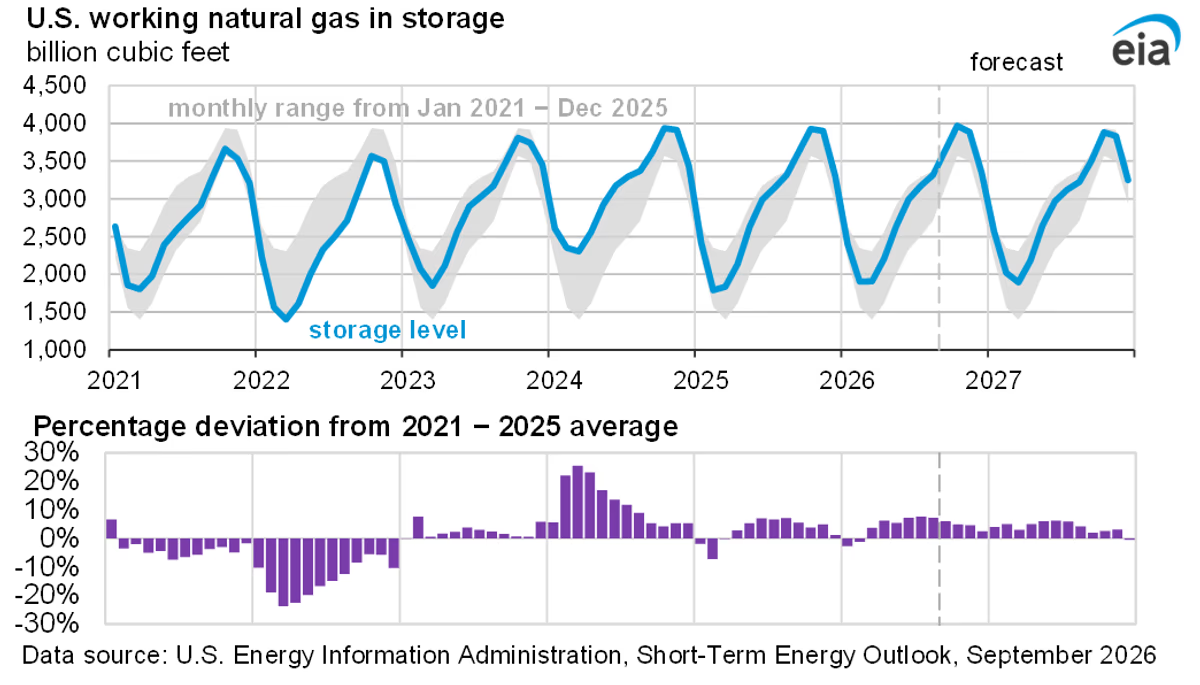
The U.S. Energy Information Administration released its weekly natural gas storage report on Thursday, shifted one day from its usual Wednesday schedule due to the Memorial Day federal holiday. For the week ending May 22, working gas in underground storage rose 92 billion cubic feet. Total storage reached 2,483 billion cubic feet.
The current level stands 144 billion cubic feet, or 6.2 percent, above the five-year seasonal average of 2,339 billion cubic feet. Storage also runs 21 billion cubic feet ahead of year-ago levels. The EIA confirms that total working gas remains within the five-year historical range, consistent with normal late-May injection season patterns.
Henry Hub Climbs 5.6 Percent Despite Storage Surplus
Henry Hub spot gas was trading at $3.27 per MMBtu as of late morning, up 5.60 percent on the session, per TradingEconomics. The move coincides with the start of the post-Memorial Day cooling season, when power-sector gas demand for air conditioning rises. European TTF natural gas gained 0.62 percent to 46.87 euros per megawatt-hour on the same session, per TradingEconomics. The smaller European gain indicates that US domestic demand is the primary driver of the Henry Hub rally, not European market conditions.
LNG Export Demand and the Storage Buffer Calculation
US LNG exports were running at 18.4 billion cubic feet per day as of the most recent tracking period, per prior Oil Authority reporting on EIA data. At that export rate, the entire 144-billion-cubic-foot storage surplus above the five-year average would be consumed in roughly 7.8 days. That calculation shows how thin the supply buffer is when measured against structural export demand. Post-Memorial Day cooling load adds further pressure on top of the LNG export pull, compressing the effective surplus.
Archive Context
A prior Oil Authority report tracked Henry Hub gaining 1.5 percent while TTF fell 4 percent, with EIA inventory data known to be shifting to Thursday. That report placed US LNG exports at 18.4 billion cubic feet per day, the same baseline used in the buffer calculation above. The dynamic has shifted: Henry Hub is now advancing more aggressively at 5.6 percent while TTF is largely flat. The spread between the two benchmarks remains wide enough to sustain strong US LNG export economics.
Published by Oil Authority, edited by Adam Humphreys
Submit a Correction
Spotted a factual error? Free account required to submit a correction.