Permian Rigs Hit 267 as ExxonMobil Posts Record 1.8 MMboepd From Pioneer Integration, While EIA Forecasts $69 Brent in 2027
Permian rigs hit 267, highest since June 2025, as ExxonMobil posts record 1.8 MMboepd from its Pioneer acquisition and EIA projects Brent at $69/bbl by 2027.
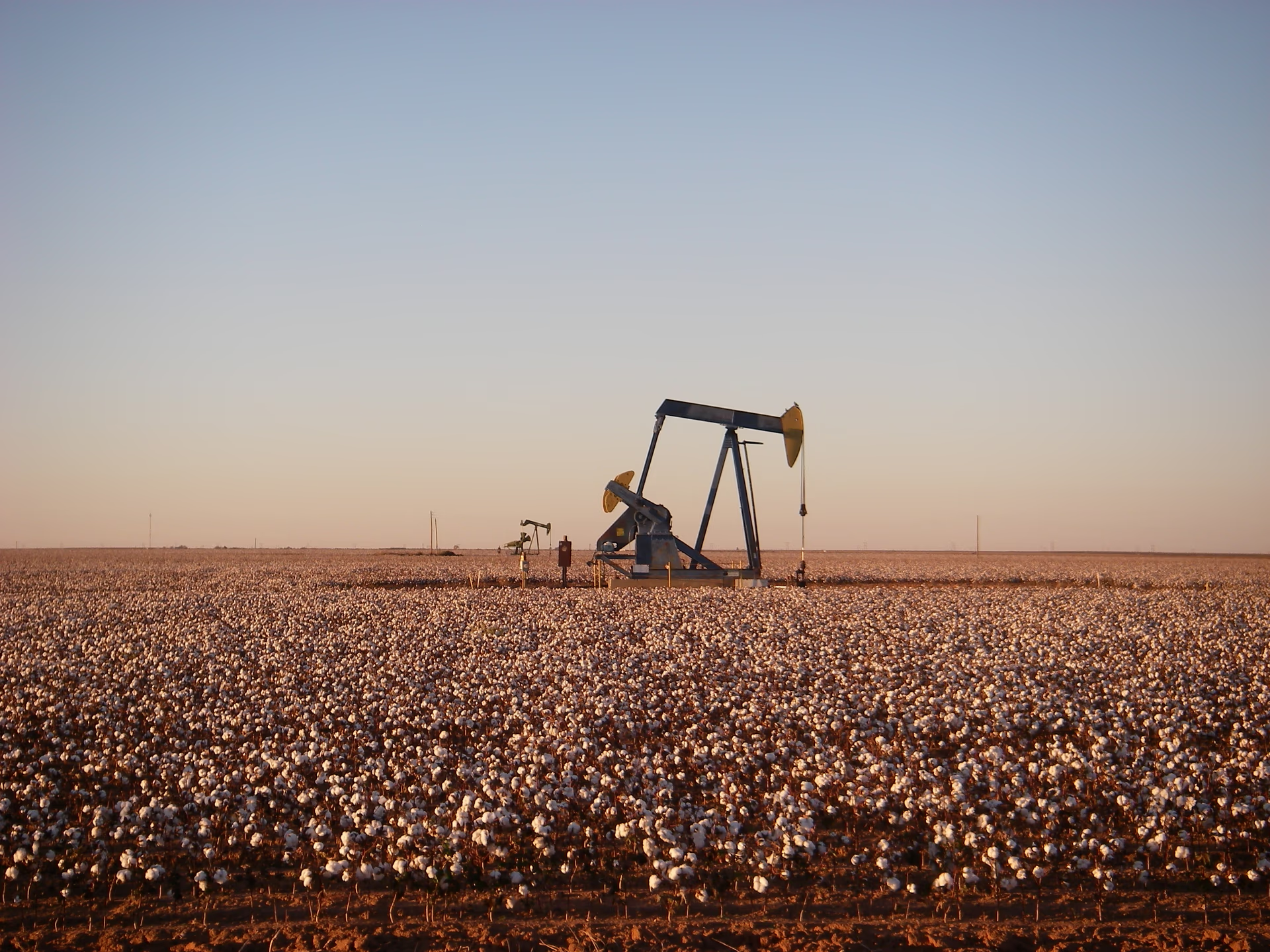
US oil and gas rigs fell by five to 588 for the week ending August 21, the first decline in four weeks, per Baker Hughes data released Friday, August 22. The Permian Basin bucked the decline, adding two rigs to reach 267, the highest level since June 2025. Eagle Ford shale climbed one rig to 50, its highest since June 2024, and Texas overall added four rigs to 281, the most since February 2025. The next Baker Hughes count publishes Friday, August 28.
ExxonMobil Posts Record 1.8 MMboepd on Legacy Pioneer Acreage
ExxonMobil reported record Permian production of more than 1.8 million barrels of oil equivalent per day in the second quarter of 2026, per its Q2 earnings release. That total includes output from legacy Pioneer Natural Resources acreage ExxonMobil acquired in May 2024 for approximately $60 billion. Pioneer ranked as one of the largest standalone Permian operators, producing roughly 300,000 boepd before the deal closed. ExxonMobil targets a 9% compound annual growth rate in Permian output, aiming to reach 2.5 million boepd by 2030.
Automation Arrives on the Rig Floor
ExxonMobil currently operates more than 30 drilling rigs in the Permian Basin, per Permian Basin Oil and Gas Magazine. Two of those rigs carry fully automated systems, and the company plans to convert one-quarter of its fleet to automation by mid-2027 and half by 2028. Senior vice president Bart Cahir said ExxonMobil's first automated rig completed a two-mile horizontal section in just over six days, "the third fastest drilling time in the company's history." Exxon is also deploying more than 40 technologies aimed at doubling oil recovery from the Permian, where current shale recovery averages roughly 10% of oil in place.
Well Economics at Current and EIA Forecast Prices
WTI crude was trading at $82.71 per barrel on Thursday, per TradingEconomics, up 0.59% from Wednesday's close. Tier-1 Delaware Basin acreage carries a breakeven cost of roughly $45 to $55 per barrel WTI, per Devon Energy's well-economics disclosures. At $82.71, a typical Permian well producing 700 barrels per day in its first month generates approximately $57,900 per day in gross oil revenue before royalties and severance taxes.
The EIA's August 2026 Short-Term Energy Outlook projects Brent crude averaging $69 per barrel in 2027, a 22% decline from Thursday's Brent level, as Hormuz transit constraints ease and non-OPEC supply grows. At $69 Brent, the equivalent WTI price falls to roughly $65 per barrel, narrowing per-well first-month gross revenue by approximately $12,400 per day. Across ExxonMobil's 30-plus rig fleet completing roughly one well per month, that gap amounts to roughly $372,000 per day in gross revenue at current prices versus EIA's 2027 projection, per Oil Authority's calculation using August 27 Baker Hughes and ExxonMobil production data.
That spread does not eliminate Permian profitability. Tier-1 wells generate positive margins even at $65 WTI, well above the $45 to $55 breakeven range. Goldman Sachs holds a Q4 2026 Brent forecast of $80, while Wood Mackenzie projects $90 for the same period, as Oil Authority reported this week. The $21 per barrel range between Wood Mackenzie's Q4 estimate and EIA's 2027 average represents a wide band for operators including ExxonMobil, Chevron, and Devon Energy planning multi-year Permian programs.
Year-over-Year Momentum and Friday Preview
Total US rig count stands 50 rigs, or 9.3%, above the August 2025 level, per Baker Hughes, reversing a 7% decline in 2025 and a 5% drop in 2024. That year-over-year improvement reflects operator willingness to deploy capital at WTI levels above $80 per barrel. Devon Energy moved rigs onto 36 new well locations over the 45 days ending mid-August, and Occidental moved 32, per OilPrice.com operator-level data, indicating broad Permian participation beyond ExxonMobil. Friday's Baker Hughes count for the week ending August 28 will test whether the Permian's June 2025 rig-count high has further room to grow.
Published by Oil Authority, edited by Adam Humphreys
Submit a Correction
Spotted a factual error? Free account required to submit a correction.