TTF Gas Falls 9% on Iran MOU but Qatar Ras Laffan Damage Cuts 12.8 mtpa of LNG for Five Years
TTF gas fell to EUR41.34/MWh on June 18, down 9% since the Iran MOU, but Qatar's Ras Laffan damage cuts 12.8 mtpa of LNG supply for up to five years.
European natural gas prices fell more than 9% to EUR41.34 per megawatt-hour on June 18, per ICE TTF futures data, following the US-Iran Islamabad Memorandum of Understanding announcement. Asian LNG spot prices also tracked lower, with the JKM benchmark falling to $15.82 per MMBtu on June 17, per Platts, down from a June 8 peak near mid-USD $19 per MMBtu. Henry Hub remained near $3.10 per MMBtu, largely insulated from the Hormuz disruption by the structural separation between US domestic gas markets and seaborne LNG trade.
Why the TTF Drop Does Not Mean Full Recovery
The TTF selloff reflects one market reality: the Hormuz shipping corridor is reopening. A second reality is adjusting more slowly. Iranian missile strikes hit Ras Laffan Industrial City on March 18 and 19, 2026, damaging two LNG production trains and a gas-to-liquids facility at Qatar's main export hub. The strikes knocked out approximately 12.8 million tonnes per year of LNG capacity, roughly 17% of Qatar's total output. QatarEnergy declared force majeure following the strikes, and company officials have said repairs will take three to five years.
What the Ras Laffan Damage Means for Supply
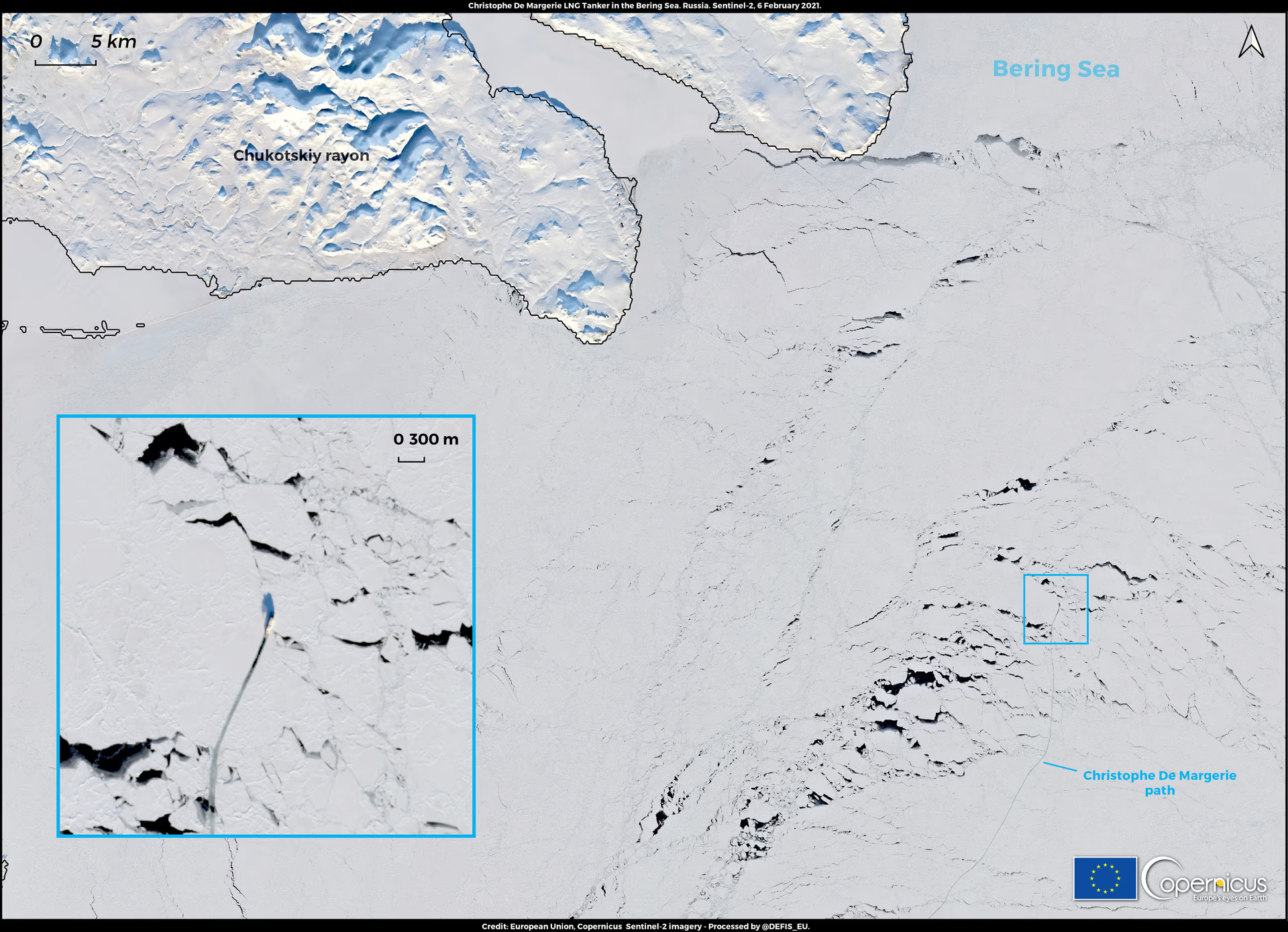
Before the conflict, roughly three LNG tankers per day transited outbound through the Strait of Hormuz, per Kpler tracking data. During the height of the conflict, only seven LNG shipments successfully completed the strait transit in approximately three months, a collapse to less than 3% of normal throughput. Hormuz reopening normalizes tanker routing, but it does not rebuild two damaged LNG production trains.
The IEA's June 2026 Oil Market Report assessed that Qatar's North Field East expansion, expected to bring significant new capacity online, is now delayed. That delay represents roughly 20 billion cubic metres of supply reduction across 2026 to 2030. The Ras Laffan facility damage and the North Field East delay together remove a structural volume of LNG from the market that no ceasefire alone can replace.
Europe's Storage Deficit and Its Cost
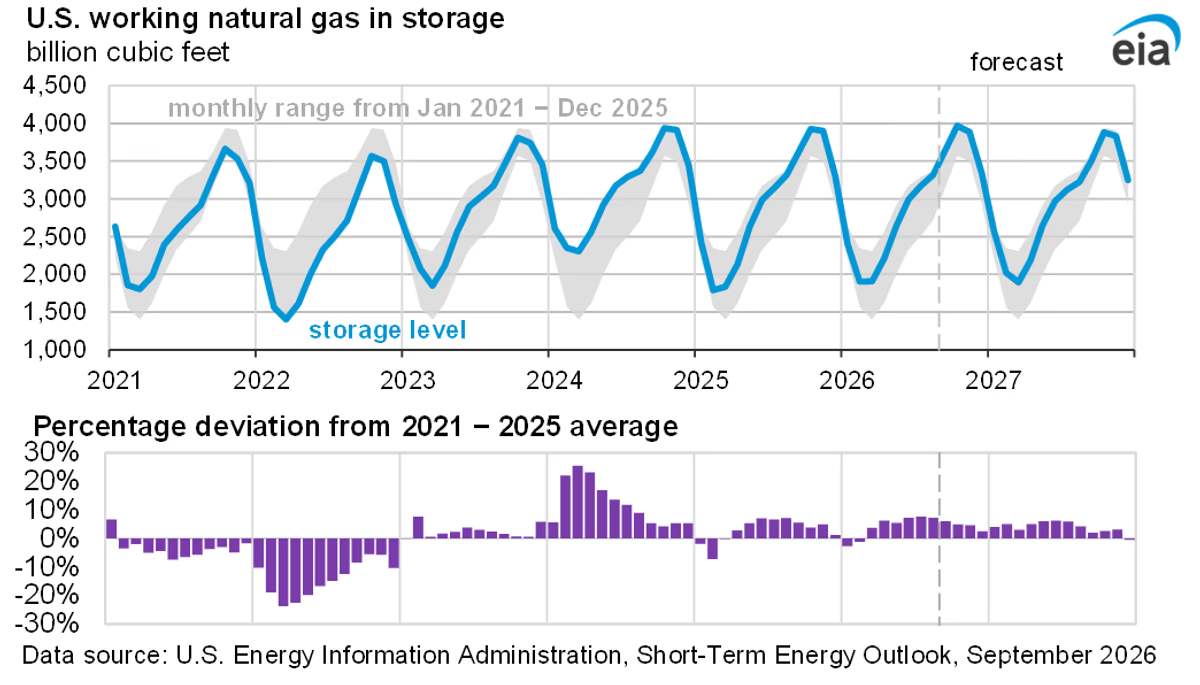
EU gas storage stood at 43.9% of capacity in early June 2026, down 16.9 percentage points from the same period a year ago, per data cited in the Global LNG Hub weekly report. Total EU underground gas storage capacity is approximately 1,130 terawatt-hours. A 16.9-percentage-point deficit against that base represents roughly 191 terawatt-hours of gas that Europe would need to inject above normal seasonal pace to match last year's storage level at the start of the heating season.
At Thursday's TTF price of EUR41.34 per megawatt-hour, filling that 191-terawatt-hour gap carries a replacement cost of approximately EUR7.9 billion above a normal injection season. Europe's mandatory storage target for the 2026 winter season has already been relaxed from 90% to 80% of capacity under European Commission flex provisions. Without sustained LNG imports and pipeline injections running above seasonal norms through September, storage could enter the 2026-27 heating season at levels that leave limited buffer against a cold spell.
The Henry Hub-TTF Spread Still Favours US Exporters
Even after TTF's sharp decline from crisis highs, the spread between Henry Hub and TTF remains historically wide. At $3.10 per MMBtu for Henry Hub (per Global LNG Hub data for the week of June 8 to 12) and $13.20 per MMBtu for TTF on June 18, converting EUR41.34 per megawatt-hour at prevailing EUR/USD rates, the spread stands at roughly $10.10 per MMBtu. That level still incentivizes maximum US LNG loading, with US export terminals running near capacity as operators capitalize on European demand that must build storage before October.
At a $10.10 per MMBtu spread applied to Sabine Pass LNG's approximate 3.5 billion cubic feet per day nameplate capacity, the gross margin potential for Cheniere Energy's flagship Gulf Coast facility runs to roughly $35 million per day. Annualized, that is approximately $12.9 billion for a single facility. The figure illustrates why US LNG operators have a direct commercial interest in Hormuz normalization proceeding, even as Qatar's supply shortfall provides a structurally elevated price floor for European gas regardless of the ceasefire outcome.
Forward Dynamics
TTF's support lies in Europe's storage deficit and the permanent reduction in Qatar's export capacity. With 12.8 mtpa of Qatar production offline for up to five years and EU storage running 16.9 percentage points below last year, European buyers face a structurally tight LNG market even as geopolitical risk premiums unwind. The floor for European gas prices is now set by injection economics: Europe needs to reach at least 80% storage by November 1 under the relaxed Commission target, and the Qatar supply hole makes that task materially harder than in any recent year.
Published by Oil Authority, edited by Adam Humphreys
Submit a Correction
Spotted a factual error? Free account required to submit a correction.