QatarEnergy Declares Force Majeure as Ras Laffan Ships Just 18 Cargoes in Six Months, European TTF Prices Up 103%
QatarEnergy declared force majeure as Hormuz restrictions cut Ras Laffan's cargo count by 96%, sending European TTF gas prices up 103% in a year.
QatarEnergy has declared force majeure on a portion of its long-term LNG supply contracts, citing Iranian drone and missile strikes that damaged infrastructure at Ras Laffan Industrial City. The facility, the world's single largest LNG-producing complex, shipped 18 cargoes in the six months following the start of the Iran conflict. Ras Laffan exported 509 cargoes in the corresponding period a year earlier. The 96% reduction in throughput has severed contracted supply to buyers across Europe and Asia, with QatarEnergy estimating a repair timeline of up to five years.
Revenue Impact and the Scope of the Export Collapse
QatarEnergy projects $20 billion per year in lost revenue from the cargo disruption, per reporting by OilPrice.com. Over the first six months of the conflict, the company has reported $24 billion in lost sales. Force majeure declarations cover long-term LNG sale-and-purchase agreements with utilities and trading houses. The Strait of Hormuz blockade has effectively removed approximately 20% of daily global LNG flows from the market, with Qatar's Ras Laffan complex accounting for the bulk of the trapped supply.
JV Partners Share the Export Shortfall
Ras Laffan hosts multiple joint-venture LNG production trains in which TotalEnergies, ExxonMobil, and ConocoPhillips each hold equity stakes alongside QatarEnergy. Those companies are parties to the sale-and-purchase agreements that the force majeure declarations now invoke, imposing delivery suspension rights on long-term buyers. QatarEnergy, 100% owned by the Qatari government, holds majority positions in all Ras Laffan production trains. The force majeure declarations open the question of whether long-term contract customers will seek alternative supply at substantially higher spot prices, or pursue legal remedies tied to the conflict trigger.
LNG Spot Prices and the Henry Hub-TTF Spread
JKM, the northeast Asian LNG spot benchmark, stood at $22.50 per million BTU for October delivery as of Monday's market session, per Oil Authority's August 24 market analysis, roughly double the rate before the Iran conflict began. TTF, the European hub benchmark, traded at 66.28 EUR per MWh on Wednesday, up 102.86% from twelve months prior, per Trading Economics. Converting to energy-equivalent terms: 66.28 EUR per MWh divided by 3.412 MMBtu per MWh equals approximately 19.4 EUR per MMBtu. At a rough dollar-to-euro rate near 1.10, TTF translates to approximately $21.40 per MMBtu against Henry Hub natural gas at $2.89 per MMBtu on Wednesday, per Trading Economics, leaving a spread of roughly $18.50 per MMBtu.
That spread would normally be wide enough to incentivize maximum throughput at U.S. LNG export facilities. Gulf Coast liquefaction terminals have been running at elevated utilization as European utilities and Asian buyers compete for Atlantic Basin supply. The bottleneck is not U.S. gas supply but transatlantic shipping capacity and the structural gap left by Qatar's near-complete export shutdown. Henry Hub rose 4.39% to $2.89 per MMBtu on Wednesday, partly reflecting weather-driven demand forecasts for late August through early September, per Trading Economics.
European Storage Deficit Heading Into Winter
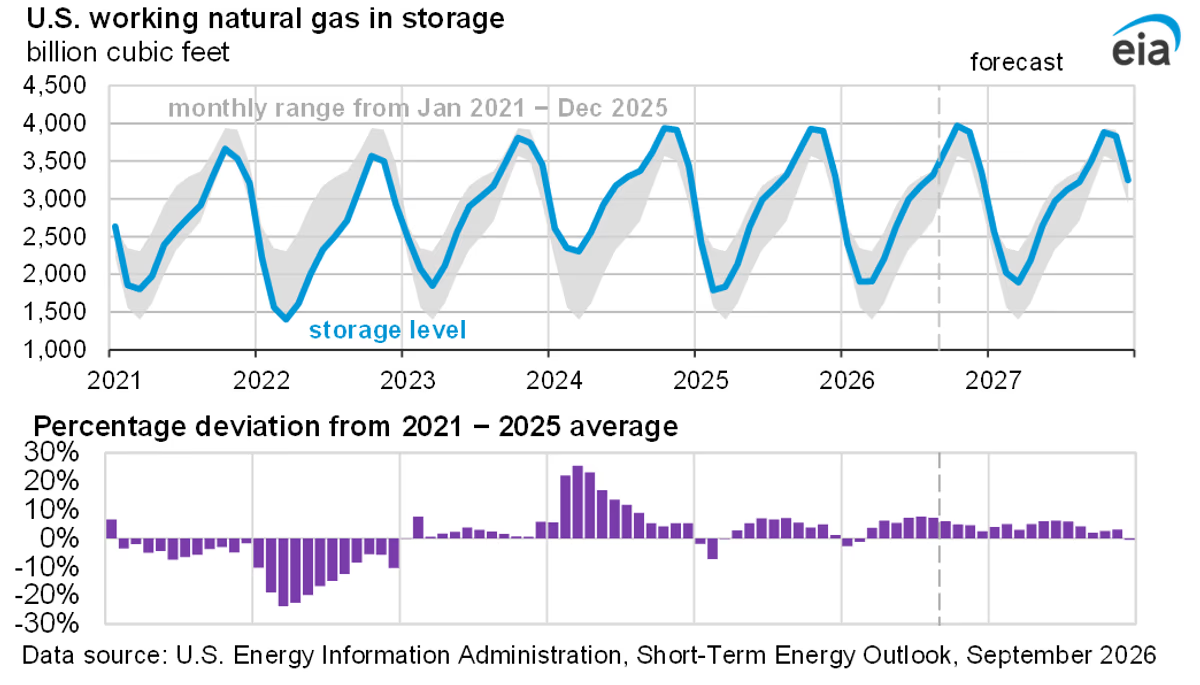
Germany holds approximately 126.34 TWh of gas in storage and France 83.41 TWh, per Gas Infrastructure Europe data cited by Trading Economics. The Netherlands has signaled it will fall short of winter filling targets, adding pressure on regional utilities to source alternative cargoes at spot prices. UK energy bills are set to reach a three-year high as elevated gas prices flow through to household tariffs. Persistent summer heat across Europe has slowed the pace of seasonal storage injections, compounding the supply shortfall from Qatar's export collapse. Europe must now compete for scarce LNG volumes from U.S. Gulf Coast terminals, West African producers, and Australian suppliers, paying a substantial premium above Henry Hub netback cost.
Published by Oil Authority, edited by Adam Humphreys
Submit a Correction
Spotted a factual error? Free account required to submit a correction.