South Bow Secures 20-Year Shipper Commitments for 450,000 BPD Prairie Connector, Advancing Keystone XL Revival
South Bow confirmed 20-year shipper deals for the 450,000 bpd Prairie Connector, a pipeline using stranded Keystone XL assets to link Hardisty to Cushing.
South Bow Corporation announced on May 29, 2026 the successful completion of its commercial open season for the Prairie Connector project, securing 20-year binding commitments for firm crude transportation service from Hardisty, Alberta to US delivery points. The open season closed March 30 following an eight-week solicitation period. CEO Bevin Wirzba called the result "another critical milestone" and cited "the ongoing need for market access for Western Canadian crude oil to key demand and refining markets."
What the Prairie Connector Comprises
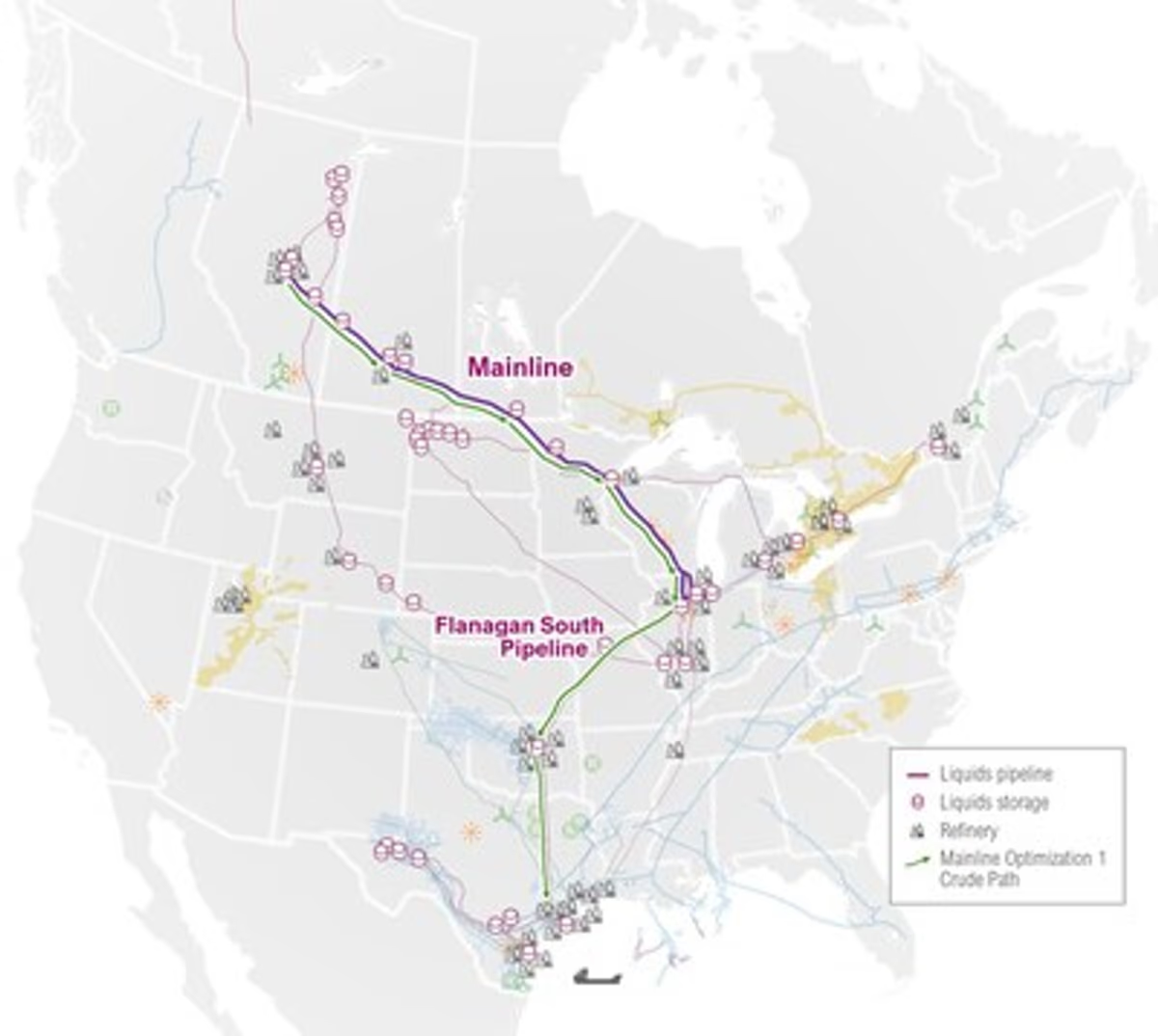
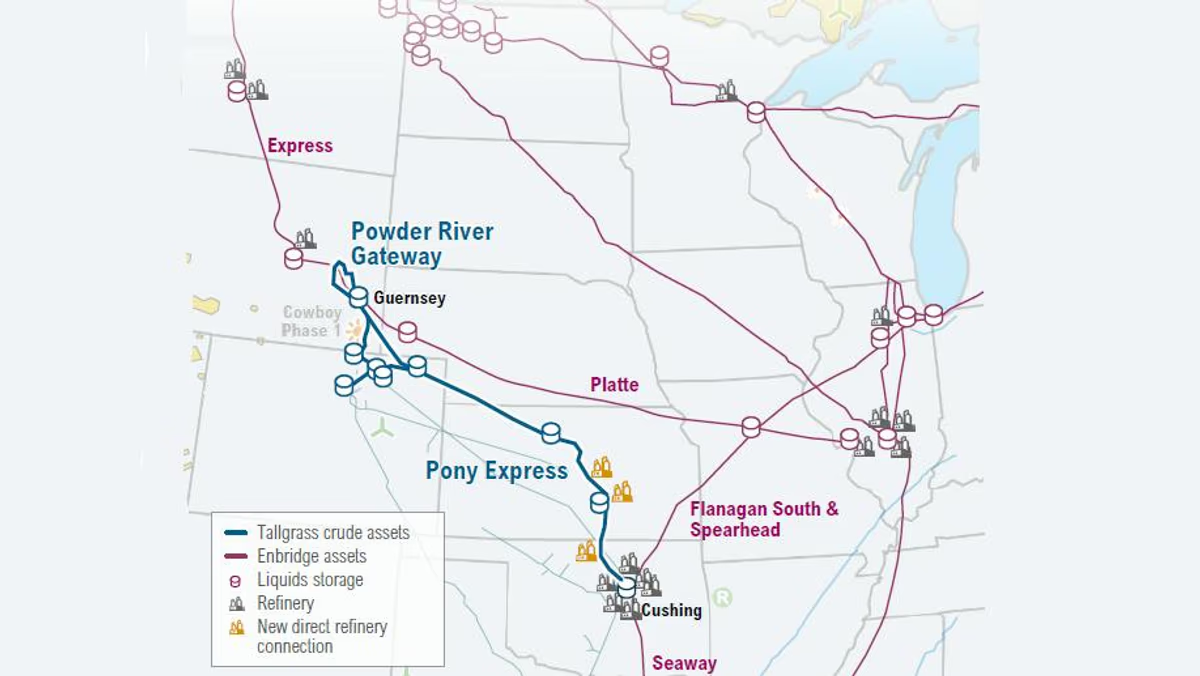
The Prairie Connector would run approximately 530 kilometres from Hardisty to the Canada-US border, comprising roughly 380 kilometres of new 36-inch pipeline and 150 kilometres of existing pipe and pump stations from the cancelled Keystone XL project. At the border, it connects to Bridger Pipeline LLC's proposed 550,000 barrel-per-day expansion to Guernsey, Wyoming. From Guernsey, crude can route into South Bow's existing Marketlink system, which runs from Cushing, Oklahoma to the Gulf Coast at an 800,000 barrel-per-day nameplate rating. Total targeted capacity for the Prairie Connector corridor is 450,000 barrels per day.
South Bow as TC Energy's Liquids Spinoff
South Bow Corporation became an independent publicly traded company in October 2023, when TC Energy separated its liquids pipeline business from its gas transmission assets. TC Energy retained the NGTL System, the TC Canadian Mainline, and Coastal GasLink. South Bow took the Keystone Pipeline System, Marketlink, and several other North American liquids lines. The Prairie Connector is South Bow's first major greenfield proposal since the separation, built around stranded Keystone XL right-of-way and infrastructure TC Energy had already partially installed.
South Bow filed early-stage US permitting documentation in spring 2026, using existing Keystone XL environmental and regulatory approvals where applicable. CEO Wirzba has said publicly that working within a pre-invested corridor improves the prospects for advancing construction on a compressed timeline. The company will provide updated spending and activity details in its Q2 2026 disclosures.
What 450,000 BPD Means for the WCS Discount
Western Canadian Select crude traded at $16.25 per barrel below WTI as recently as April 13, 2026, per brokerage CalRock data reported by the BOE Report, compared to an Alberta Energy Regulator full-year 2026 forecast of $12 per barrel. The differential widened that week as US Strategic Petroleum Reserve releases suppressed demand for Canadian heavy crude. Pipeline capacity constraints are a structural driver of the WCS discount: when takeaway capacity runs tight, producers must offer deeper discounts or rely on higher-cost rail.
With WCS quoted at $16.25 below WTI on April 13, Alberta heavy-oil producers were realizing approximately $84 per barrel on WCS-priced output when WTI was near $100. Today, with WTI at $86.55 on the CME as of mid-morning Friday, a comparable $16 discount would put realized prices at roughly $70.55 per barrel. At 450,000 barrels per day of new committed capacity, every dollar narrowed on the WCS discount represents approximately $164 million per year of additional realized revenue for Canadian shippers. Prairie Connector's 20-year binding commitments reflect shipper conviction that corridor economics justify that long-run investment.
Oil Authority reported in April 2026 that the EIA projected a $96 per barrel Brent average for the full year, with a Q2 peak near $115 driven by Hormuz supply disruptions. Brent has since declined to $90.69, as ceasefire talks have introduced a Hormuz reopening scenario. Prairie Connector's commercial case was built during a high-price, wide-differential environment, and 20-year commitments signal shippers expect the market-access value to persist across commodity cycles.
Timeline and Next Steps
South Bow targets a final investment decision in mid-2027, contingent on acquiring remaining US permits, securing government assurances on permit durability, completing cost estimates, and arranging project financing. Construction lead times for a 380-kilometre 36-inch line suggest first oil through the Prairie Connector would not arrive before 2029. The FID date depends on whether Canadian and US regulators provide the permit-stability assurances South Bow has publicly requested. CEO Wirzba has called on both governments to do more to reduce political risk around cross-border pipeline permits.
Published by Oil Authority, edited by Adam Humphreys
Submit a Correction
Spotted a factual error? Free account required to submit a correction.