Suncor Q1 Profit Hits $2.1B, Fort Hills Record
Suncor posts record Q1 upstream output of 875,200 bbl/d and $2.1 billion net income as Fort Hills hits 187,000 bpd and refining touches 97% use.
Calgary-based Suncor Energy reported first quarter 2026 net earnings of C$2.1 billion, or $1.77 per share, alongside an all-time first-quarter upstream production record of 875,200 barrels per day. The result, released after market close on May 5, was up from C$1.689 billion a year earlier and was driven by record output at the wholly owned Fort Hills mine and a 97 percent refinery utilization rate across the company's four downstream plants.
WTI crude was trading near $103 per barrel as of late morning Tuesday on the CME, with Brent around $111 on ICE, both off recent highs after United States President Donald Trump called off a planned military strike on Iran on Monday. The Strait of Hormuz remains effectively closed to most oil traffic, keeping Atlantic-basin barrels at a premium and supporting the realized prices that powered Suncor's quarter.
Fort Hills hits 187,000 bpd in first full quarter under sole ownership
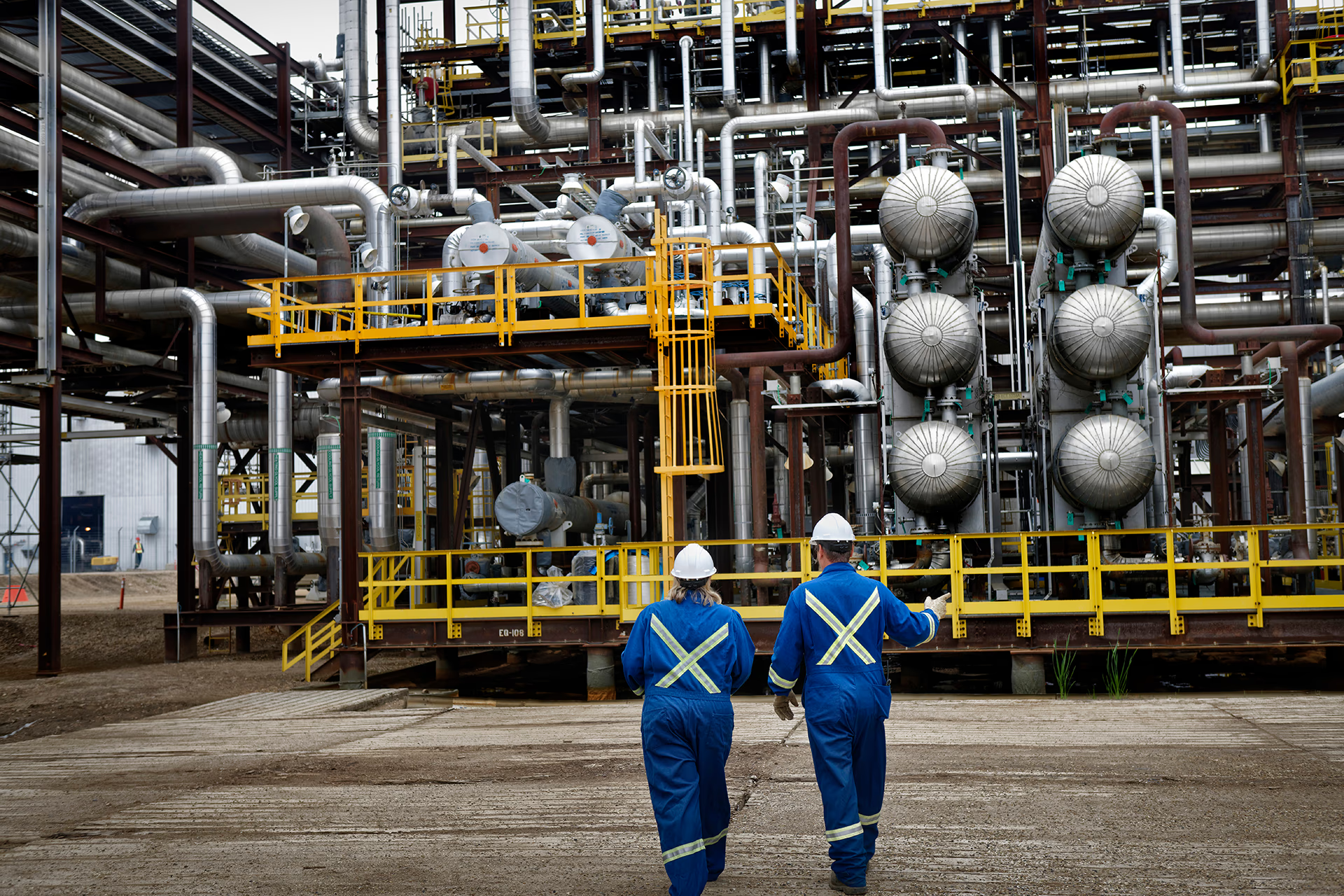
Fort Hills delivered a record 187,000 barrels per day of bitumen in the quarter, Suncor said, the highest output since the mine reached first oil in 2018. The asset was originally a joint venture among Suncor, TotalEnergies and Teck Resources, with Suncor closing on full ownership in early 2023 after acquiring TotalEnergies' 31.23 percent stake for C$1.468 billion. The 2026 quarter was the first to fully reflect a commercial ore-sharing deal Suncor reached in late April with the owners of the neighboring Syncrude mine, under which Fort Hills processes incremental ore from Syncrude's Aurora mine through spare plant capacity.
Total oil sands bitumen production came in at 933,900 barrels per day, broadly in line with the prior year's 937,300 bpd despite planned maintenance at Syncrude. Exploration and production output, which sits outside the oil sands segment, rose to 76,400 bpd from 62,300 bpd a year earlier as offshore Newfoundland fields continued to ramp.
Refining throughput record at 497,800 bpd
Refinery throughput was 497,800 barrels per day, a first-quarter record and up 15,000 bpd year over year. Refined product sales of 680,900 bpd were also an all-time quarterly record. Effective January 1, 2026, Suncor lifted nameplate refining capacity by 10 percent to 511,000 barrels per day across its Edmonton, Sarnia, Montreal and Commerce City refineries, after a multi-year debottlenecking program. The company revised full-year 2026 refinery utilization guidance to 90 to 93 percent to reflect the larger denominator, while leaving absolute throughput guidance of 460,000 to 475,000 bpd unchanged.
Free funds flow of C$2.9 billion funds bigger buyback
Adjusted funds from operations of C$4.03 billion and free funds flow of C$2.913 billion underwrote C$1.537 billion in shareholder distributions during the quarter, split between C$825 million of share repurchases and roughly C$712 million in dividends at the C$0.60 per share quarterly rate. Suncor lifted its 2026 buyback target by more than 30 percent to a roughly C$4 billion annual run rate, the second monthly buyback increase in four months according to chief financial officer Troy Little.
Net debt closed the quarter at C$6.842 billion. Capital expenditures of C$1.076 billion remained inside the company's full-year guidance band, signalling that Suncor will continue to lean on buybacks rather than growth capex as the primary use of incremental cash through 2026.
Oil Authority synthesis: cash netbacks now lead the Canadian senior peer group
At 875,200 bpd of upstream production, Suncor's Q1 free funds flow of C$2.913 billion equates to roughly C$36.97 per barrel of equivalent production, before counting refined product sales. That figure compares to the C$5.05 billion in adjusted funds flow that Canadian Natural Resources reported on Q1 production of 1.64 million boe/d, or about C$33.79 per boe. Suncor's downstream integration, especially the Commerce City and Sarnia refineries running at near full capacity into the current cracking-margin environment, is the marginal difference. Investors should track whether the 510,000 bpd nameplate refining footprint can sustainably absorb incremental WCSB barrels as Cenovus Energy Christina Lake and CNRL Horizon both add capacity later this year.
Published by Oil Authority, edited by Adam Humphreys
Submit a Correction
Spotted a factual error? Free account required to submit a correction.