Trans Mountain Pipeline Hits Record Utilization as Hormuz Crisis Drives Asian Demand for Canadian Crude
Trans Mountain Pipeline shatters record Utilization as Hormuz Crisis Drives Asian Demand for Canadian Crude.
Canada’s Trans Mountain Pipeline system is operating at near-maximum capacity for the month of April 2026, a record utilization milestone driven by surging Asian demand for non-Gulf crude oil in the wake of the Strait of Hormuz crisis. The 890,000 barrel-per-day pipeline, which carries heavy and light crude from Edmonton, Alberta, to the Westridge Marine Terminal in Burnaby, British Columbia, is running in the high-90 percent utilization range, according to Trans Mountain CEO Mark Maki.
The milestone vindicates what was once one of the most contentious infrastructure projects in Canadian history. The C$34 billion expansion, completed in May 2024 after more than a decade of regulatory battles, nearly tripled the system’s capacity from its previous 300,000 barrels per day. With Iran’s blockade of the Strait of Hormuz disrupting an estimated 12 to 15 million barrels per day of global supply since late February, buyers in China, South Korea, Japan, and India have pivoted aggressively toward Canadian barrels shipped via the Pacific coast.
Western Canadian Select Benefits from the Shift
The WCS discount to WTI has narrowed materially as a result of the demand shift. Canadian heavy crude, historically discounted by $15 to $25 per barrel relative to WTI due to pipeline bottlenecks and quality differentials, has seen that gap compress to single digits in recent weeks. With WTI trading near $95.50 per barrel and Brent at roughly $96 as of April 10, Canadian producers including Suncor Energy, Cenovus Energy, and Canadian Natural Resources are enjoying some of the strongest netback prices in years.
Imperial Oil, the ExxonMobil subsidiary that is one of the largest shippers on the Trans Mountain system, has also reported increased export volumes through Westridge. The terminal’s three-berth dock complex can handle Aframax-class tankers carrying up to 630,000 barrels per load, with vessels departing for ports across the Asia-Pacific region on a near-daily basis.
Optimization Projects Aim to Add 300,000 Barrels per Day
Even as the system runs near its nameplate capacity, Trans Mountain Corporation is pursuing multiple optimization projects to push throughput higher. The most immediate initiative involves drag-reducing agents (DRAs), chemical additives that reduce friction inside the pipeline, which could boost capacity by approximately 10 percent, or roughly 90,000 barrels per day. That project, estimated at C$9 million, is expected to begin construction in August 2026 and be completed by January 2027.
A more ambitious effort, the Mainline Optimization Project, would add new pumping stations and other upgrades to lift total system capacity to approximately 1.19 million barrels per day by the end of 2028. If completed, Trans Mountain would become one of the highest-capacity crude export pipelines in North America.
British Columbia, which spent years opposing the original expansion through legal challenges, has reversed its stance and now backs the capacity increases, reflecting the economic benefits flowing to the province through terminal fees, marine traffic, and employment.
Broader Pipeline Context
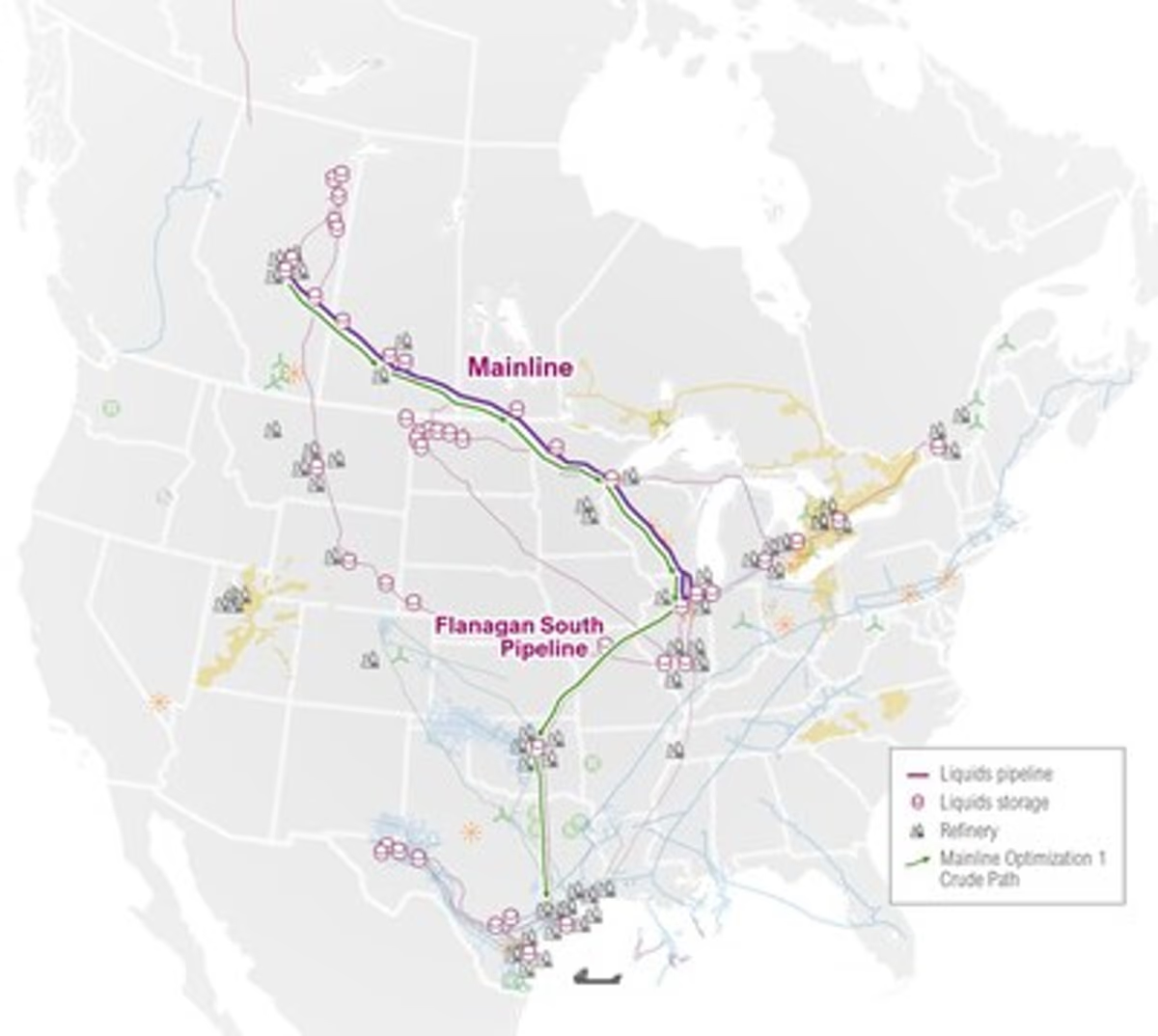
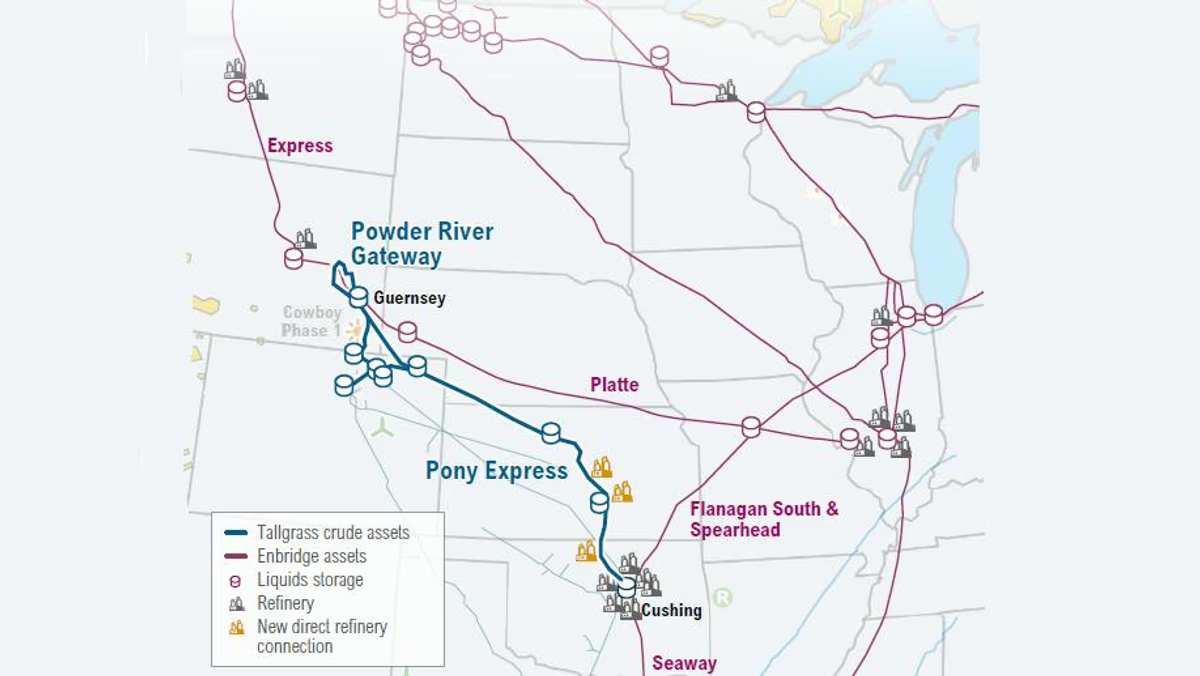
Trans Mountain is not the only Canadian pipeline system benefiting from the current environment. Enbridge’s Mainline system, which carries roughly 3 million barrels per day of crude and liquids from Western Canada to refineries in the U.S. Midwest and Gulf Coast, has also seen strong nominations. TC Energy’s Keystone Pipeline system continues to operate at high rates as well.
However, Trans Mountain’s Pacific coast access gives it a unique strategic advantage during a crisis centered on Middle Eastern waterways. While Enbridge and Keystone primarily serve landlocked U.S. refining markets, Trans Mountain is the only major pipeline that can put Canadian crude onto tankers bound for Asia, exactly where the supply shortfall is most acute.
For the latest crude oil pricing data, visit our prices dashboard. For more on how the Hormuz crisis is reshaping global flows, see our latest news coverage.
Investor and Government Implications
The federal government, which purchased the pipeline from Kinder Morgan in 2018 for C$4.5 billion and oversaw the expansion to completion, has signaled its intent to eventually return Trans Mountain to private ownership through an IPO or strategic sale. The current operating environment, with record throughput and strong revenue, is likely to boost the asset’s valuation and accelerate that timeline.
Trans Mountain reported that toll revenues have exceeded internal projections for three consecutive months, aided by both high utilization and premium pricing for committed capacity. With the Hormuz crisis showing no clear resolution timeline, the pipeline’s strategic importance to both Canada and its Asia-Pacific trading partners has never been more apparent.
Sources: CBC News, Bloomberg, Trans Mountain Corporation, Canada Energy Regulator.
Published by Oil Authority, edited by Adam Humphreys
Submit a Correction
Spotted a factual error? Free account required to submit a correction.