WCS Differential Widens to $16.15 per Barrel as Trans Mountain Hits 890,000 BPD Capacity, Squeezing Alberta Producer Netbacks in April
WCS settled at a $16.15/bbl discount to WTI on May delivery as Trans Mountain hits 890,000 BPD, with Alberta producers netting just $75 even as WTI holds $91.
Western Canadian Select (WCS), the benchmark price for Alberta oil sands bitumen blends, settled at a $16.15 per barrel discount to West Texas Intermediate (WTI) at Hardisty, Alberta this week on May delivery contracts, a spread that is quietly limiting the gains that elevated global crude prices would otherwise deliver to Canadian producers.
With WTI trading at $91.91 per barrel on April 16 and Brent at $94.89, the benchmark rally driven by the Strait of Hormuz supply crisis translates to netback prices of approximately $75 to $78 per barrel for Alberta oil sands producers selling at Edmonton. While that remains above the long-run sustaining breakeven for most oil sands projects, the widening discount underscores a structural tension in Canadian energy: even when global prices surge, Canadian barrels do not capture the full upside.
Trans Mountain Running Full
The Trans Mountain Expansion pipeline, which reached commercial operations in May 2024 and tripled Alberta-to-British Columbia export capacity to 890,000 barrels per day (BPD), is operating at or near full throughput. Trans Mountain Corporation has applied to the Canada Energy Regulator to use drag-reducing agents (DRA) in its mainline, a chemical injection technique that reduces turbulent flow and could increase effective capacity by approximately 10 percent to around 979,000 BPD without physical pipe replacement.
The pipeline has been a genuine commercial success for Alberta. British Columbia coast exports of Canadian crude approximately doubled in 2025 to record levels, with the majority of volumes moving to refineries in China, South Korea, and Japan via Westridge Marine Terminal in Burnaby. Asian refineries have been willing to pay closer to Brent-linked prices for heavy sour Canadian crude, helping narrow the Pacific differential compared to the traditional WTI-WCS spread that dominated Alberta pricing before the TMX expansion entered service.
Factors Behind the Widening Spread
Several forces are pushing the WCS-WTI differential wider in mid-April 2026:
- Demand softening at the margins: The IEA April 2026 Oil Market Report projects global oil demand will contract by 80,000 barrels per day on average in 2026, the first annual decline since COVID-19, as high prices suppress consumption in price-sensitive Asian markets. That demand destruction hits heavy crude harder than light sweet barrels, since Asian refineries with hydrocracking and coking capability are the primary buyers of WCS.
- Heavy crude quality discount: WCS is a blend of diluted bitumen and conventional heavy oil that requires upgrading or specialized coking units. With US Gulf Coast heavy-crude refineries running at capacity, incremental WCS volumes compete for a narrow buyer pool.
- US-Canada trade uncertainty: Tariff policy uncertainty under the Trump administration has added a risk premium to cross-border crude trade, which intermediaries price into the WCS discount.
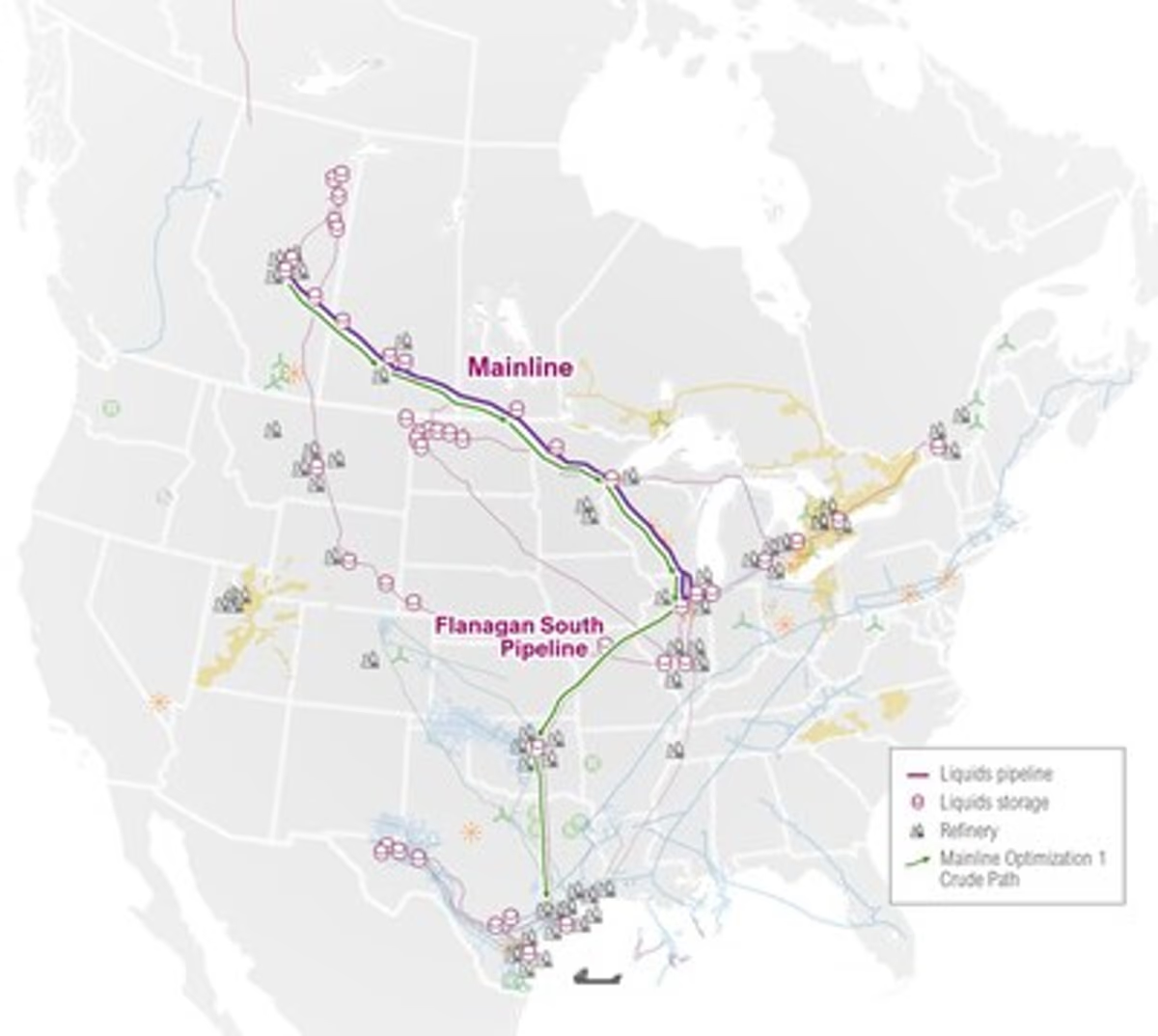
- Mainline apportionment: The original Trans Mountain mainline and Enbridge's Alberta system remain subject to monthly apportionment, limiting producers ability to ship all contracted volumes when pipeline demand exceeds booked capacity.
Alberta Revenue Context
Alberta's 2026-27 budget was modelled on WTI at approximately $72 per barrel. Current prices are generating significant royalty windfalls even after accounting for the differential, and the Alberta Petroleum Marketing Commission manages bitumen royalty receipts in a way that partially insulates the government from spot-market swings.
Major producers including Imperial Oil, Suncor Energy, Cenovus Energy, and Canadian Natural Resources are positioned to report strong first-quarter 2026 earnings, given average realized prices well above operating breakevens. The key watch item is whether the WCS-WTI spread exceeds $18 per barrel for a sustained period, which tends to compress cash flows for producers whose costs are in Canadian dollars but revenues track USD benchmarks.
Alberta's regulatory environment is also shifting in producers' favour. The province tabled legislation in April 2026 to fast-track project approvals to 120 days, while Ottawa and Edmonton signed a memorandum of understanding on a potential new tidewater pipeline corridor that could add export capacity beyond Trans Mountain.
Outlook
The WCS-WTI differential is expected to range between $14 and $18 per barrel through the second quarter of 2026 as Trans Mountain throughput stabilizes and OPEC+ adds a combined 206,000 BPD to global supply starting in April, contributing light sweet barrels that compete with upgraded synthetic crude from Alberta. A Hormuz settlement restoring 10 million BPD to world markets would likely push WTI toward $70 to $75 per barrel, at which level even a narrowed WCS differential could place some oil sands projects near their sustaining capital thresholds.
For now, Alberta producers are banking cash at $75 netback prices and watching the OPEC+ compliance data for signs that supply discipline holds through the geopolitical uncertainty of the coming weeks.
Sources: BOE Report, Trans Mountain Corporation, Alberta Petroleum Marketing Commission, International Energy Agency April 2026 Oil Market Report.
Published by Oil Authority, edited by Adam Humphreys
Submit a Correction
Spotted a factual error? Free account required to submit a correction.