South Bow Corporation Seeks 450,000 BPD Commitments for Prairie Connector Pipeline From Alberta to Gulf Coast
South Bow Corporation Seeks 450,000 BPD Commitments for Prairie Connector Pipeline From Alberta to Gulf Coast. Brent crude stood near $96 per barrel.
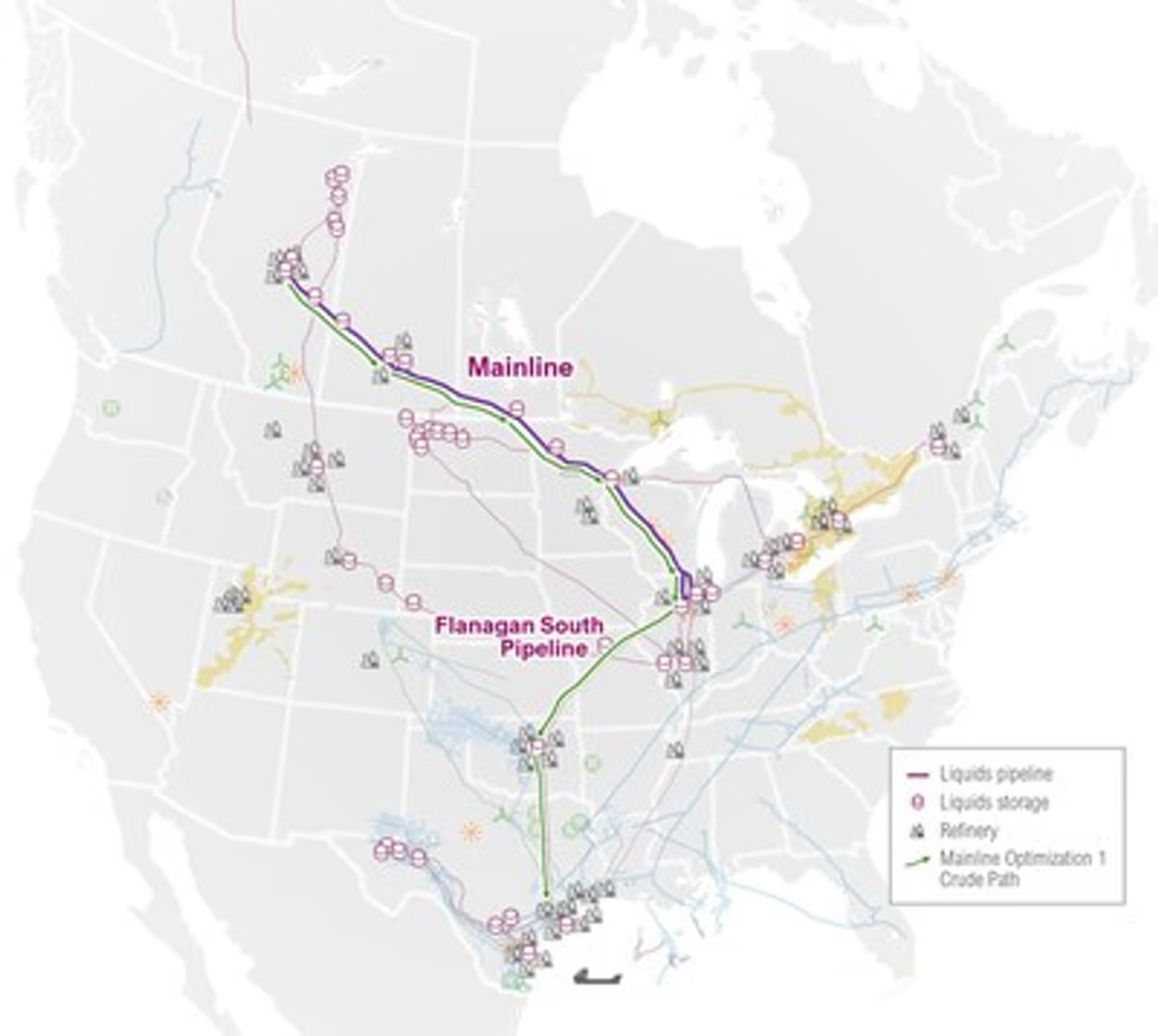
South Bow Corporation, the Calgary-based pipeline operator spun off from TC Energy in late 2024, is advancing plans for the Prairie Connector, a proposed 450,000 barrel-per-day crude oil pipeline that would link the Hardisty oil hub in Alberta to refining markets on the U.S. Gulf Coast. The company launched a formal open season earlier this year to gauge shipper interest, and executives have described the early commercial response as encouraging.
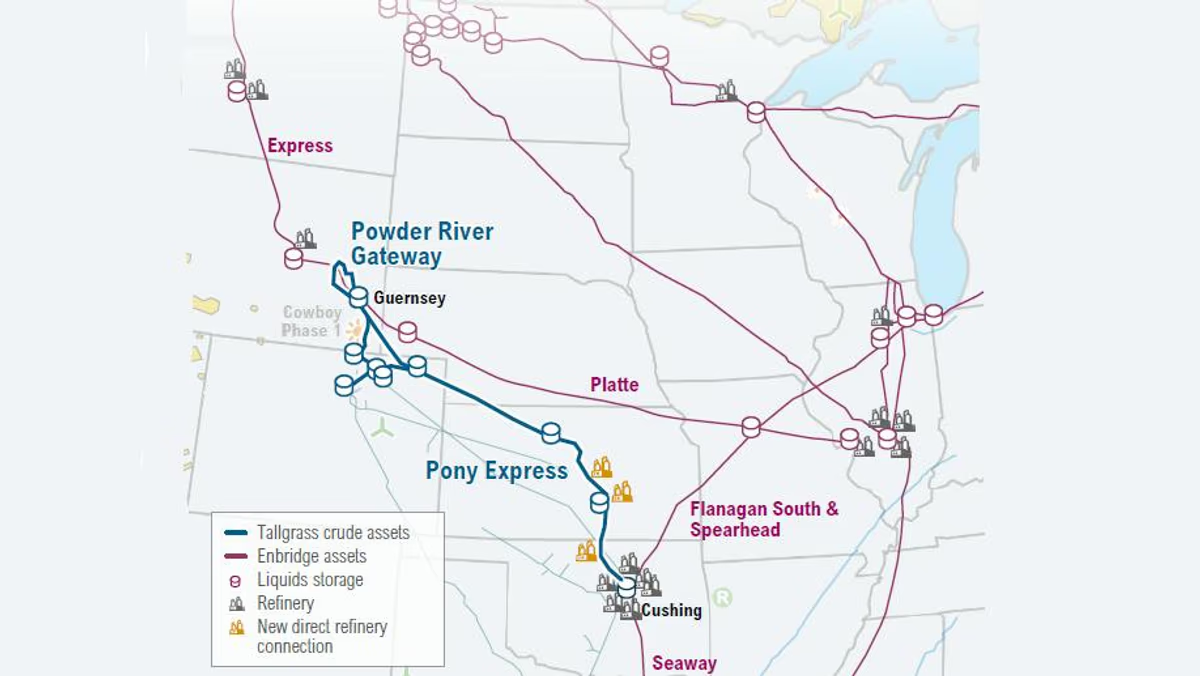
The Prairie Connector would leverage stranded infrastructure from the abandoned Keystone XL project, including partially built pipeline segments and pump stations stretching from Hardisty to the U.S. border. South of the border, the route would connect into proposed new pipeline capacity reaching Cushing, Oklahoma, and onward to Gulf Coast refineries. By repurposing existing steel in the ground, South Bow aims to bring the project to market faster and at lower cost than a greenfield build.
Commercial and Regulatory Status
South Bow has not yet disclosed a capital cost estimate for the Prairie Connector. The open season, which closed on March 30, 2026, solicited firm transportation commitments from producers and shippers. Management noted during the company's fourth-quarter 2025 earnings call that many potential customers have announced significant production growth targets over the next three to five years, aligning well with the project's midterm development timeline.
The company has not filed any formal application with the Canada Energy Regulator, signaling that the project remains in the commercial de-risking phase. Regulatory approvals, environmental assessments, and landowner negotiations in Saskatchewan and Montana would all need to proceed before construction could begin. South Bow has already begun approaching Saskatchewan landowners about potential pipeline routing, an early indicator that the company is moving beyond conceptual planning.
Why New Pipeline Capacity Matters
The case for additional export pipeline capacity out of Western Canada strengthened considerably after the Trans Mountain Expansion came online in 2024, quickly filling to near capacity. Canadian oil sands production continues to grow, with operators such as Suncor Energy, Imperial Oil, and Cenovus Energy all pursuing incremental debottlenecking and new projects.
Without additional takeaway capacity, the Western Canadian Select differential to WTI would likely widen, eroding netbacks for producers. WCS currently trades at a discount of roughly $12 to $14 per barrel below WTI, which itself was trading near $95.50 per barrel in early April 2026. Brent crude stood near $96 per barrel. A wider differential would penalize Canadian producers and reduce provincial royalty revenues in Alberta and Saskatchewan.
Competitive Landscape
The Prairie Connector is not the only proposed solution to the takeaway constraint. Enbridge continues to optimize throughput on the Mainline system, and rail-by-crude volumes can flex to absorb some incremental barrels. However, pipeline transportation remains significantly cheaper and safer than rail, typically costing $5 to $8 per barrel less on a full-cycle basis.
South Bow's position is strengthened by the fact that it already operates the existing Keystone Pipeline, which moves approximately 600,000 barrels per day of Canadian heavy crude to U.S. markets. Adding the Prairie Connector would effectively create a second major artery under South Bow's operational control, giving the company enormous leverage in the continental crude transportation market.
Market and Investor Outlook
Analysts at Scotiabank recently raised their price target on South Bow shares, citing the Prairie Connector's potential to drive long-term earnings growth. The stock has outperformed the broader energy midstream sector over the past six months as investors price in the possibility of a successful open season outcome.
For the broader North American crude market, the Prairie Connector represents a bet that Canadian oil sands production will continue growing through at least the early 2030s, despite increasing pressure from the energy transition. With global oil demand still rising and crude prices at elevated levels, the economics of heavy oil production and transportation remain robust.
Follow pipeline and midstream developments on the Oil Authority news page.
Published by Oil Authority, edited by Adam Humphreys
Submit a Correction
Spotted a factual error? Free account required to submit a correction.