Alberta Files West Coast Oil Pipeline Application, Trans Mountain and Pembina Named as Partners
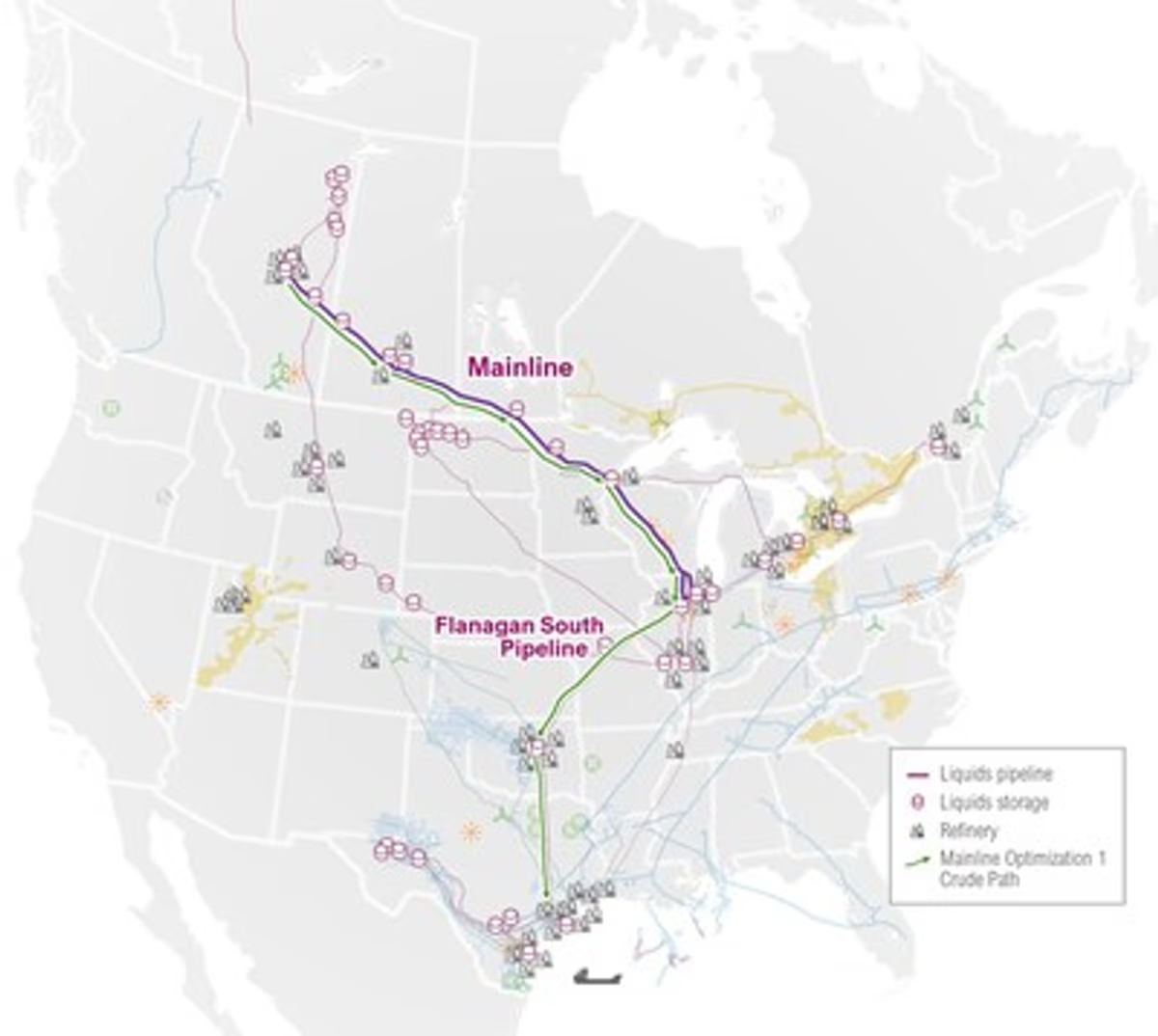
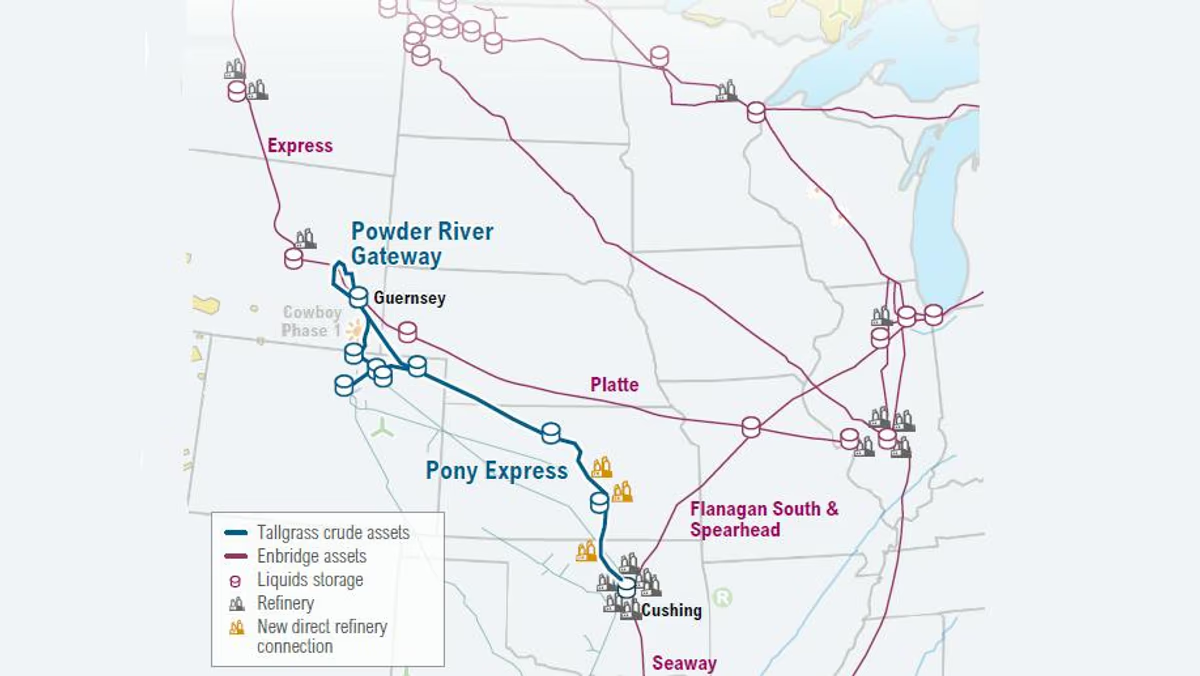
Alberta filed a federal application for the West Coast Oil Pipeline on July 2, naming Trans Mountain and Pembina as partners under the Building Canada Act.
Alberta's government submitted the West Coast Oil Pipeline application to Canada's federal Major Projects Office on July 2, 2026. The filing seeks designation as a project of national interest under the Building Canada Act. Trans Mountain Corporation and Pembina Pipeline Corporation are named as the lead construction and operations partners.
Crown Corporation and Private Midstream Company Lead the Bid
Trans Mountain Corporation is a federal Crown corporation, wholly owned by the Canada Development Investment Corporation (CDEV), a holding company of the Government of Canada. Pembina Pipeline Corporation is publicly traded on the Toronto Stock Exchange and New York Stock Exchange, making it one of Canada's largest publicly listed midstream operators. Alberta's government described the partnership as bringing "world-class pipeline design, construction and operational expertise" to the project.
Alberta Committed $18 Million to Pre-Application Engineering
Alberta committed just over $18 million to early planning work between October 2025 and June 2026. That funding covered preliminary engineering, cost estimates, economic modelling, and early engagement with Indigenous communities along prospective routes. Technical experts completed assessments of multiple potential routes and terminal locations on British Columbia's Pacific coast during that period. A federal-provincial Implementation Agreement, finalized in May 2026, established the regulatory framework before the application was submitted.
National Interest Listing Expected by October 1, Construction by September 2027
Under the Building Canada Act, the federal government is expected to designate the West Coast Oil Pipeline as a project of national interest by October 1, 2026. That designation would provide a streamlined approval pathway for the project. Construction could begin as early as September 1, 2027, pending the completion of Indigenous consultation and remaining regulatory approvals.
Three Prior Pipeline Bids Failed Under Earlier Frameworks
Federal regulators rejected the Northern Gateway pipeline in November 2016, citing inadequate consultation with Indigenous communities by project proponent Enbridge. TransCanada, now TC Energy, cancelled its Energy East pipeline proposal in October 2017 after regulators moved to expand the required scope of review. Trans Mountain Expansion succeeded only after Ottawa purchased the Trans Mountain system from Kinder Morgan in August 2018 for C$4.7 billion. The federal government built the expansion using public capital, completing it in May 2024 at a cost of C$34 billion. The West Coast Oil Pipeline uses a different model: a public-private partnership between a Crown corporation and a listed private company, under a legislative framework designed to accelerate approvals.
TMX Set the Differential Benchmark; New Capacity Would Extend It
Trans Mountain Expansion added 590,000 barrels per day of capacity to the 1,150-kilometre Edmonton-to-Burnaby corridor, raising total system throughput to 890,000 barrels per day. Before the expansion came online in May 2024, the Western Canadian Select differential against West Texas Intermediate crude regularly ran $15 to $20 per barrel. That expanded Pacific access helped narrow the differential, which has since moved to the $12 to $13 per barrel range.
WTI settled at $68.78 per barrel on Thursday's CME close, with U.S. markets shut Friday, July 4, for the Independence Day holiday. Western Canadian Select was quoted at $56.34 per barrel as of the same Thursday close, per OilPrice.com. That puts the current differential at $12.44 per barrel. A second Pacific pipeline would add further competition for Alberta crude in Asian markets and could narrow that spread further for Canadian producers.
Published by Oil Authority, edited by Adam Humphreys
Submit a Correction
Spotted a factual error? Free account required to submit a correction.