Enbridge Adds 250 kbpd WCSB Egress to Gulf Coast
Enbridge launches binding open seasons on Flanagan South and Southern Access, adding 250,000 bpd of Western Canadian crude egress to the U.S. Gulf Coast.
Enbridge Inc launched binding open seasons on the Flanagan South Pipeline and the Southern Access Extension on Thursday, May 8, 2026, advancing 250,000 barrels per day of incremental Western Canada Sedimentary Basin egress capacity under the second phase of its Mainline Optimization program. The Calgary-headquartered midstream operator disclosed the open seasons alongside first-quarter results that lifted its secured project backlog to 40 billion U.S. dollars.
Two Pipelines, Two Gulf Coast Endpoints
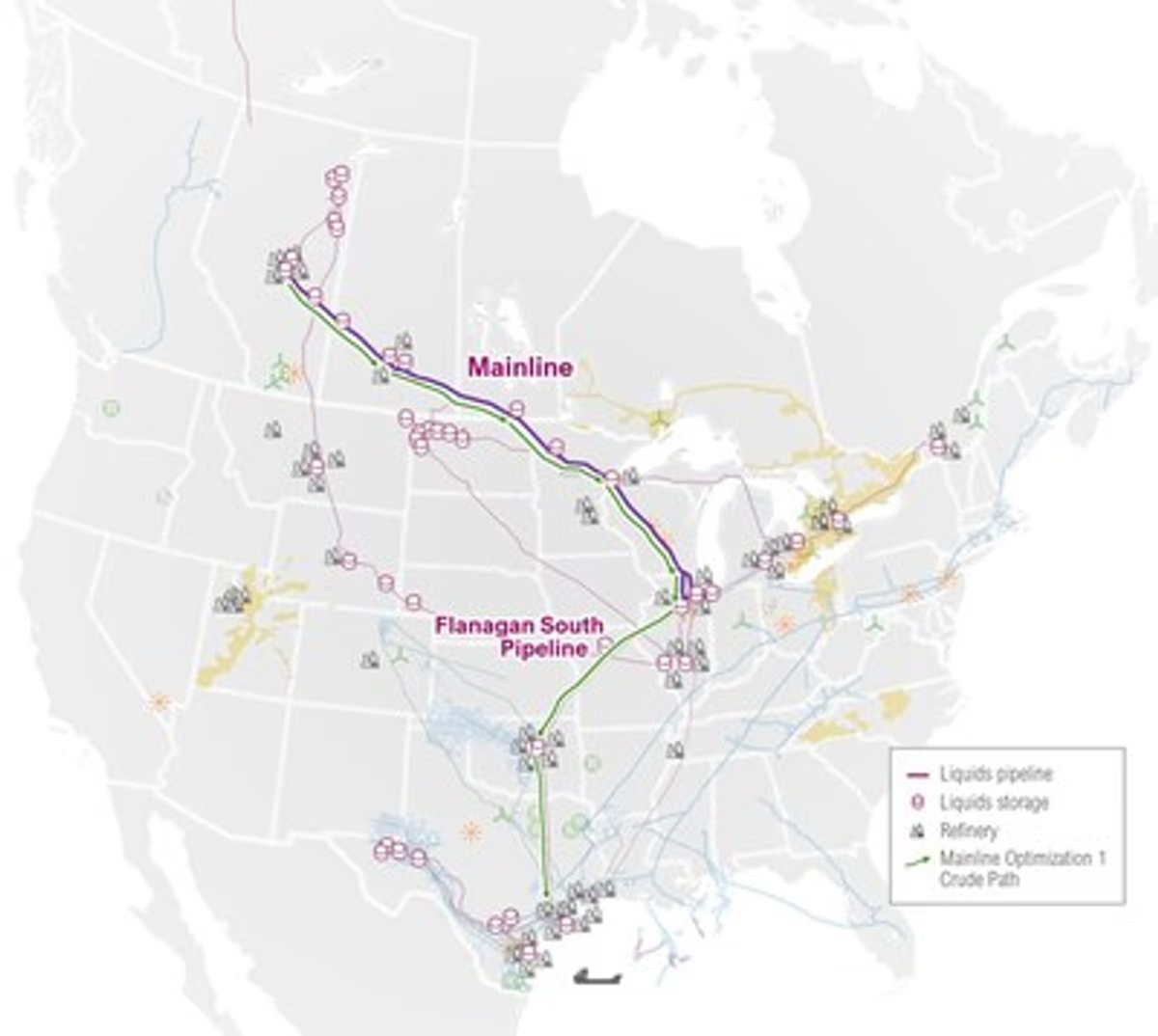
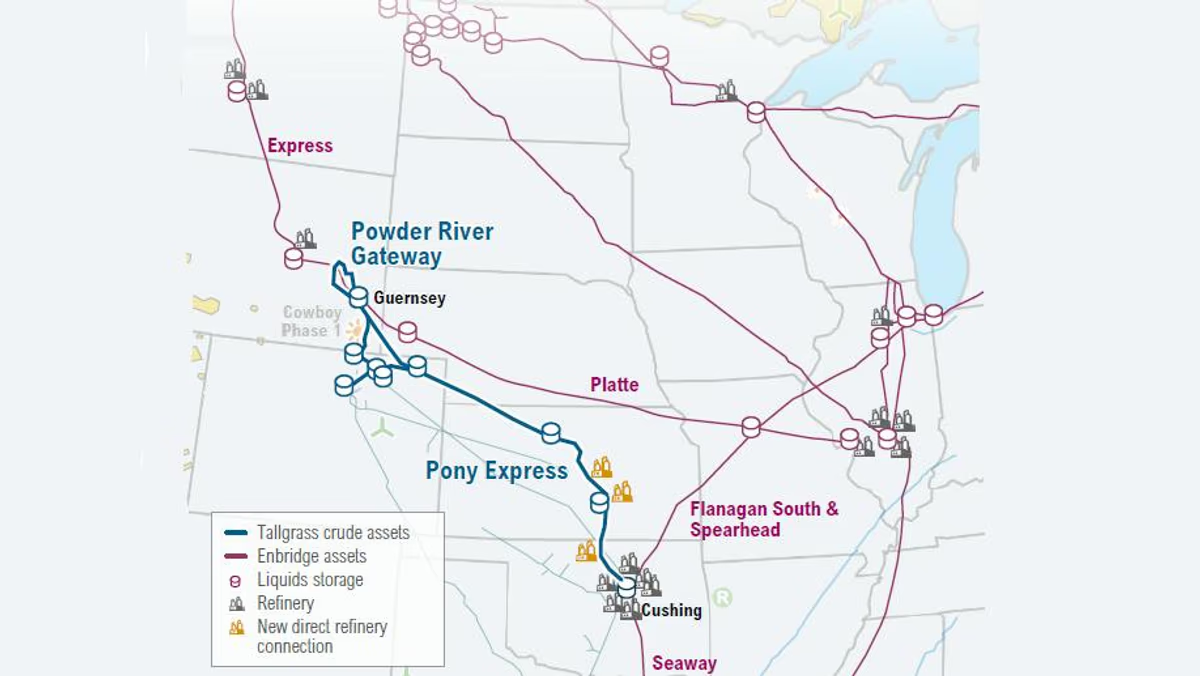
The Flanagan South open season covers 200,000 bbl/d of long-term contracted service. Volumes will move from receipts in Western Canada through Enbridge's mainline network to Flanagan, Illinois, then onto the Seaway Crude Pipeline for delivery into the Seaway Jones Creek Terminal in Brazoria County, Texas. The Southern Access Extension open season adds 50,000 bbl/d, routing through the Energy Transfer Crude Oil Pipeline to Nederland, Texas. Both services price under an International Joint Tariff with Canadian receipt points and U.S. Gulf Coast delivery, structurally similar to the tolling on Enbridge's existing committed expansion volumes.
Chief Executive Greg Ebel framed the announcement as advancing "additional 250 kbpd of egress capacity from Canada" and emphasized North America's role in global energy security. Enbridge did not publish an in-service date with the open season notice; binding shipper commitments are the gating condition before construction-related disclosures.
The 40 Billion Dollar Backlog
The open seasons are part of a Q1 2026 disclosure package that also reaffirmed full-year 2026 financial guidance and reported distributable cash flow of 3.851 billion dollars for the quarter. The 40 billion dollar secured capital backlog now stands alongside roughly 50 billion dollars of unsanctioned project opportunities the company has identified across its liquids, gas transmission, gas distribution, and renewables segments. Enbridge declared a common share dividend of 0.9700 dollars payable June 1, 2026.
WCS Differential Math and TMX Context
Pipeline egress matters most when the basin is constrained. Canadian Heavy crude oil, marked by Western Canadian Select, was indicated at 93.07 dollars per barrel against West Texas Intermediate at 102.60 dollars per barrel on Monday, May 18, 2026, per OilPrice.com intraday quotes, putting the WCS-WTI differential at approximately 9.53 dollars per barrel. That is well inside the historical 17.20 dollar per barrel average flagged by the Canadian Association of Petroleum Producers and approaches the narrowest band since the depths of 2020.
The Trans Mountain Expansion has been the primary driver of that compression. CER market snapshots show TMEP has materially eased pipeline constraints since startup, and Trans Mountain reported no apportionment on its system in March 2026, indicating sufficient capacity at current basin volumes. The Enbridge Mainline Optimization Phase 2 adds another structural relief valve at the 250 kbpd level on top of the 590 kbpd of TMX nameplate, suggesting Canadian heavy producers should retain leverage to negotiate tight differentials through the back half of the decade.
The Bridger Pipeline Parallel
Enbridge's open season follows a similar capacity solicitation by Bridger Pipeline LLC, which secured 400,000 bpd of shipping commitments on its Alberta-to-Wyoming expansion earlier in May 2026. The two announcements, taken together, signal that midstream operators expect WCSB egress demand to outpace 2024-2025 expansion adds, even with TMX operating below apportionment. Wood Mackenzie has projected Canadian heavy production to reach 5.0 million bbl/d by 2028 from approximately 4.4 million bbl/d at the end of 2025, implying a 600,000 bbl/d net egress shortfall absent further sanctioning of capacity like the Enbridge and Bridger projects.
Implications for Canadian Producers
The 250 kbpd of new long-term contracted egress represents roughly 5 percent of current total WCSB takeaway capacity. For producers including Cenovus Energy, Suncor Energy, and Canadian Natural Resources, securing committed barrels on Flanagan South or Southern Access at International Joint Tariff economics is a hedge against future apportionment cycles and a way to lock in U.S. Gulf Coast pricing exposure that historically carries a premium over Hardisty-based contracts. Refiners on the Gulf Coast with heavy-sour configuration capacity, including subsidiaries of ExxonMobil and Chevron Corporation, are likely natural counterparties on the delivery side.
Published by Oil Authority, edited by Adam Humphreys
Submit a Correction
Spotted a factual error? Free account required to submit a correction.