TC Energy Greenlights $1.5B Appalachia Gas Build
TC Energy commits US$1.5 billion to add 800 MMcf/d on its Columbia Gas system, anchored by a 20-year take-or-pay with an investment-grade utility.
TC Energy sanctioned the US$1.5 billion Appalachia Supply Project on May 1, an expansion of its Columbia Gas system that will add 800 million cubic feet per day of takeaway capacity across 10 eastern and midwestern United States states. The project, announced alongside the company's first-quarter 2026 earnings, is fully underpinned by a 20-year take-or-pay contract with an unnamed investment-grade utility and is expected to enter service in 2030.
Henry Hub front-month gas was trading near $3.95 per MMBtu on the CME late Tuesday morning, well above the sub-$3 levels that prevailed through much of 2024, and TTF in Europe was holding above €50 per MWh, or roughly $16 per MMBtu, as the Strait of Hormuz disruption continues to choke Qatari LNG outbound flows. Those forward curves are the backdrop for a wave of long-dated North American gas takeaway commitments, of which the Appalachia Supply Project is now the largest United States Gulf-direction sanction of 2026.
800 MMcf/d initial, room for 2 Bcf/d
TC Energy said the Appalachia Supply Project will be built in a single 800 MMcf/d phase but is designed for incremental expansions that could lift total capacity to 2 billion cubic feet per day over time. The system serves Ohio, West Virginia, Pennsylvania, Maryland, Virginia, Kentucky, Tennessee, New York, North Carolina and Indiana through the legacy Columbia Gas Transmission grid that TC inherited in its 2016 Columbia Pipeline Group acquisition.
Chief executive officer Francois Poirier said in the company's release that the project "further extends our reach into this high-value, high-growth market" and creates "line of sight for capital-efficient growth projects." TC quoted a 7.3 times build multiple on the project, materially below the 9 to 10 times build multiples typical of greenfield long-haul pipelines, reflecting the brownfield nature of looping and compression additions on an existing right-of-way.
Data center load drives demand
The Appalachia corridor is now home to one of North America's largest pipeline-bound data center build-outs, with hyperscalers committing to gas-fired generation in Ohio, Virginia and West Virginia to bypass multi-year electric grid interconnection queues. TC Energy projects regional natural gas demand will reach 4 billion cubic feet per day by 2035 across the Columbia footprint, roughly 1.6 Bcf/d above current throughput on the system.
The 800 MMcf/d sanction also lands as North American producers grapple with a structural shortfall in northeastern takeaway. Marcellus and Utica producers including EQT, Antero Resources and Range Resources have been pushing for expanded eastbound and southbound pipe egress since 2022, when Mountain Valley Pipeline construction was repeatedly delayed.
Building on the LNG Canada commercial framework
The Appalachia announcement comes weeks after TC Energy reached a commercial framework with Shell Canada-led LNG Canada on a potential Phase 2 expansion of Coastal GasLink, which would double the 2.1 Bcf/d British Columbia pipeline's capacity in lockstep with a doubling of the 14 million tonne per annum Kitimat liquefaction facility. Under that framework, LNG Canada would lead construction as execution manager while TC Energy provides technical advisory services, capping TC's capital commitment and construction-risk exposure.
The two projects together signal TC Energy's strategic pivot from speculative growth capex toward de-risked, contracted expansions on existing footprints. Poirier reiterated TC's 5 to 7 percent annual earnings per share growth target through 2029, supported by what the company described as more than C$25 billion of secured projects.
Oil Authority synthesis: 7.3 times build multiple is the cheap end of US midstream
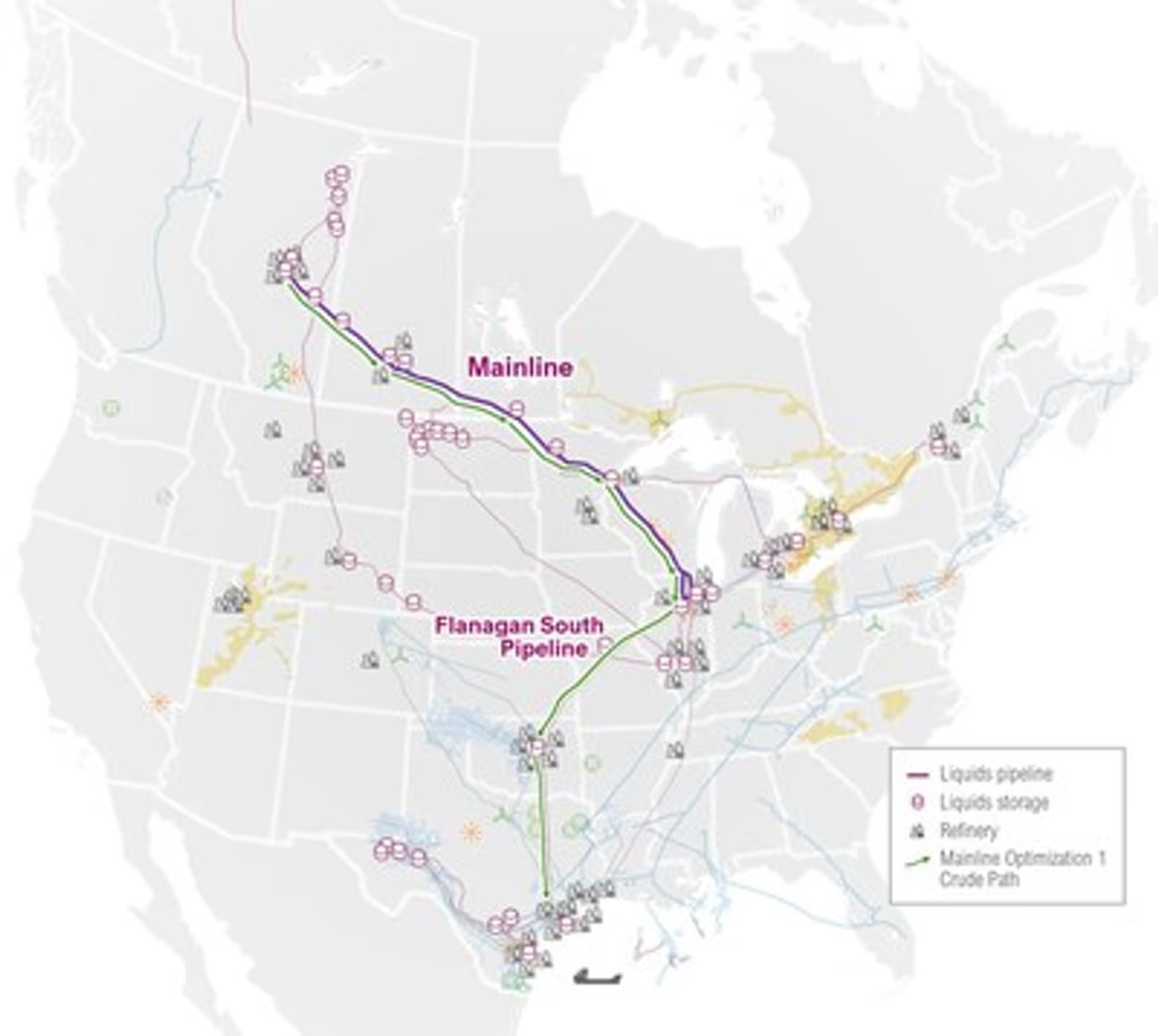
A 7.3 times build multiple at sanctioning equates to an unlevered after-tax internal rate of return in the low- to mid-teens at current contract terms, materially above TC Energy's roughly 5.4 percent weighted average cost of capital. By contrast, Enbridge's 250 kbpd Mainline Optimization announced in early May targets a high single-digit multiple on an oil pipeline that is already 100 percent contracted. The Appalachia project's combination of brownfield economics and a 20-year take-or-pay shield makes it the more attractive of the two pure pipeline sanctions of the month for return-on-capital-focused investors, though it requires a longer wait for cash flow given the 2030 in-service date.
Published by Oil Authority, edited by Adam Humphreys
Submit a Correction
Spotted a factual error? Free account required to submit a correction.