South Korea Pivots to Coal and Nuclear as JKM LNG Reaches $29.84 per MMBtu and Qatari Cargoes Stay Behind Hormuz
South Korea turns to coal and nuclear as Asian LNG hits $29.84 per MMBtu, up 86% since April, with Qatar's Hormuz cargoes still stranded this winter.
South Korea will lean on coal and nuclear power this winter to curb LNG use, Climate, Energy and Environment Minister Kim Sungwhan told Bloomberg in an interview published Friday. "We must somehow reduce LNG demand" in the short term, Kim said, according to OilPrice.com. The shift lands as spot LNG prices in Asia sit at four-year highs.
South Korea ranks as the world's third-largest LNG buyer, after China and Japan. Kim said gas use must fall by expanding renewables while "more actively utilizing nuclear and coal power." Coal-fired supply rose about 40% in April, the biggest jump since August 2019, per market data cited by Reuters. OilPrice.com reported that LNG prices at four-year highs are also raising electricity prices.
How far Asian LNG has climbed since Hormuz closed
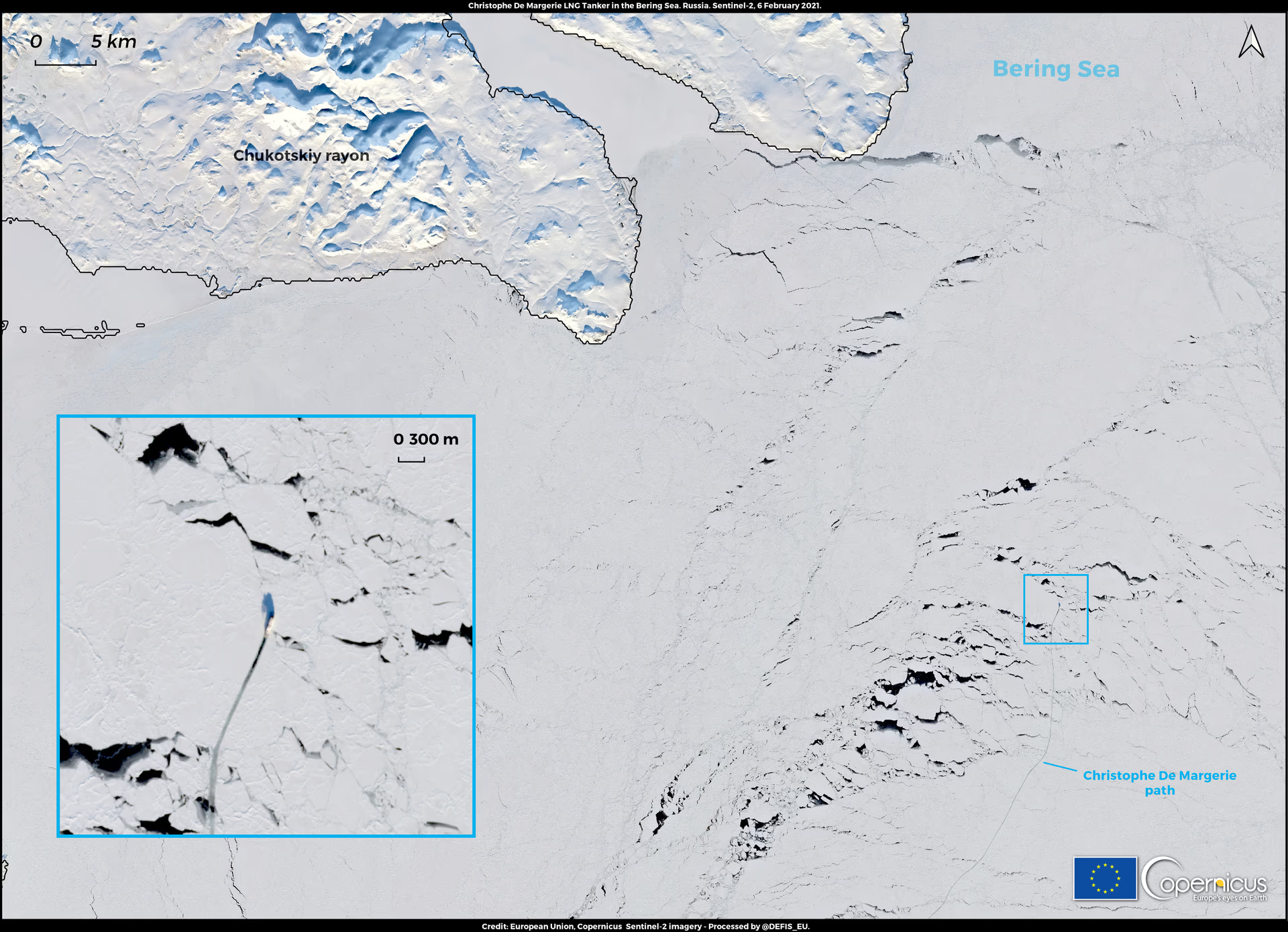
The Strait of Hormuz has been closed since February 28, according to the US Energy Information Administration. The closure affects more than 10 billion cubic feet per day of LNG, about 20% of global trade, mostly from Qatar's Ras Laffan complex. QatarEnergy declared force majeure on March 4.
EIA put the JKM front-month at $16.02 per MMBtu for the week ending April 24, up 51% from pre-closure levels. Kpler recorded Asian spot LNG at $22 on July 22, with TTF at $20.91 and Henry Hub at $2.93. Our October 10 report logged JKM at $25.96 on that Friday's close.
LNGInsights, an aggregator drawing on LNGPriceIndex.com, showed JKM at $29.84 per MMBtu on Friday, October 16, with TTF near $28.50 and Henry Hub at $3.11. These are indicative readings, not Platts or ICE settlements, and other aggregators show JKM between $29.84 and $30.04. Against EIA's April reading, that is an increase of roughly 86%.
Archive comparison: one week of movement
On October 10 we reported TTF at about $26.30 per MMBtu, Henry Hub at $3.13 and a Henry Hub to TTF spread of $23.17. On the aggregator's Friday figures, TTF is up about $2.20, or 8%, while JKM is up $3.88, or 15%. Asia has widened its premium over Europe to roughly $1.34 per MMBtu.
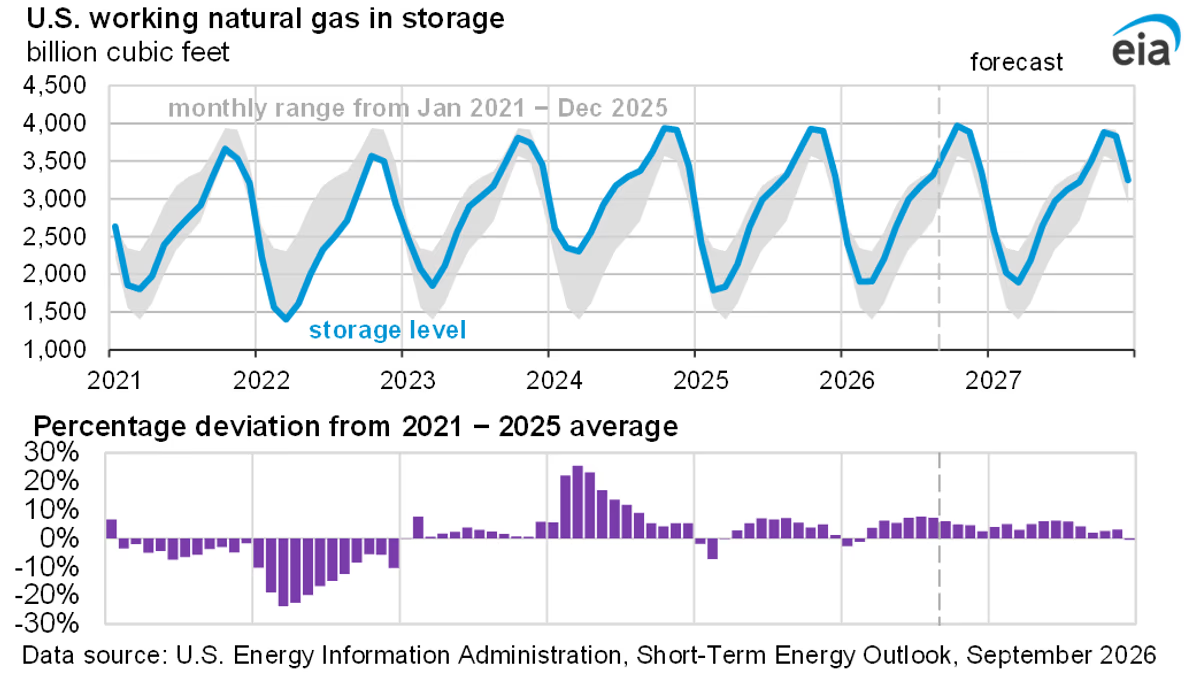
Henry Hub, by contrast, has slipped to $3.11 as US supply stays ample and export capacity runs near its ceiling. EIA estimated US LNG exports at 17.9 billion cubic feet per day in March, with terminals at 94% utilization. The agency expects about 2.4 billion cubic feet per day of added capacity between April and December 2026 from Golden Pass and Corpus Christi Stage 3.
Derived math: the arbitrage per cargo
The gap between JKM and Henry Hub is about $26.73 per MMBtu on Friday's indicative figures. A conventional cargo of 3.5 million MMBtu, an Oil Authority assumption, would carry a gross spread of roughly $93.6 million before liquefaction fees, shipping and regasification. That is the margin pulling US molecules toward Asia.
The same arithmetic explains the pressure on Seoul. Every cargo of Qatari supply that cannot transit Hormuz must be replaced from the spot market at that premium. Kpler cut its South Korea LNG demand outlook in July, saying spot prices above $18 to $20 per MMBtu would delay restocking and push coal generation.
Winter supply: Qatar and China
Kpler assumes severely constrained Hormuz LNG transit through the end of 2026, with gradual recovery in the first quarter of 2027. In July, Ras Laffan, which has 77 million tonnes per year of capacity, loaded four cargoes in a week, down from six, according to Kpler. That recovery timeline is a single-source projection, attributed to Kpler alone.
China offers a contrast. OilPrice.com reported that Chinese buyers stockpiled early during the conflict, leaving the country better supplied for winter. OilPrice.com did not report a comparable stockpile for South Korea, which is now turning to coal and nuclear to reduce spot purchases.
Ember and Global Energy Monitor estimated South Korea's annual fossil fuel import bill for the energy sector at $133 billion, based on early June spot prices. That figure predates the latest leg higher in LNG. Seoul has also outlined up to 1 quadrillion won, about $747 billion, in investment by 2035 in renewables, electric vehicles and industrial decarbonization.
Published by Oil Authority, edited by Adam Humphreys
Submit a Correction
Spotted a factual error? Free account required to submit a correction.